Online Reporter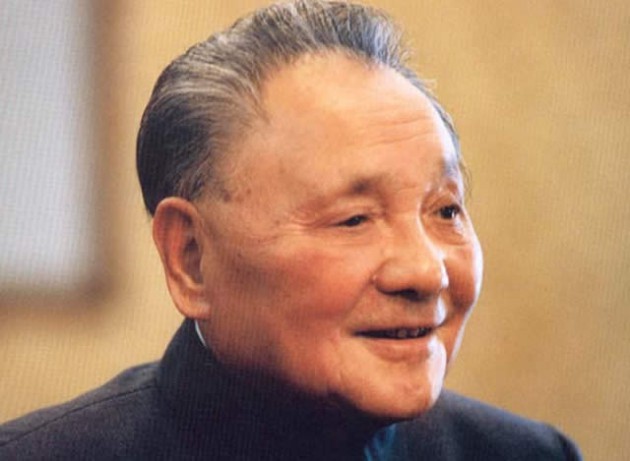
Wesley Zvomuya
I recently had an interesting discussion with a Chinese friend about “lessons from China”, which has become almost a cliché because of interest from the media, as well as policy, academic and developmental circles in Zimbabwe, Africa and beyond.
China, particularly its rise to become the world’s second-largest economy, is like a huge open book waiting to be read for lessons on how its success story can be retold; and, in the case of the rest of the developing world, how its approaches and accomplishments can be replicated and emulated.
Unsurprisingly, there have been many books, papers and events that have sought to unpack this phenomenon of China’s rise, and what the world can learn from it.
China is the world’s biggest developing country, while Africa is the continent with the biggest number of developing countries.
Similarities between the two sides have led to a constant stream in the discourse of learning from China.
However, the discussion revealed a fundamental problem, which may distort both the discourse and the outcomes. My interlocutor explained that the story of China’s rise and achievements should not be understood solely in the context of the period of the famous “Reform and Opening Up”, which began with the leadership of Deng Xiaoping, having taken over from Chairman Mao Zedong.
Deng led China through a period of rapid economic growth, anchored in opening China to foreign trade and investment — or what is sometimes called market socialism — leading to him being venerated as the “Architect of Modern China”.
A wide window
This article gives a more nuanced view of the factors and dynamics that have led to China’s success.
It navigates major historical phases that foregrounded China as we know it today.
Taking lessons from the Deng period arguably risks failing to account for other powerful forces that have shaped China — from which lessons should be learnt in equal measure — as countries such as Zimbabwe attempt to chart their own modernisation paths.
Through a historicisation methodology, one may argue that China’s rise is deeply rooted in its ancient 5 000-year civilisation, its traumatic encounters with imperialism (or the “Century of Humiliation” from 1840 to 1949), the revolutionary leadership of Mao Zedong, and the adaptive capacity of the Communist Party of China (CPC).
Most crucially, China’s story is not one of mere economic reform but of civilisational resilience, ideological innovation and historical memory.
Without appreciating this complex matrix, the discourse on “learning from China” risks being superficial and reductionist.
There is indeed a wide window to understand China through appreciating the various forces and dynamics that gave birth to its rise.
An ancient civilisation
China’s modern success cannot be divorced from its 5 000-year-old civilisation.
As the cradle of some of humanity’s most sophisticated ancient technologies, philosophies and governance systems, China was a centre of global commerce and culture.
Historical sources state that some of China’s pre-modern dynasties and kingdoms had vibrant urban centres, advanced monetary systems and complex bureaucratic governance that rivalled or exceeded their contemporaries in Europe.
The Qing dynasty (1644-1912), for example, was a period of significant growth and expansion for China.
The dynasty expanded China’s borders, creating the largest Chinese empire in history.
It also saw a flourishing of Chinese culture, including the development of the Peking opera and the creation of classic novels.
According to historians, the Qing dynasty presided over remarkable economic growth, accounting for 32 percent of the world’s industrial output.
Successful military campaigns and administrative reforms helped modernise China’s governance.
The dynasty also engaged in international trade, reluctantly establishing relations with European countries and opening Chinese ports to foreign trade.
The Great Zimbabwe empire here is said to have had contacts with the Qing dynasty, a historical fact that powerfully connects China and Zimbabwe for a period of no less than 600 years.
China’s past is also credited with deep philosophical and social attributes that have had an influence on Chinese society, political and governance structures, with the teachings of ancient figures such as Confucius and Laozi (also known as “Lao Tzu”, the founder of Taoism) playing a huge part in shaping China to date.
Experts believe Confucian’s emphasis on social harmony, meritocratic governance and education laid a substrate upon which modern policies could take root.
The intellectual endurance of legalism and Taoism has continued to inform social discipline and strategic patience, qualities essential for long-term developmental planning.
Making of political order
China’s modern political system began in earnest with the 1911 revolution, which marked the end of not only the Qing dynasty but also the two-millennium imperial empire, ushering in a republican era and paving the way for significant political, social and cultural transformations.
The revolution’s emphasis on nationalism, democracy and modernisation laid the groundwork for subsequent movements.
However, this transition had its fatal weaknesses.
After the 1911 revolution, China’s political system was plagued by warlordism, a weak central government, lack of national unity, strong foreign influence, persistent economic stagnation, alarming social inequality and lack of democratic representation.
These problems created a power vacuum, fuelling widespread discontent and social unrest.
Capitalism failed China, thus creating conditions for the adoption of socialism later.
A key historical moment arose in what was to be known as the May 4th Movement in 1919.
It was a pivotal moment in China’s history, as it brought together students, intellectuals and workers to protest against the Treaty of Versailles and the government’s handling of foreign affairs, particularly after the loss of Chinese territories. This movement marked a shift towards political mobilisation, nationalism and anti-imperialism, with slogans like “science” and “democracy” becoming rallying cries.
The movement also spurred the spread and growth of communism, with influential leaders like Chen Duxiu, Li Dazhao and Mao Zedong becoming founders of the CPC.
The founding of the CPC in 1921 was a direct result of the May 4th Movement’s emphasis on Marxism and Leninism.
Mao Zedong — who is said to have not been among the intellectual and political giants of the time, but a humble librarian — became leader of the CPC in 1935 during the civil war with the Kuomintang (KMT), which ended with the KMT being driven out and banished to Taiwan.
The People’s Republic of China, or the “New China”, was founded on October 1, 1949.
In between, from the 1840s to the 1940s, the Chinese nation experienced what is now widely known as the “Century of Humiliation”, which was a period in which the country was subjected to imperialism, foreign occupation and unequal treaties.
China became politically fragmented and weak, opening the door for its unequal treatment as a once leading civilisation and powerful country.
This era began with the First Opium War (1840-1842), the Second Opium War (1856-1860) and the First Sino-Japanese War (1894-1895), which forced China to open its ports to European trade and cede territories like Hong Kong, Kowloon and Taiwan to foreign powers — Britain and Japan.
The subsequent unequal treaties imposed by Western nations and Japan eroded China’s sovereignty, allowing foreign powers to exert control over Chinese territory, economy and politics.
In the period, China was occupied by foreign powers, with a particularly humiliating episode being the Japanese invasion of Manchuria (Northeast provinces in China) in 1931.
This period, dubbed the “Century of Humiliation”, has fostered a “never again” sense in Chinese people and state, which is even shaping its present stance in today’s world.
Adaptability and consistency
The collapse of the Soviet union in 1991 was dubbed the “end of history”, a notorious quote attributed to American political scientist Francis Fukuyama.
The disintegration was meant to demonstrate the failure of communism as a political model.
It was also widely expected that all other countries, including China, would abandon their socialist experiment and revert to capitalism.
China has bucked the trend and the conventional wisdom that Western capitalism and democracy are the best ways of governance.
China adapted socialism to suit its local conditions and contexts and departed from the “bookish” ideas of Marx and Engels.
Instead, it crafted and pursued a philosophy and style relevant to China from the peasant beginnings to what it has become — a modern, prosperous socialist country.
China’s model has also been known for its strategic state intervention, long-term planning and a strong ideological commitment to social stability and national development.
The concept of “socialism with Chinese characteristics” explains and emphasises two strong characteristics of China and the ruling CPC — adaptability and consistency.
Clearly, China is dynamic and resolute on its chosen path, which is informed by strong philosophy, planning and execution. For instance, while undertaking reforms, Deng Xiaoping pursued a pragmatic approach that preserved the socialist fundamentals while opening up to capitalism.
Further, President Xi Jinping, who undertook several learning visits abroad in his younger years as a party cadre, argues that China has matured enough to focus on local solutions.
Therefore, China did not become successful overnight.
There are forces, dynamics, circumstances and, most of all, policies that shaped the development of the country to what it is today.
So, no single era or force was more important than the other.
Adaptability and consistency have become the hallmarks of China in the modern era.
Where do we begin?
One of the pitfalls in the “learning from China” discourse is to advocate a “copy and paste” approach for countries, especially those in Africa, to achieve the level of success the Asian country has.
Chinese leaders themselves often state that reforms and lessons should suit local conditions — there is no “one-size-fits-all” approach to modernisation.
Further, unlike Western countries, China’s strict non-interference policy means it does not prescribe rules and conditions for other countries, even those that it assists technically and financially.
Zimbabwe has its own history — from the Great Zimbabwe civilisation to the liberation struggle and the post-2000 era — that offers a rich resource for crafting a potentially homegrown developmental toolkit.
But there are still several key lessons to learn from China.
After all, the Global Civilisation Initiative (GCI), which was propounded by President Xi in 2023, is a key reference point that seeks to foster greater understanding, respect, cooperation and mutual learning among civilisations of the world.
The GCI also aims to encourage dialogue, cultural exchange, people-to-people diplomacy and cooperation in areas like education, science, technology and innovation while seeking to address common global challenges through collective action and cooperation.
Wesley Zvomuya is a Bindura-based analyst and international relations expert.