admin
admin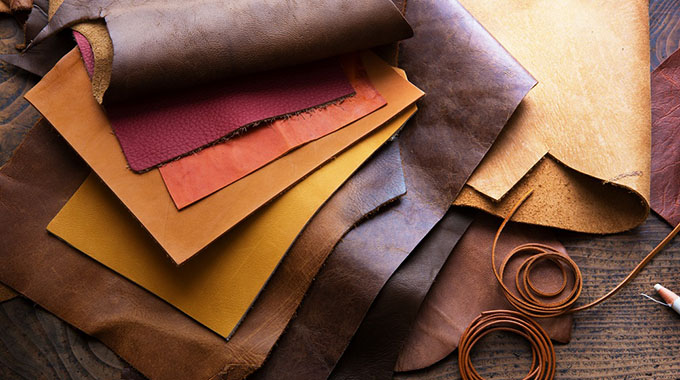
Leonard Ncube
Victoria Falls Reporter
THE leather sector in Zimbabwe is planning to establish a plant that will produce shoe soles and lasts, the essential components for making quality shoes.
The development will help reduce the importation of cheap and low-quality shoes that have flooded the market.
Many Zimbabweans are familiar with the frustration of buying shoes from shops at low prices, only to find out that they have a short lifespan.
Some even joke that some shoes are “one trippers”, meaning they can only be worn for one trip before they fall apart.
Secretary for Zimbabwe Leather Development Council (ZLDC) Mr Jacob Nyathi, said an initial capital injection of US$600 000 was needed to establish the two plants and improve the quality of shoes.
“We need a last and sole plant and we need investment of US$600 000 entry level. We need mobilisation of those resources and we have made a proposal to see how best we can get funding,” said Mr Nyathi from the Bulawayo leather cluster.
He made a presentation at the Matabeleland North diaspora investment conference in Lupane recently, where he highlighted the potential and opportunities of the leather sector in the province.
Government rolled out the US$2,3 million beef and leather value chain project in Matabeleland North between 2017 and 2021, with funding from the African Development Bank (AfDB).
The province’s farmers are major livestock producers and their future prosperity is reliant on upgrading their meat and leather.
The project’s aim was to contribute towards the growth of the region and the country’s economy by enhancing the production and value addition of leather products.
Through the project, nine leather value chain groups were established in Matabeleland North following training of people in various sectors in the industry.
Mr Nyathi said Bubi and Lupane districts had two groups each, while other districts have one group each.
The groups are said to be doing well and the Tsholotsho Cluster has established a processing plant that has provided employment to scores of youths as well as heralded industrialisation to rural area.
This is in line with the rural industrialisation agenda, which is one of the pillars of the Second Republic’s devolution policy.
Through rural industrialisation, Government hopes to stem rural-to-urban migration, which saps growth, incomes and wealth from the countryside, transferring it to towns and cities.
Rural industrialisation involves nurturing agro-processing start-up enterprises in rural areas through financial and technological support via venture capital funding and Government agencies.
Mr Nyathi said the leather industry was an all-encompassing value chain with players including farmers’ associations, skin collectors, slaughter and butcheries and abattoirs, tanneries, skin processors, footwear makers and those dealing in leather clothes.
“We got support to the beef and leather value chain in 2017 to 2021 when we trained groups in all districts and created groups of 10 people each. We now want to strengthen that,” he said.
“We have spoken with Lupane State University who have agreed to have a project on processing of goat and sheep hides. LSU got funding from the Research Council of Zimbabwe so as ZLDC we will be part of that project and we hope to support these young groups.”
The project will help in research on the Matabele goat, a unique breed of goat that is native to the region, to add value to it, with lessons from the Highland goat in Ethiopia, which is selling for a premium and contributing significantly to the country’s economy.
Besides groups across the province, there are some individuals dealing in leather products mostly in Victoria Falls, Hwange and Binga.
“So we are working on a proposal so that we have a plant that will help in manufacturing. The only company that manufactures soles is in Harare and is the only one in the region outside South Africa,” said Mr Nyathi.
“If we can have a new plant we will improve the quality of shoes in the country. Fashion trends are very dynamic especially in women’s shoes and if you can’t respond very fast you may not address the needs of the market.”
Shoe soles are generally made from synthetic materials, including thermos rubber and PVC, and are then stitched and bonded to the leather uppers.
A last is used to design and shape shoes, being the form that the cobblers mould and stitch the leather around.
Responding to Mr Nyathi’s presentation, Finance, Economic Development and Investment Promotion Minister, Professor Mthuli Ncube, said the project will get funding.
He promised that his office will help unlock funding for the project, which will transform community livelihoods especially in Matabeleland.
Leather processing will also help contribute to the Special Economic Zones where the beef and leather sector is one of the most critical areas in need of capital injection.
Presently, Zimbabwe’s leather industry is operating at subdued capacity despite opportunities in markets such as SADC, Comesa and further abroad.
Matabeleland North boasts good quality livestock, with the beef and livestock census saying the region has 695 771 cattle, with Lupane, Nkayi and Bubi, having more than 100 000 each and the other districts less than 100 000.
There are 51 938 sheep in the province, 499 658 goats, 35 455 pigs, 117 889 donkeys, 177 horses, two ostriches, 1 181 168 poultry and 99 803 dogs. The ostrich population excludes those in protected game parks like Hwange National Park.



 Online Reporter