Online Reporter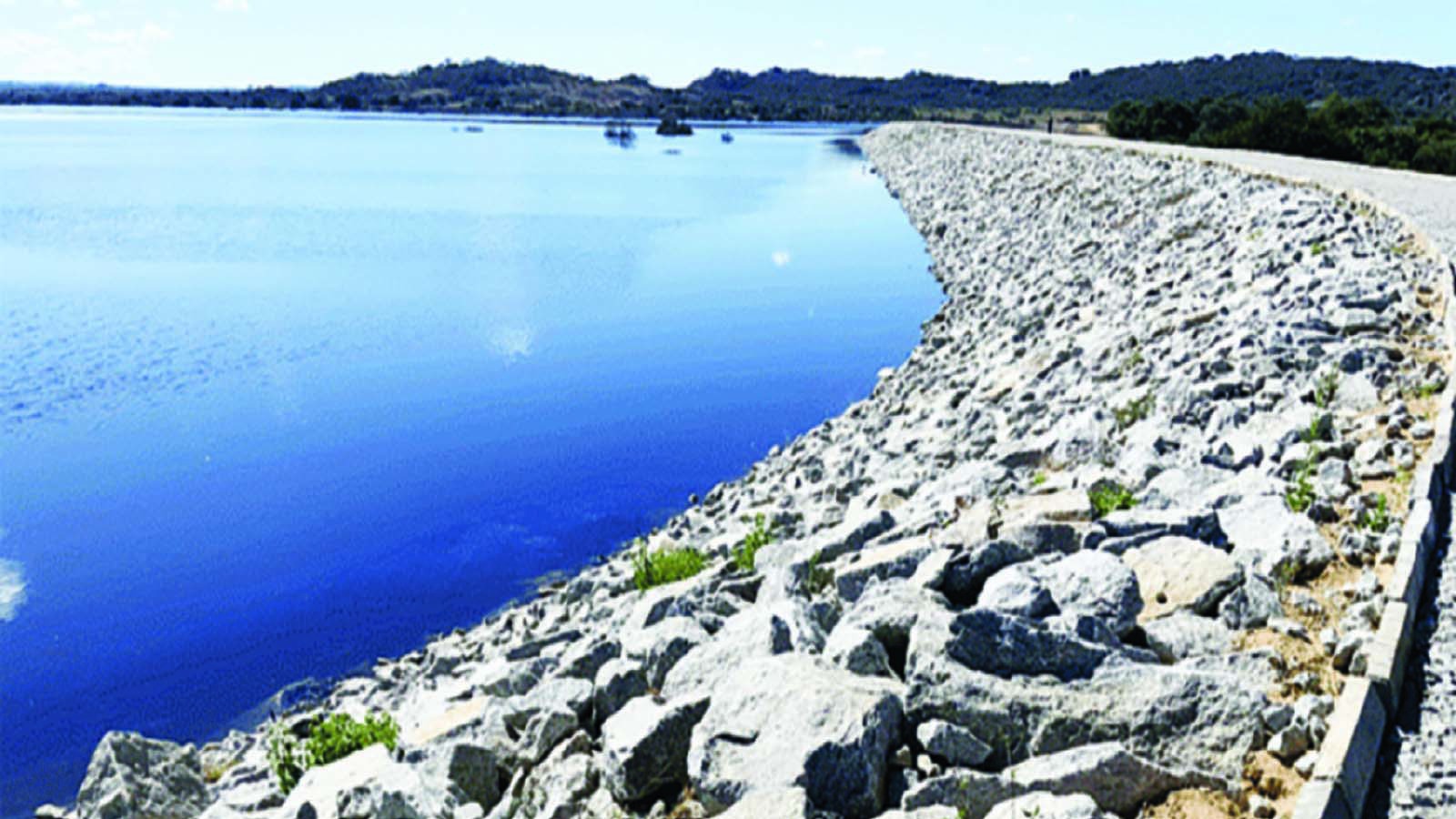
A philosophy is only as powerful as the ground it walks on. In Zimbabwe, the new dispensation’s guiding creed: Leaving No One and No Space Behind: is no longer a slogan on a wall.
It is like a dam rising from dry earth, a road cutting through a savanna, a young man learning Mbira under an acacia tree and a fisherman casting his net on waters that, a decade ago, did not exist. Anchored in the National Development Strategy 2 (NDS2) and the bold horizon of Vision 2030, this philosophy is reshaping what Zimbabwe means to its people: and to the world.
Water as a Weapon Against Poverty
Nothing signals sovereign intent like taming rivers. The new dispensation has committed a remarkable US$1.1 billion to dam construction across all 10 provinces, a decision that speaks directly to the spine of the leaving-no-space-behind philosophy. Muchekeranwa Dam in Mashonaland East has already become a living case study: communities lining its shores have embraced fisheries, turning a construction project into a tourism brand. Here, a visitor does not just see water: they see enterprise, heritage and pride.
Several major dams are currently under construction or nearing completion: Kunzvi, Dande, Gwayi-Shangani, Mbada, Bindura, Defe, Tuli Manyange, Semwa and Vungu.
The Gwayi-Shangani Dam, already over 70 percent complete, will deliver irrigation and a reliable water supply to Bulawayo, Zimbabwe’s second city.
When these water bodies are complete, they will attract eco-tourism, sport fishing and water sports: transforming landscapes once defined by drought into gateways of recreation and productivity.
This is not development for development’s sake. It is tourism infrastructure disguised as social justice.
Roads, Runways and the Return of the Traveller
Tourism dies without access. The new dispensation understands this acutely.
The rehabilitation of the Bulawayo-Victoria Falls road is among the most strategically significant infrastructure decisions of this era, reconnecting one of Africa’s iconic destinations — The Smoke That Thunders — to the broader national and regional tourism grid.
Road tourism, a tradition that colonial-era infrastructure once supported and post-independence neglect eroded, is being rehabilitated. Equally transformative are the expansions of Kariba Airport and Hwange National Park Airport.
Both gateways serve landscapes of world-class ecological and recreational value. Hwange, home to one of the largest elephant populations on earth, has long suffered from limited air access.
Expanding its airport is a direct investment in high-value, low-volume tourism that generates maximum returns per visitor. These projects do not merely move people: they move economies.
Clean Water, 35 000 boreholes and the Village as a Tourism Destination
The Government’s commitment to sinking 35 000 boreholes across rural villages is a policy that doubles as a tourism vision.
Over 2 000 villages have already benefited. When a village has clean water, dignity follows: and dignity is the foundation of a community that can confidently welcome visitors. Rural tourism, agro-tourism, and cultural tourism cannot flourish in communities struggling for survival.
The borehole programme is, quietly and powerfully, a tourism investment.
Memory, Soil and the Gravesites That Demand Our Attention
Tourism is not always about pleasure. Sometimes it is about reckoning.
The mass graves at Doroi, in Mozambique and Zambia and those at Chibondo carry the weight of Zimbabwe’s liberation struggle.
These are not sites of shame: they are shrines of sacrifice that remind every visitor of the cost of sovereignty.
The philosophy of leaving no one behind extends into history itself: no martyr forgotten, no grave unmarked. Developing these sites into centres of heritage tourism is both a moral obligation and a strategic opportunity.
Dark tourism, where visitors engage with difficult histories, is among the fastest-growing segments of global tourism.
Culture as Currency: Alois Mutinhiri and the Ngoma Yepasi Legacy
If water is the economy’s blood, culture is its soul. The private sector and passionate individuals are answering the government’s call in remarkable ways.
Alois Mutinhiri, founder of the Ngoma Yepasi Culture Centre in Mhondoro, Rwizi area, has dedicated his life to transmitting the art of Mbira, the values of good conduct and the principles of Hunhuism to young Zimbabweans.
He also lectures at the Ubuntu Learning Village in Gutu: A dual mandate that firmly positions him as a guardian of Zimbabwe`s intangible heritage.
Initiatives like the Baradzanwa Cultural Centres echo this mission, demonstrating that cultural infrastructure is spreading organically across the country.
These are not Government-built monuments: they are community-owned declarations that Zimbabwe`s identity is worth celebrating. International tourists increasingly seek authentic cultural immersion.
Zimbabwe’s mbira, totems, traditional cuisine and oral literature are products the world is ready to purchase: If they are packaged with confidence and pride.
Farming as Business: The Rural Economy Reborn
Leaving no space behind means looking at the land with new eyes. Across all the 10 provinces, the Government is championing farming-as-business in rural areas. This shift in mind-set: From subsistence to enterprise: is transforming rural Zimbabwe into a network of productive, attractive communities.
Agro-tourism, where visitors experience active farms, harvest festivals and rural hospitality, is a booming global segment. Zimbabwe’s fertile provinces, from Manicaland’s highlands to Matabeleland’s vast plains, offer agro-tourism products of extraordinary potential.
Global Parallels: Lessons from Rwanda, Botswana and Beyond
Zimbabwe is not rebuilding in a vacuum. Rwanda transformed from tragedy to tourism powerhouse through deliberate investment in infrastructure, culture and conservation: attracting over 1.3 million visitors annually by 2023.
Botswana built a high-value, low-volume tourism model on the back of pristine wilderness. India’s rural tourism programme under its national development strategy energised thousands of villages through heritage trails and craft economies.
Zimbabwe’s NDS2 and Vision 2030 draw from these global lessons while remaining rooted in Zimbabwean realities.
Conclusion
The dams will fill. The roads will stretch. The airports will hum. The cultural centres will ring with song. The graves will be honoured. The farms will yield. And when all of this happens together:
Guided by NDS2, pointed toward Vision 2030 and driven by the iron conviction that no citizen and no corner of this land shall be forgotten: Zimbabwe will not merely have a tourism industry.
It will have a tourism story. And stories, more than any marketing budget, are what move the world to travel.
Charles Mavhunga co-authored textbooks in Business Enterprising Skills and is currently studying for a PhD in Management at Bindura University. He can be contacted at charles.mavhunga @gmail.com Cell:0772989816