Online Reporter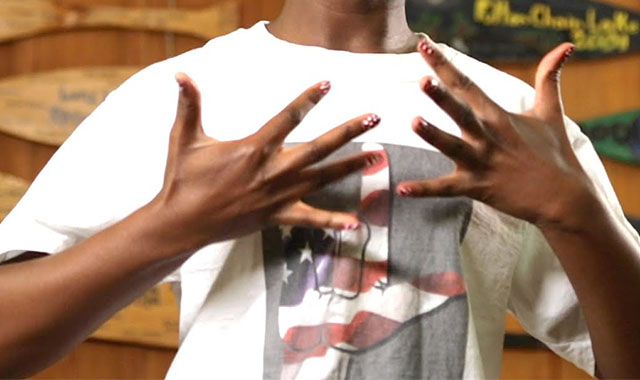
Disability Issues
Dr Christine Peta
Although sign languages are often misunderstood as mere gestures or simplified codes, they are fully developed languages complete with their own unique grammar, syntax and cultural richness.
GLOBALLY, more than 300 distinct sign languages exist, including Zimbabwean Sign Language (ZSL), American Sign Language (ASL), British Sign Language (BSL) and South African Sign Language (SASL).
Each reflects the history, identity and resilience of the community that uses it.
For deaf individuals, sign languages serve as far more than practical tools for communication; they are deep expressions of identity and belonging that enable full participation in education, healthcare, justice and cultural life.
On September 23, 2026, Zimbabwe will join the rest of the world in commemorating the International Day of Sign Languages, a day designated by the United Nations to emphasise the importance of sign languages in protecting the rights and dignity of deaf persons.
This year’s theme, “Declaring Deaf People’s Human Rights”, serves as a powerful reminder that access to sign language is a fundamental human right rather than a privilege.
This focus also guides the broader International Week of Deaf People, observed from September 21 to 27, 2026, alongside daily sub-themes.
The International Day of Sign Languages has evolved into a vibrant global movement characterised by political pledges, community workshops, performances and advocacy campaigns.
A central element of this movement is the colour blue, which has become a global symbol of solidarity with deaf communities, representing visibility, unity and the equal standing of sign languages alongside spoken ones.
By illuminating iconic buildings, bridges and monuments in blue, societies send a resounding public message that deaf people’s rights are human rights and that sign languages must be actively respected, promoted and resourced.
When these landmarks glow blue on September 23, they act as beacons of justice, dignity and equality, declaring that sign languages matter and that deaf individuals deserve full inclusion across all aspects of society.
In Zimbabwe, the constitutional recognition of ZSL marked a monumental victory for disability rights.
This constitutional mandate is increasingly reflected in everyday life, with ZSL being progressively adopted in schools and public institutions to facilitate seamless communication.
Furthermore, Section 3.33 of the National Disability Policy explicitly highlights ZSL, affirming its value not only for functional communication between deaf and hearing individuals but also for deepening interpersonal relationships.
For instance, because sign language relies naturally on direct eye contact, it inherently strengthens emotional bonds, such as parent-child connections.
Sign language should never be viewed as the exclusive domain of deaf persons; rather, both deaf and hearing people benefit from learning it so that communication can flow freely whenever necessary.
Sign languages are also indispensable to reaching global equity benchmarks, particularly Sustainable Development Goal 10 on reducing inequalities.
Without sign language access, deaf learners face exclusion from classrooms, deaf patients risk misdiagnosis in medical settings and deaf citizens encounter severe barriers within law-enforcement and judicial systems.
Social workers, educators and policymakers widely acknowledge that sign language is a critical asset for inclusive communication, advocacy and social empowerment.
Despite these advancements, significant systemic barriers remain.
More than half of the world’s countries still lack legal recognition for sign languages and severe interpreter shortages persist, leaving some regions with only one interpreter for hundreds of deaf residents.
Additionally, many global digital platforms lack sign language accessibility, cutting deaf users off from modern digital participation.
Addressing these gaps requires urgent, prioritised action from governments, civil society and international partners through updated policies and operational practices. Ultimately, embracing sign languages is an imperative of justice, dignity and equality.
As the world lights up in blue on September 23, the message remains clear: Deaf people’s rights are human rights and sign languages are essential to building a world where nothing is done about deaf communities without them.
Dr Christine Peta is a disability, public health, policy, international development and research expert. She can be contacted on: [email protected]