Online Reporter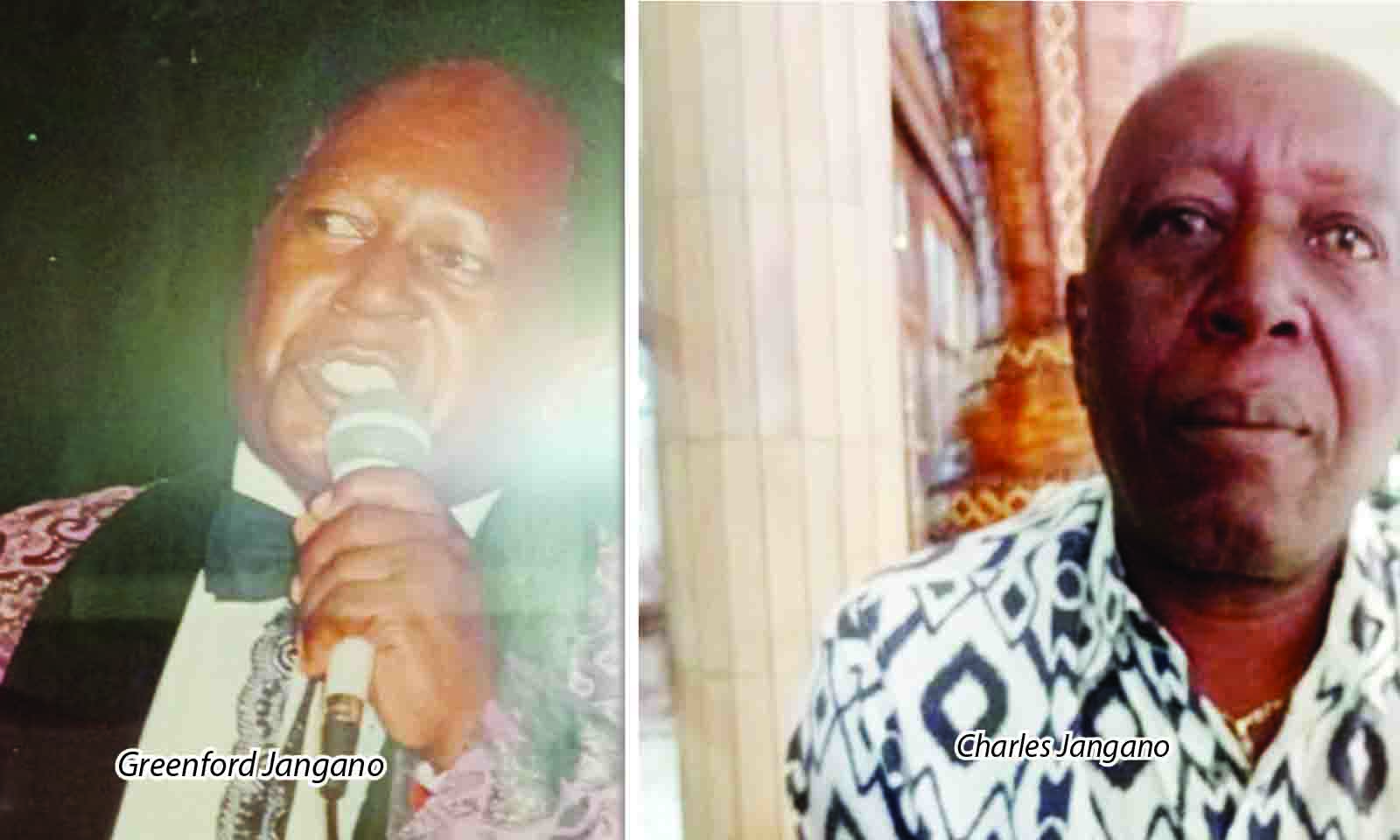
Trust Khosa
Zimpapers Arts and Entertainment Hub
TEN years after his death, the legacy of jazz legend Greenford Jangano remains alive.
Regarded as the grandfather of Zim jazz, Jangano succumbed to heart failure in 2015 at the age of 79.
He has left behind footprints that are hard to ignore.
His outfit, The Harare Mambos, which made an impression for nearly five decades, will be best remembered for producing stars.
As the Heroes Holidays approach, many people often overlook the significant role that musicians played in motivating freedom fighters.
The war of liberation was not only fought on the battlefields but also in the studios.
One notable group that contributed to this cause was the renowned Harare Mambos.
A true nursery of talent, the group featured a remarkable line-up of stars, including the late Jangano, living legend Tanga wekwa Sando, Phillip Svosve, the late Chris Chabuka, Elisha Josam, and Charles Jangano, the son of Greenford.
Reflecting on Harare Mambos’ journey, and its role in shaping the Zimbabwean music landscape, Charles told this publication that it was a dream come true to work alongside his father.
“To be honest, I can’t thank God enough for the opportunity I had to work with my father.
“He led one of the oldest jazz outfits in Zimbabwe, which made quite an impression back in the day.
“Of course, I was very young then but he was leading a galaxy of stars who thoroughly enjoyed music. Some of the big names who went on to form their own groups included Tanga wekwa Sando, Jonathan Nyoni, Elisha Josam and Phillip Svosve, who flourished independently.
“I used to play keyboards, and that is the only job I have known since childhood. My father composed songs with substance and one of his songs, ‘Mbuya Nehanda,’ was a huge hit as it inspired freedom fighters during the Independence movement.
“It was composed at a time when people were returning from the war and the spirit of victory could be strongly felt in that song.”
Charles, who has been jamming with several groups since the disbanding of Harare Mambos, praised past musicians for their impact on the birth of Zimbabwean music.
“When my father assembled Harare Mambos, he made history as many guitarists came to learn the ropes from him.
“He was a genius who left an indelible mark while leading a cream of stars.
“Of course, there were only a few bands at that time due to challenges in securing instruments. After forming a large group, he ended up creating Harare Mambos A, B, and C.
“All these groups flourished, which stands as proof of my father’s mentorship,” he said.
Charles, who has performed alongside Thomas Mapfumo and several other local groups, expressed his desire to collaborate with more artists.
The keyboardist, who trained at the Zimbabwe College of Music in the late ‘70s alongside Manuel Bagorro, who used to run the Harare International Festival of the Arts, believes he still has a lot to offer to the music industry.
“To be honest, I have seen it all and trained in music, which makes me somewhat unique. I am doing what I love the most, music is one of those things I cherish doing daily.
“In fact, music was the only thing I loved, which is why I pursued further studies in the USA. In the US, I played with Mukanya from 2016 and toured with him to the UK for Zim Fest.
“My most memorable show with him was the 2018 gig at Glamis Showground in front of a crowd of 25,000. I still cherish that show as one of my best.
“We played for four hours non-stop and we didn’t even feel it because the crowd was incredibly appreciative.”
Charles, who had a stint with his father in Victoria Falls where they became the resident band at Elephant Hills, described his time in the resort town as one of the best moments.
“I can safely say Victoria Falls opened many doors for us, allowing us to perform alongside great artists like Hugh Masekela and Dorothy Masuka.
“Sharing the stage at Elephant Hills Hotel was a huge achievement for us.”
The musician, who is set to launch his single titled “Zvichanaka,” said he had an excellent relationship with the late Oliver “Tuku” Mtukudzi.
“Around 2013, I had the opportunity to perform alongside Tuku and I will always cherish that moment as one of the best.
“I had known him from Highfield where we lived together before he became popular.
“When he came to Dallas for a show, I booked a studio by faith before I could contact him and he agreed to be part of the collaboration,” he said.
As Zimbabwe celebrates its heroes, Charles wants musicians of his father’s calire to be honoured for their role in shaping the Zimbabwean music landscape.