Online Reporter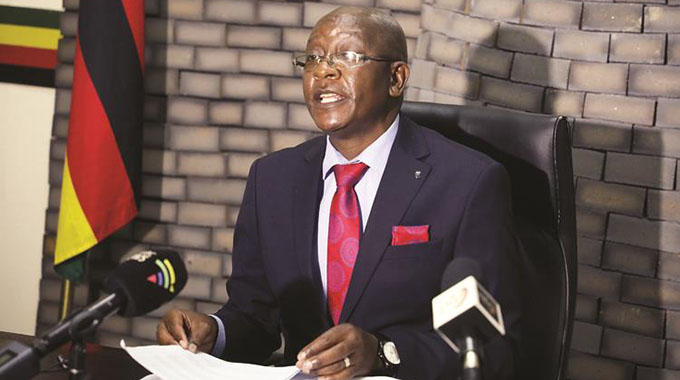
Sam Matema
The legislative and constitutional tragedy confronting us is that many work within a narrow and short horizon.
This was on full display during the Constitutional Amendment Bill Number 3 (CAB3) legislative process. Out of their own wisdom or lack thereof, some chose to apply their hearts and not their minds.
They chose convenience, played to the gallery, and the political posturing and grandstanding were palpable. The tomfoolery was shocking, and at some stage, some pushed the false narrative that CAB3 was meant to benefit a minority. Nothing could be further from the truth.
It is important to bring to the fore that constitutional amendments are occasioned by lived realities. Constitutions by their very nature are living creatures. They evolve in sympathy with the prevailing realities in the different spaces relating to the politics, economics, social, technological and ecological considerations.
It is prudent, therefore, to keep a finger on the pulse of the different spaces so that interventions and prescriptions are informed by facts and not emotions.
In view of our lived experiences, it was high time that we brought a lasting solution and closure to electoral contestations, which had punctuated our elections for the past three decades.
The Constitutional Amendment Act (3) did exactly that by giving that responsibility to Parliament sitting as an electoral college. An absence of contestations gives birth to stability and predictability in the things that we do as a country at all levels, micro, meso and macro.
We went through very trying times and lived through some very harsh legislative conditions that were born out of either errors of omission or commission, or both. The Second Republic was deliberate in its quest to bring finality to the toxicity that we witnessed before, during and after elections for far too long. Genuinely disturbed and burdened by such an unsustainable political environment, the revolutionary ruling party, Zanu-PF, during the 2024 and 2025 National People’s conferences in Bulawayo and Mutare, respectively, activated the initial processes that led to the
Constitutional Amendment Bill Number 3 that culminated in CAA3.
That capital projects with respect to infrastructure development operate in long time horizons admits no debate. We need to invest more towards development of our infrastructure across sectors in preparation for the giant leap that is on the horizon. For this to be actualised, a longer electoral cycle was introduced, changing from five years to seven years.
To some extent, the Zimbabwe Electoral Commission (ZEC) was conflicted and tainted on matters of electoral management. This can be traced to how the Chapter 12 commission was structured and the responsibilities it was given.
In the old dispensation, the Zimbabwe Electoral Commission was charged with voter registration. For all intents and purposes, voter registration is the space of the Registrar General, and CAA3 corrected this to provide stability and legitimacy.
CAB3 was also a learning process in more ways than many. Understanding constitutional processes and provisions on critical matters, for example, the majority of people now know when a referendum is required on constitutional matters.
They are clear in terms of the legislative role that Parliament plays in both the lower and upper houses, as well as the voting process. Post CAB3, people can easily relate to critical constitutional processes on amendments.
It laid bare how the politics of the day converge with government business for the greater good. CAB3 was triggered by a resolution at both the 2024 and 2025 Zanu-PF National People’s conferences. The party, therefore, takes precedence over government. In other words, it is the governing party that forms the government.
In view of the aforesaid, going into the future, we have prepared a solid base for future generations, a stable launchpad from whence future constitutional adjustments can be made, leveraging on the historic and defining process that the 10th Parliament of Zimbabwe executed with legislative precision. We are wiser.
Hoping and working for a great future for posterity, all was done to give a soft and smooth landing to posterity. Alive to the fact that we, the current generation, are holding this great nation in trust for future generations, we were and are obligated to bequeath to posterity a stable and prosperous nation.
This we did within the provisions and prescriptions of the Constitution, and history will judge us well for making the correct legislative decisions at a defining moment. CAB3 was a national project meant for the greater good, with posterity and national stability being front and centre.
l Honourable Sam Matema is the National Assembly Member for Buhera Central constituency, Zanu-PF Manicaland Province Secretary for Administration, Climate Parliament Zimbabwe Chapter chairman and chairperson of the Parliamentary Portfolio Committee on Environment, Climate and Wildlife. He writes in his personal capacity.