

 dyton mupawaenda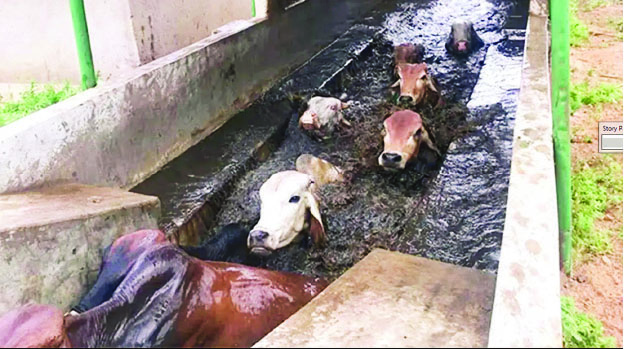
Obert Chifamba-Agri-Insight
IT may now be four months past the month of January, which is infamous to cattle farmers for being that stretch of time when the brown ear tick (Rhipicephalus appendiculatus), which causes Theileriosis or January disease, is hyper-active and causing rampant deaths among cattle.
And since Theileriosis cases are traditionally at their highest during the month of January, thanks to the wet weather, the next thing to happen was that people started referring to it as ‘January disease’ and that name has become so common that it is now the most widely used when referring to the disease.
It is not a secret that January disease has in recent years caused an estimated half a million or so cattle deaths impacting negatively on people’s livelihoods and their capacity to farm.
Most people were left without draught power and unable to outsource the services given that the cattle mortalities were so rampant that they affected almost every cattle owner.
The Government’s Pfumvudza/Intwasa programme that uses zero-tillage came at an opportune moment when thousands, if not millions of farmers, especially from the smallholder category were grappling with the reality of not having draught power for tillage services.
On the one hand, the Government duly declared ‘war on January disease’ early this year to try and contain the scourge.
And that war is bearing positive results, with the Department of Veterinary Services (DVS) announcing that cattle mortalities were significantly dropping.
The DVS is on record as urging farmers to use the 5-5-4 dipping regime with dipping sessions spaced five, then four days apart.
This strict dipping regime has also been complemented by the Presidential Tick Grease programme that saw more than a million households receiving a kilogramme each of free tick grease.
The grease was to be applied to parts of the animal where ticks attack but are not usually dipped (such as ears and beneath the tail).
Now the risk that comes with an exciting announcement like the one made by DVS on the gains the country is making towards containing January disease is that people can easily think the war is over.
The Theileriosis holocaust is far from over and can easily gather tempo once people lose concentration and take their feet off the pedal.
It is critical for the country to maintain that momentum and not be lulled to sleep by the fact that there have been positive gains and that we are way past January.
It is time the nation comes to terms with the unambiguous reality that the war to contain January disease should be on-going and must not be declared over with people relaxing their dipping regimes.
This has to keep on happening so that the brown ear tick population falls to very small and manageable figures.
Farmers and the rest of the stakeholders in the cattle industry must appreciate that a lot of changes have happened in the cattle sub-sector, which may make the regular dipping programmes that were instituted across the country since the colonial times seem ineffective towards keeping the tick and disease at bay.
Of course, this is not to say there were no outbreaks in the past. They were there, but the scale was manageable and not as colossal as what is currently happening.
The current scenario must be understood in the context of the changes that came with the implementation of the land reform that saw farmers moving into spaces previously out of their bounds.
There was also a boon in the cattle numbers, as many farmers could now access breeds and services that used to be out of their reach.
There are also changes in the rainfall patterns that stakeholders must come to terms with.
While recent seasons have had high rainfall amounts, the same cannot be said about their predecessors that were characterised with low rainfall patterns or even droughts, which had a bearing on the propagation and distribution of the Theileriosis vector — the brown ear tick.
Abundant rains usually generate lots of grass, which naturally provide more habitats for ticks where they wait for grazing cattle.
There are also more cattle spread across the country against few dips especially in the resettlement areas where not much had been done in terms of providing such infrastructure.
It is, however, refreshing to note that the Government has since embarked on a programme to establish more dip tanks across the country, as part of the raft of measures to contain January disease.
Once those areas that did not have dip tanks have some, it will be crucial for tight implementation of dipping regulations to ensure animals are dipped frequently and thoroughly so that brown ear ticks are kept suppressed all the time.
Farmers must bear in mind the fact that infrequent dipping and misapplication of dips may result in resistance to dip chemicals (acaracides) by ticks, which makes it important for them to ensure they follow instructions on dipping to the last letter.
Those situated in the heavily grazed communal areas where the problem did not use to be common must also realise that there has been widespread movement of animals from all directions with commercial farms that used to be heavily associated with January disease also contributing to the animal movements actively.
The mixing of breeds in both the communal and resettlement areas that resulted from the dispersal of commercial breeds across the country following land reform may be responsible for the perceived less overall resistance to ticks and tick-borne diseases by most cattle herds at the moment.
The crux of the matter here is that there is no longer that January window during which the brown ear tick would be at its most ravishing but every month has become a potential hotbed for the pest.
This means farmers and other stakeholders must no longer take it for granted that there is a dead period for the tick.
They need to be vigilant and taking all the necessary preventive measures to ensure the tick does not have that breakthrough again that saw it claiming hundreds of thousands of cattle in the recent past.
It is important for those that may not want to believe that January disease is now outliving the January window to closely follow correspondence from the DVS that is confirming that cattle deaths are still being recorded thanks to the disease.
Farmers also need to physically check their animals for the presence of the tick and religiously follow their dipping regimes to effectively suppress the pest.
It is crucial for those farmers that are now using spray dips at their farms and no longer going to the communal plunge dips to make sure they spray every part of the animals thoroughly.
They also need to properly mix their chemicals so that they do not over-dilute them to the point of making them impotent.
Such farmers must also remember to apply tick grease if they have it just to make sure they do not leave anything to chance.



 Online Reporter