admin
admin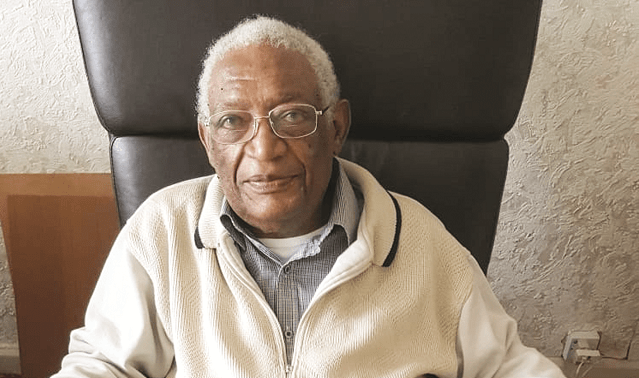

WHEN political writers and historians write about the Zapu internal strife in 1971 that saw the party splitting, resulting in then Vice-President, the late James Dambaza Chikerema, forming Frolizi, a lot of attention is on the political side, ignoring the military side of things.
The birth of the March 11th Movement of 1971 that saw some combatants trying to wrestle control of Zapu is consigned to the periphery although it is a very important piece of history of the country’s liberation struggle. In a book titled, A Cradle of the Revolution: Voices from Inyathi High School edited by Pathisa Nyathi and Marieke Clarke, the leader of the ill-fated March 11th Movement, Walter Mthimkhulu, a journalist who went on to join the armed struggle gives an account of what they meant to achieve. Other actors in that Movement such as former Matabeleland North and South Provincial Administrator, Cde Zwelibanzi Mzilethi and Cde Joshua Mahlathini Mpofu also gave their own accounts in the book.
Below are excerpts of Cde Mthimkhulu’s account, who unfortunately passed on, on 7 July this year at Hull in the United Kingdom where he was based. Below are excerpts of the account of the Soviet-trained guerilla captured in the book:
In Zambia I was friends with other Zapu members: Joshua Mahlathini Mpofu, Rex Nhongo (late General Solomon Mujuru), Livingstone Mashengele (late Matabeleland North Provincial Administrator) and Cain Mathema. In fact Livingstone Mashengele’s family and that of my mother lived close to each other near Gwelo (now Gweru).
Zapu Leadership: When I got back from the USA, I wanted to be fit to be a guerilla, as I had always wanted to fight, and I joined a karate club. I got to Lusaka in December 1967. The Zapu leadership made no attempt to use people’s skills. Exactly a month after I reached Lusaka, I was told, “there’s a mission”. But I was completely untrained: I had never even handled a gun.
I was taken to E Camp on a supply mission to provide ammunition to men at a Zapu camp near Karoi. In the month before I went to Karoi, Halimana Ndlovu at E Camp showed me how to handle an AK. That was the start of my military training. We left the ammunition at Karoi with no incident.
As I said before, no attempt was made to use people’s skills. Colleagues and I who had been in the USA had had four years of Maths and Science. But when we arrived in Lusaka, we were given teaching in those subjects by someone who did not even have Junior Certificate. Another time, just after I returned from the USA, a Zambian army group headed by a white major came to our camp. Most men hid following orders, but a few of us remained as spokesmen and got arrested and jailed for 10 days. (In this group was one woman, Thoko, dressed like a man). The Zambians did not realise she was female. She spent the night with us in the jail. Chikerema got us released.
While I was in the USA, a big group of activists from Rhodesia (including Dumiso Dabengwa, while Matric and Akim Ndlovu, who perhaps did not even have secondary education,) was sent to the USSR, mostly in different military fields. Phelekezela Mphoko took the top military position. No one, absolutely no one else who had been overseas for training was given the opportunity to use that training in the struggle. Some colleagues were sent across the Zambezi at Livingstone. It certainly did happen, (as Joshua M Mpofu writes in his book: MFC), that colleagues crossed the Zambezi and, as soon as they reached the south bank, were caught by the Rhodesians. So the ordinary soldiers started changing the plans they were given, because they did not trust their briefing from Lusaka. The belief developed that there was a spy or spies, possibly a double agent, informing both Zapu and Rhodesians.
Another very concerning development was as follows. Military parades were held before a group, led by Philemon Mabuza, from DK Camp, crossed the Zambezi. The Mabuza Group were arguing with Dumiso Dabengwa, asking who made them do the military parades. Dabengwa and Akim Ndlovu ordered photos to be taken. Shortly after the Mabuza Group crossed the river, there were several encounters with the enemy, leading to our men going to Botswana. The biggest surprise was that in Botswana they found the very same photos that had recently been taken at DK Camp. Our colleagues wanted to know: Who else had been shown their pictures? Distrust with Zapu’s leadership grew.
A useful year in the Soviet Union
Ten of us were sent to the USSR to major in communications for one full year. We left Zambia in about January 1968 and returned around December 1968. Joshua Mahlathini Mpofu was commander of the group and I was deputy. The Soviets behaved as if I were the commander; Joshua seemed happy that all the problems were lifted from his shoulders onto mine.
When we returned to Lusaka after the year in the USSR, J Z Moyo and Chikerema sent our communications group to work out of Peter Mackay’s private’s house. After a while we went to a new camp to join up with a group who had been trained in intelligence. The Zapu top office appointed me commander. Meanwhile, there was in-fighting: you had George Nyandoro and James Chikerema versus Jason Moyo, George Silundika and Edward Ndlovu.
I had been sent to all the Zapu camps, including the two big ones, DK and East, to set up the communications. The two big camps were at good crossing points of the Zambezi River. In about 1969, we left someone in each camp to manage communications. We then went back to Peter Mckay’s house in Lusaka, where we were based. It was a very isolated house in the suburbs, so there were no nosy neighbours.
The birth of the March 11th Movement, 1971
In 1969, we were reassigned to go to a camp where we were mixed up with the intelligence experts. Then the idea of the March 11th Movement developed. There was a split between J. Z Moyo (Zapu treasurer) and James Chikerema, on the other hand, and George Silundika and his group. Chikerema was Vice-President and top of Zapu after Nkomo: Chikerema was assigned by Zapu to take responsibility for the military. Chikerema and Moyo excluded George Silundika and other executive members from any knowledge of the military.
Moyo’s group was responsible for providing food to certain camps. Chikerema had to supply others. There was a tendency for Moyo to supply Ndebele camps and Chikerema to supply Shona camps. Those of us who came to found the March 11th Movement found this unacceptable. In the camp that I commanded, the Stompie Camp, which was a small one, I refused to give loyalty to either Moyo or to Chikerema. I said, “We’ve got Shona and Ndebele men in my camp and we’ll take food from either of you.”
Those of us who came to belong to the March 11th Movement thought about this issue and I started to write a plan about the situation. I decided we should arrest J Z Moyo and Chikerema and their main followers, Dumiso Dabengwa and Akim Ndlovu and their immediate followers.
I called a meeting of about 20 people at my camp. They comprised most of the people in the camp including Joshua Mhlathini Mpofu who was now my deputy: he and I worked very well together. I started seeing Zambian government people, usually with J M Mpofu. We wanted to see if the Zambian government would agree with their plan. The Zambian authorities were in fact very supportive to us: they were upset to see there were “two organisations” within Zapu speaking different languages and not talking to each other.
My mission was to try to communicate with all the bigger camps. We sent messages to various camps and got very positive feedback. A strong united group led by Philemon Mabuza had spent some months inside Zimbabwe, travelled to Botswana and then returned to Zambia. The Mabuza group joined my group and we moved to F Camp near Lusaka.
Now formally we agreed on action to arrest J Z Moyo, Chikerema and all the people in the Zapu High Command: Akim Ndlovu, the commander, Dumiso Dabengwa, in charge of intelligence, Robson Manyika, chief of staff, Phelekezela Mphoko (logistics). I had recruited Mphoko, when he was working in my father’s shop. The plan was agreed. I resigned my military command so we could correct a political situation. But I was re-instated as commander. I had drawn up a plan to arrest these men.
More people came to F Camp, attracted by what was going on there. I was seeing J Z Moyo and Chikerema but their group had no counter strategy. We asked Chikerema, who badly wanted armaments, for transport to fetch heavy weapons from the armouries that Moyo controlled. These weapons were hidden in very difficult country near the Zambezi River.
Former Inyathi student J Zwelibanzi Mzilethi was a weapons expert. He had been trained in arms, explosives etecetera, in the USSR, so we leaders of F Camp involved Mzilethi in collecting these weapons. In our group we had people from Mphoko’s Logistics group who had actually stored the weapons. These weapons were hidden unguarded, because apparently the Logistics people thought it was too risky to have the weapons guarded.
So we used Mzilethi’s skills and went to armouries. Mzilethi knew exactly how to check that they were not booby-trapped and we took the weapons. We filled my Land Rover and put some rather useless stuff in Chikerema’s lorry. The Land Rover had explosives in it. We travelled back towards F Camp, but the Land Rover I was driving turned over when the brakes failed going downhill. The lorry was in front of us and stopped in the middle of the road. My Land Rover then ran into the lorry.
Very fortunately, nothing exploded. All the weapons were put into the lorry. We poured petrol over the Land Rover so that Mphoko’s Logistics people would not find out how their weapons had disappeared.
We took the injured man to Lusaka for medical care. I stayed with him and made up a story about how he had been hurt. As I was admitting him to hospital, Dumiso and J Z Moyo turned up for some routine medical problem. They actually carried the injured man into the hospital, not seeing me. I then went to the Zapu office and encountered Dumiso and Moyo, who told me:
“One of your boys is seriously hurt,” and gave me a Land Rover to go and see him in hospital, which I did. I had grown up in Mpopoma (Bulawayo) with Dumiso and we had always been good friends.
The March 11th Movement in Action
We told the Zambian government that we were angry and frustrated with our leaders, but we did not tell the Zambians what our plans were. We planned in the camps and got our troops — about 40 people into Lusaka travelling in small groups.
Jabulani Mazula was in charge. Originally we wanted to arrest J Z Moyo, Chikerema, Nyandoro, Dumiso Dabengwa and Akim Ndlovu in their offices. But we decided to wait for them in the residential area where all the leaders stayed. There was only one entrance, Cain Mathema positioned himself near the gate to make things look normal. Dumiso Dabengwa arrived and stayed outside the gate. He sensed that something was wrong. He tried to run and got beaten.
Unfortunately Chikerema and Nyandoro hardly came to Zimbabwe House, and that’s why I thought that the attack should happen at the offices. Edward Ndlovu was elsewhere, too, and someone warned him. But my colleagues changed the plans without consulting me. Unfortunately one man escaped. We confiscated the leaders’ transport and drove them straight to F Camp.
The following morning, Nyandoro walked into the office and was arrested. He fought hard but was also taken to F Camp. Now we published the arrests. Every Zambian newspaper had my name as leader of the group. The Zambian government had to be involved. Chikerema went straight to the police who decided to come to F Camp with him and a frightening number of armed jeeps. Our people spotted them, and sent a message that the police were coming. I ordered the police commissioner to be stopped at the gate and found he was with Chikerema. We were very well armed and even had anti-aircraft guns.
Our commanders, including myself, Joshua M Mpofu, came out of our camp and walked between the bushes towards the sentries. There we saw the police commissioner with Chikerema. I opened the conversation and said to the police commissioner, “Thank you for bringing Mr Chikerema to us.” The police commissioner then said: “No, he wants to talk, not to be taken in. This is Zambia, you can see we have arms and we will not allow you to take him.”
At my signal, the men all appeared from the bushes fully armed, so the police commissioner was tongue-tied. I took Chikerema’s hand and took him into the camp and I shoved him in with the other leaders. Our group wanted one or two other people, for instance Stephen Parirenyatwa, the Zapu representative in Lusaka, brother of the late doctor. Stephen Parirenyatwa was a leading Chikerema supporter.
To be Continued next week
n Continued from last week
We took them one at a time to bath in the river, where we all washed. The commissioner drove away. I continued to visit the Zambian officials to keep them informed. I met Aaron Milner, for example, who was very helpful. We had treated our prisoners quite well.
Finally the Zambian government decided that Milner would come to our camp to discuss things. He came and we sat down and we told him that we wanted to have a conference involving the ZPRA comrades from other camps in Zambia, and that the big group under Ambrose Mutinhiri in Morogoro in Tanzania should be brought in. Milner agreed and talked to the Zambian Cabinet. But they insisted that the Zambians should take all of us to a neutral place and that we must leave our arms at F Camp. We agreed and were taken to a very remote game reserve area at Mboroma.
The Meeting at Mboroma
About 100 of us were at Mboroma waiting with a group of 10 to 20 pro-Chikerema and J.Z. Moyo supporters. But no combatants were brought from other camps. Milner flew in. We discussed the conference and he chaired. The leaders gave their views. Chikerema and J.Z. Moyo walked hand in hand to the podium and said, “We are all brothers. We were chosen by Joshua Nkomo and only Nkomo can remove us.” Everybody put their views. On the final day I had my chance, as the group had agreed in advance. As Philemon Mabuza should have been the chair of the March 11th Committee, he should have spoken, but I was asked to continue.
I made 18 points. As we had only the one copy of the paper, and the Zambians took this, we can only recall by memory. But Joshua M. Mpofu did his best to record what I said. Below are the summarised points: 1. Five Zapu National Executive members in exile accused and counter -accused each other in public in February and March 1970. 2. The Five admitted that there was no strategy to fight the Rhodesia Front Regime. All the Five wanted to do was to run a sabotage campaign to frighten the regime into accepting negotiations about majority rule. 3. The leaders gave no thought to how the fighters and ordinary members of Zapu would react to this policy. 4. The leaders treated Zapu like a private company that had gone bankrupt. 5. The leaders made it clear that they were retreating to tribal enclaves. 6. The leaders behaved like antiquated village chiefs and produced no analysis of the military forces in the country. 7. The fallout was the result of the leaders’ inability to find a new strategy. 8. So a quarrel developed between them. 9. They used freedom fighters like automatons, not making clear whether the freedom fighters were supposed to be guerrillas or saboteurs. 10. The leaders did not spell out their main goal and fundamental objectives as (for instance) the African National Congress of South Africa had done through the Freedom Charter. 11. Fighters considered that the time had come to recognise a guerrilla as a politically motivated fighter. 12. A political programme of national liberation should be based on the premise that liberation was a revolutionary process focusing on the attainment of freedom and social justice in a liberation society. 13. A guerrilla is an angry citizen whose anger is instigated by the injustice of a repressive system of governance in his or her country. 14. A guerrilla is a self-developed politician who volunteers to fight. 15. A guerrilla cannot be treated like a conventional soldier who is expected to follow orders from above. 16. Our leaders failed to understand that our freedom struggle had developed from a civilian-driven struggle for majority rule to a revolutionary process. 17. As the leaders were in disagreement, they could not lead the freedom fighters; the leaders’ tribalism disqualified them from leading a revolution.
18. We propose that all five members of the National Executive Committee in exile should be suspended from leadership of the struggle or until a Zapu elective congress was held.
Milner’s demeanour changed that day. I knew something was terribly wrong. I called for a vote. Aaron Milner said, “There’s going to be no vote. These are the leaders appointed by Joshua Nkomo and they are going to continue to be your leaders.” He seized my paper with my 18 points and kept it. Milner said: “Who supports Walter Mthimkhulu? Go to the left.” He then said: “Who support Joshua Nkomo and President Kaunda? Go to the right.” The vast majority came to the “Walter Mthimkhulu” side. Milner got his security people to arrest us, but there were too many of us. A list of “ringleaders” was given to Milner. We were put into trucks and taken to another camp which we called The Fridge. It was freezing cold at night. The Zambian government called it the Walter Mthimkhulu Camp. We sent messages to Mboroma to tell the others where we were and that we were safe. The messengers returned to us at Milima.
Many men perhaps 40 walked away from Mboroma to the Fridge to be with us. That left about 60 men at the Mboroma. A few of the 60 eventually followed Jason Moyo and Chikerema. Some quite influential people were left in Mboroma: they did not go over to Moyo and Chikerema. Some men at Mboroma who refused to join Moyo and Chikerema were sent to Livingstone and handed naked to the Rhodesian with the message “These are the Rhodesian spies”. Some of the group who had been sent to Livingstone were still imprisoned when I returned in 1978. I fought for their release. A few others from Mboroma who refused to cooperate with Moyo and Chikerama were sent to prison in Eastern Zambia. Eli Mthethwa fought very well as the leader of that group and got the United Nations to bring a court against the Zambian government: this was unsuccessful.
We stayed at the Fridge. The Zambian government took us from the Fridge to prison: a lot of us were taken to Milima Prison, which was an open prison between the Democratic Republic of the Congo and Tanzania. Conditions were quite comfortable: we could play football, for example. Later we were transferred to Livingstone. While we were in Milima, Peter Mackay came and asked to see me and Cain Mathema. Cain, as one of our communications men, had often stayed in Peter’s house. Peter was very upset at what had happened to us. He said that he was going to London and asked if there was anything he could do.
I briefed him, saying that I thought our chances of getting out soon were very slim: there was no court and we were prisoners at President Kaunda’s pleasure. I said to Peter :”Please do what you can to raise awareness of our situation. The world should know”. We arranged a means of communication. Jacob Moyo was Peter Mackay’s contact person and got him to be in touch with me, as Mackay and I were already in contact.
Then one man escaped ,also called Jacob Moyo .The Zambians moved us to be with convicted prisoners, which made it harder for us to escape. The Zambians took away our shoes. I refused to give up my shoes and two of us were put in solitary confinement. We had no blankets, nothing. After we had been in solitary confinement for some time, some friendly security guards came at night and brought us blankets and then took them away in the morning. The guards knew us because we had been in the same location for some time. I was in solitary confinement for eleven days: that is a very long time. When we returned to the original place, we still had our shoes. The chance of escape had now passed.
At Milima, there was a big garden which flourished under the expert care of Livingstone Mashengele. We sold food to the wardens. The escapee, Jacob Moyo, who was a very big strong man, was brought back after three weeks, at liberty. He had become very thin. We were then brought back to high security conditions at Livingstone. Some of us were beaten up badly, for no reason, by some of the wardens as we arrived. But Catholic priests came every Sunday to pray with us and talk to us. They took letters for us and received letters for us. We communicated with Peter Mackay, for instance, and Jacob Moyo who was in Britain.
Nathan Shamuyarira came to see me, but nobody came from Zapu. Nathan was very helpful: he brought us books so some of our colleagues in jail got their O levels: Cain Mathema was one of them. Gerson Phangwana, an ex- Inyathi student, was head of the school. Nathan also went to see the UN Refugee Council in Lusaka. Finally someone from the Refugee Council came to see us and tried to get us support so that the UN could pay our travel costs. Finally the UK government agreed to take us all: but the Zambian government treated us all as prisoners until we got on the plane. The colleagues who has been imprisoned in Eastern Zambia were released at the same time and taken to the airport.
Ends
Clrd


 derick.khumalo