Online Reporter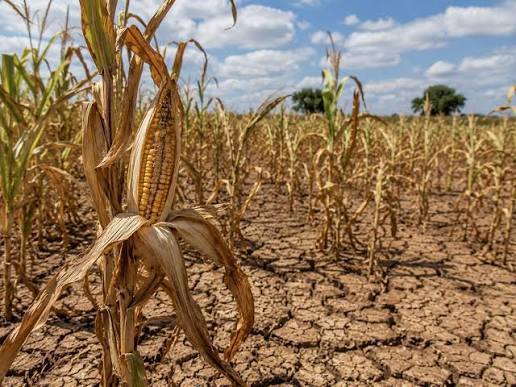
Stephen Mpofu
Weather experts have forecast a dry rainfall season for 2026-2027 in Zimbabwe, as well as in other countries in the southern region.
This compels governments, together with civil societies in the affected countries, to take measures that minimize, rather than complement and aggravate, the effects of El Niño and, with that, the suffering of human beings and wildlife.
In our beloved country, Zimbabwe, for instance, the Government might wish to compel industries to modify factory and coal mine chimneys which pump smoke containing carbon gases into the atmosphere. This is along with veld fires, some of which are lit by people who hunt with fire.
The smoke from the sources mentioned above combines in the higher atmosphere with the carbon gases it contains, corroding ozone — the layer that protects the Earth from the dangerous rays of the sun.
This causes droughts, as has already been experienced in the eastern parts of Zimbabwe, with floods destroying homes and crops.
What the above suggests is that massive education campaigns on the destructive effects of some of our human actions — no doubt taken out of ignorance — must be conducted across the country to minimize the effects of drought on people as well as on livestock.
If, for instance, a person is made aware that he or she endangers their own life through unorthodox behaviour, chances are that knowledge and safe behaviour will prevail.
This suggests that extensive education campaigns on the above should be conducted without delay across our country, with Members of Parliament and traditional leaders in the forefront.
Right now, villagers in the Midlands Province, for instance, have lost livestock to January disease as well as to the foot-and-mouth scourge, reportedly due to a lack of dipping chemicals.
The animals are sources of draught power, meat, milk, as well as income for villagers.
No explanation has been given as to why animal dipping, which was regular in the past, has now become a rare occurrence, with villagers who have money having to import dipping chemicals from South Africa for spraying and saving their surviving livestock.
This means that, El Niño or not, some villagers will continue to suffer hunger after losing their livestock to diseases and for lack of draught power, compelling the Government to spend a lot of money on imports of food which could be grown locally.
Meanwhile, rural constituency Members of Parliament should advise their constituents not to fritter away their grain on beer binges in light of possible food shortages as a result of El Niño, with alluvial gold panners being prevented from silting water sources as El Niño looms ahead of us.
Deforestation for wood to sell as charcoal in urban areas should be forbidden as trees absorb and sink carbon gases.