malvernmugadzikwa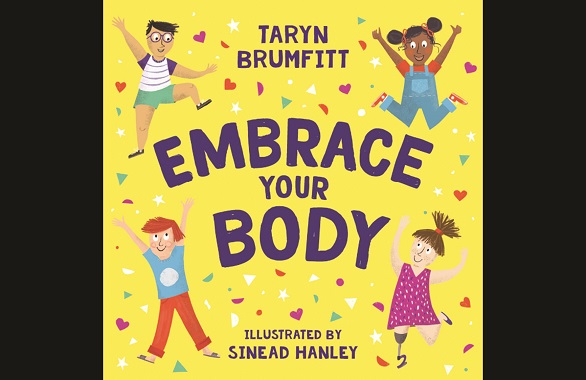
Disability Issues
Dr Christine Peta
IN this article, I pay attention to the politics of the human body. We will particularly focus on bodies of women with disabilities.
Bodily differences and restrictions in role effectiveness often frame the central experiences of disability.
However, appearance is the most common feature that results in social exclusion, and more so for women with disabilities.
As such, from a visual perspective, bodies whose appearances are perceived as being different from the “norm” are usually classified as “abnormal” and often targeted for intense discrimination.
Such bodies are described as being ugly, deformed, fat, outrageous, ambiguous, uneven, or marked by blemishes or so-called birthmarks that are not desirable. As a result, medical surgeries are often undertaken in a bid to “discipline” such bodies. They are reframed and “normalised” in accordance with what we regard as the main order. Most of such surgeries often take the form of aesthetic procedures, such as extending legs or arms of people, including those of women who are of short stature, removing what we regard as blemishes, enlarging breasts, enlarging the back, lifting faces and stapling stomachs.
Although some corrective operations may assist in sustaining untenable lives such as in the case of open-heart valves, it is not uncommon that such operations may result in more harm than “normalcy”.
Regardless of whether surgical procedures are done under the banner of reconstruction or cosmetology, such practices resemble vicious attempts to minimise human differences and a high level of intolerance of bodily differences.
Research has indicated that it is not uncommon for men to compete, at times violently, for women. However, women themselves can compete with each other and treat each other with disrespect, to the extent that within the context of the politics of the body, some non-disabled women may regard women with disabilities as substandard beings.
This is so because, from the day they are born, women are often taught to compete with each other to capture the attention of men, thus, ironically, awarding additional mileage to patriarchy. The dismal performance of women in respecting one another has been attributed to early competitive training fostered by parents, neighbours, teachers, bus drivers and by entire cultural economies that are devoted to perpetuating a scenario where women are commodified, where they are hangers-on and are not privileged participants.
Competition among women, which is grounded on bodily appearance, upholds feminine seats in structures of patriarchy. The risk is that such structures may remain unaltered by the presence of women, who, through their own practices and behaviours, sustain contexts in which they are perpetual subordinates. It is, therefore, not surprising that despite its quest to end all forms of oppression against women, feminism has been criticised for failing to incorporate the concerns of women with disabilities in theory, methodology, research and politics.
By viewing disability and women as two disconnected and conflicting entities, feminism has remained unconscious of the experiences of women with disabilities, including those that relate to the politics of their bodies.
While increasing their efforts to intensify women’s emancipation in a predominantly patriarchal society, leading African non-disabled feminists have not said much about disability.
Compared to their non-disabled counterparts, women with disabilities have generally been regarded as sub-standard, deficient, excessive, incompetent, unhealthy and useless. Furthermore, and contrary to normative feminine perspectives, women with disabilities are mythically considered asexual, unattractive and unbefitting as parents. It is, therefore, not surprising that within certain African contexts, some women may actually be leaders of practices that marginalise or reject women with disabilities who may want to marry their non-disabled male family members.
This is because some wrongly feel the bodies of women with disabilities are “deformed” and are, thus, of lesser value than those of other women.
However, in Zimbabwe, a positive identity politics for women with disabilities is promising. The National Disability Policy (2021) has a section that is dedicated to the subject of women with disabilities, as well as additional sections that address issues of sexuality, violence and abuse that is perpetrated against women with disabilities.
This seeks to address various challenges experienced by women with disabilities, including those that relate to the politics of the body.
Women have the potential to usher in a new era of a social background in which both non-disabled women and those with disabilities can be empowered. If women are to make significant progress that goes beyond just changing one or two professions, unity becomes a non-negotiable value.
As we move towards inclusion from exclusion, we should all learn to embrace different bodies, instead of seeking to reject or eradicate some of them.
I, therefore, call upon women to not only respect themselves but to also respect other women, regardless of disability, culture, age and religion. There should be a spirit of unity and sisterhood. Ultimately, a critical analysis of the whole gender system with focus on the politics of the human body is required.
Dr Christine Peta is a disability, policy, international development and research expert. She is the national director of disability affairs in Zimbabwe. She can be contacted on: [email protected]


 Online Reporter