Chronicle Editor
Father Hlakanipha Mbongolwane
The ritual of baptism is the privilege for every Christian. It is the indelible mark that differentiates Christians and gives them obligation. Go out to the whole world was the last instruction of Jesus Christ to make disciples of all nations, baptising them in the name of the Father, Son and Holy Spirit. (Mt 28:19-20).
This is a call to live authentic lives, so that from the moment of baptism one explores the infinite number of possibilities one can become.
However, desperate to maintain the illusion of being in control of their lives, many modern Christians have either turned their backs on God or created a new spiritual rhetoric that allows them to determine selectively God’s will for their lives.
It has been claimed that religion asks too little of people. It is too ready to offer comfort and console, but has lost the courage to challenge. Religion has just become religion, so respectable that its acceptance involves neither risk nor strain.
Religion is thus reduced to a crutch, something to lean on in times of weakness and sadness. But in times of wellbeing we forget about it.
There is a religion of devotion, and a religion of commitment. A religion of devotion is a religion of comfort, and is often centred on self rather than on others.
There is also a misconception about Christianity. Some believe that to be Christian you have to run away from the world. They think that to be Christian you have to despise everything of this world and walk around with a long drawn – out, stoic look on your face. These are all unnatural and unattractive ideas that the world proclaims about Christianity.
Contrary to such popular opinions, Christianity brings us to life. It refines every human ability. Christianity does not dampen our emotions; it elevates them. Christianity is thus, a religion of commitment. It is a religion of challenge, of risk, of unselfishness. Being a Christian is serious business. Religion should challenge and stretch one to one’s limit and beyond, so that thereafter one has new standards to judge oneself.
Mere existence is not enough for Christians. We are meant to live. It is well known fact that those who have lived fully and intensely don’t feel cheated at death. As Christians we have a very positive role to play in the world. We have something to offer, something the world desperately needs, even though it may not always welcome it. We should not be shy or apologetic about our role. Baptised and sent means that we are sent to practise our Christianity, not just in church but out in the world in whatever situation we happen to find ourselves.
Professionally some of us may work as teachers, doctors, lawyers, nurses, mechanics, bakers, and carpenters. Others may keep the home and dedicate the professional aspect of their lives to motherhood. Some may be politicians.
Christians should not shirk or dodge public office, but must see it as a chance to serve their fellow men and women and thereby God. The Pharisees opted out of real life and kept themselves apart. The result was a vain religiosity which had little or nothing to do with life.
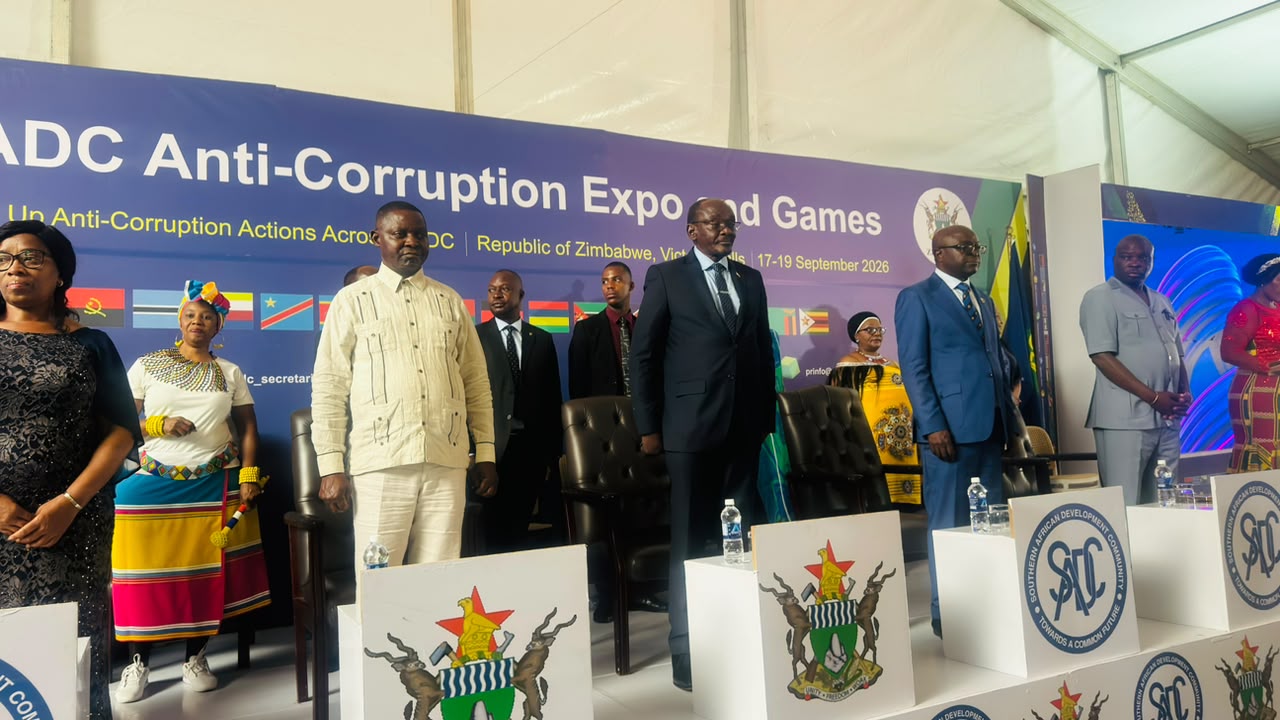
When Obedingwa Mguni (former MP for Mangwe) passed on sometime this year the whole country lost a great servant of development and peace. He was a rare person for whom public service was not simply a career or means of achieving power but a vocation, a way of being faithful to God. Politics plays a vital role in creating the kind of society in which we live.
What greater vocation is there than to assume responsibility for local, national and international affairs. To work for peace, development and justice in the world, for the betterment of human life for all. No life is more satisfactory than that of selfless service to your country or humanity.
Gandhi is another example of a deeply religious man who involved himself in politics. He said, “I am in politics because I cannot separate life from belief; because I believe in God, I have to enter politics. Politics is my service to God.”
Christ did not choose a way of ease or evasion; he chose the way of self-sacrifice and suffering. It wasn’t that He was in love with suffering. No.
It was because He chose the way of love. And love inevitably results in suffering. When Mother Theresa was still alive, there were young ladies who came seeking to join her.
She didn’t mince her words “Our job is difficult, we work and pray 24 hours a day.”
If you lower the standard for Christian life whatever your area of influence you don’t make it easier for people – you make it harder. You don’t bring them happiness; you start them along the road toward hopelessness and misery.
People excel, thrive, and are ultimately happier when they have higher standards to look up to. This was Michelangelo’s observation “the great danger for most of us is not that our aim is very high and we miss it, but that it is very low and we reach it.”
Christianity is a very practical and social religion. It is not a matter of God and me but of God, Me and others. There is hunger in the world for Christ of the gospels. Concern for people, charity towards the poor, the weak and those who suffer is most appealing. The generosity underlying this attitude and these actions stands in contrast to human selfishness. All Christians are therefore baptised and sent.
An extract from the inaugural speech of Nelson Mandela is worth thinking about, “Our greatest fear is not that we are inadequate, but that we are powerful beyond measure. It is our light not darkness that most frightens us. We ask ourselves “who am I to be brilliant, gorgeous, talented and fabulous? Actually, who are you not to be?”
You are a child of God. Your playing small does not serve the world. There is nothing enlightened about shrinking so that other people won’t feel insecure around you.
We are born to make manifest the glory of God that is within us. It’s not just in some of us; it’s in everyone. And as we let our light shine, we unconsciously give other people permission to do the same. As we are liberated from our own fear, our presence automatically liberates others.
– Father Hlakanipha Mbongolwane is a Catholic priest in the Archdiocese of Bulawayo based in Brunapeg mission. He writes in his personal capacity and the views expressed in this article are not necessarily the official views of the Archdiocese of Bulawayo nor the Catholic Church in Zimbabwe.



 Online Reporter