Online Reporter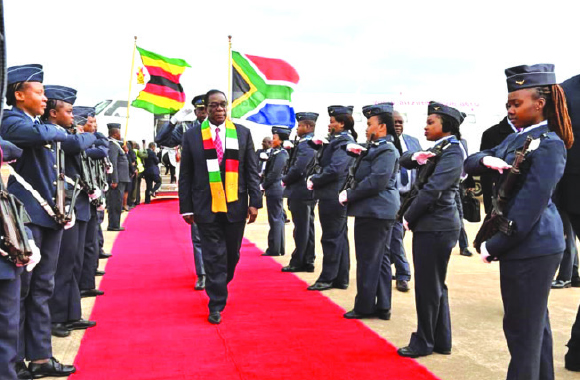
Nduduzo Tshuma in JOHANNESBURG, South Africa
PRESIDENT MNANGAGWA joins fellow leaders at the Liberation Movements Summit today for strategic deliberations to confront growing threats to the parties’ continued relevance and survival amid shifting global and regional dynamics.
The three-day summit, which began on Friday and enters its final and most crucial phase today, brings together six Southern African liberation movements — the ANC (South Africa), which is also chair and host); ZANU PF (Zimbabwe); MPLA (Angola); SWAPO (Namibia); FRELIMO (Mozambique) and CCM (Tanzania).
They have been joined by parties from the region and beyond, as well as key institutions like The Museum of African Liberation.
The indaba is running under the theme “Defending the Liberation Gains, Advancing Integrated Socio-Economic Development, Strengthening Solidarity for a Better Africa”.
Leaders of the liberation movements have convened to reassert their collective vision and craft strategies to navigate an increasingly hostile environment.
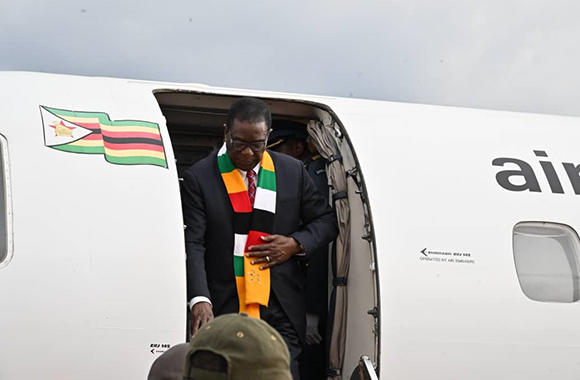
President Mnangagwa arrives at Waterkloof Air Base, in Pretoria, South Africa. He was received by Bejani Chauke, ANC National Executive member and Zimbabwe Ambassador to South Africa David Hamadziripi.- Picture: Presidential Photographer Joseph Nyadzayo.
A departure from previous events where secretary-generals represented the movements, the presence of leaders of respective movements will add weight to the summit and its resolutions.
President Mnangagwa, who arrived yesterday, was received at Waterkloof Air Force Base by African National Congress National Executive Council member Cde Bejani Chauke, Zimbabwe Ambassador to South Africa David Hamadziripi and ZANU-PF Secretary for External Affairs Cde Simbarashe Mumbengegwi, among other senior officials.
Changed environment
Speaking to the media before the President’s departure from Harare, Deputy Chief Secretary in the Office of the President and Cabinet (Presidential Communications) Mr George Charamba said the summit brings together heads of revolutionary parties from across the region to reflect on the shifting political landscape and strategise for the future.
“This is actually a convocation of liberation movements in the Southern African region, and, as such, it is a back-to-basics, a back-to-roots come together of liberation movements. We are in an environment which is completely and radically changed,” he said.
“Geo-politically, you see what is happening across the world; there are major power shifts. Within our region, we have seen the growth of very negative forces which seek to undermine, if not overthrow, liberation movements.
“I can make reference to an organisation, which has just folded up — and hallelujah it did! — the Brenthurst Foundation, which has been working quite assiduously to try and overturn liberation movements and liberation governments in quite a number of countries; yes, succeeding partially here and there but thankfully failing elsewhere.”
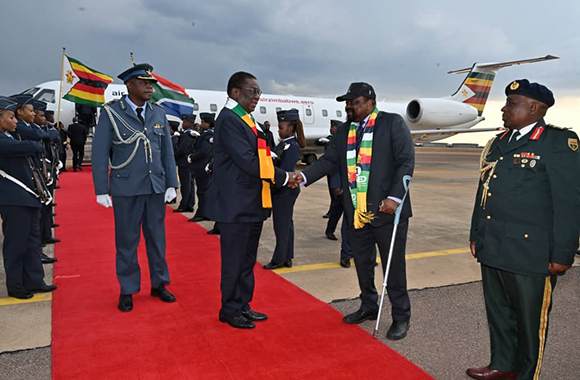
President Mnangagwa arrives at Waterkloof Air Base, in Pretoria, South Africa. He was received by Bejani Chauke, ANC National Executive member and Zimbabwe Ambassador to South Africa David Hamadziripi.
Picture: Presidential Photographer Joseph Nyadzayo.
Such developments, Mr Charamba said, define the new environment within which liberation movements have to seek, obtain and exercise power as governing institutions.
“When you have such major seismic shifts within the global and regional context, it means the liberation movements must get together and take stock of the environment, otherwise their survivability is in question.
“This is exactly why the President is going down south. It is to try and confer, share notes with his counterparts so we can see how we can strategise against changing times.”
“Under threat”
ZANU PF Secretary-General Dr Obert Mpofu and heads of party leagues arrived here on Friday and engaged in deliberations with sister parties up to yesterday.
The engagements build to pre-summit deliberations by the movements on a number of critical issues, with their findings to be presented at the indaba.
In an interview on Friday evening, Dr Mpofu said the summit comes at an important time in the region and beyond because of various geopolitical developments.
“The issues have to do with the regional integration, especially the political situation within the region following the elections that we had recently. And I feel this meeting will also unravel some of the issues that have been dealt with in the past year or so, which seek to divide the region,” said Dr Mpofu.
He said the fact that most Heads of State will be attending the summit shows the seriousness of leaders in tackling threats against the region.
“The region is under threat, as you are aware, from our detractors. When the elections in Mozambique took place, there were some serious issues in an attempt to destabilise the country. The same applied to some countries within the region that had gone through the elections. This meeting is likely to bring together the strategies that the region has to come up with to ensure that we are not divided, to ensure that we are united in our resolve to deal with those that detract from us …
“It is an important meeting in that we have been meeting as secretary-generals, but because of the challenges that we have been facing, the issues that need urgent attention, we called for a summit and it will have to guide us on what next, on how we should progress with the organisation.”
Meanwhile, former Mozambican President Joaquim Chissano was on Friday night honoured for his outstanding leadership and immense contribution to Africa’s liberation.
He received an honorary portrait following his keynote address at the dinner, which ran under the sub-theme “Wisdom of the Ages”.
Dr Obert Mpofu led the Zimbabwean delegation at the dinner, which also marked the official opening of the summit.
In his speech, President Chissano reminded delegates of the sacrifices that shaped the region’s shared journey to independence and development.
In his keynote address, ANC Deputy President Cde Paul Mashatile urged delegates to reflect deeply on the responsibilities of liberation movements in the present era.
ANC Secretary-General Cde Fikile Mbalula echoed similar sentiments, stressing the importance of unity, ideological clarity and collective action in defending the hard-won gains of liberation.