malvernmugadzikwa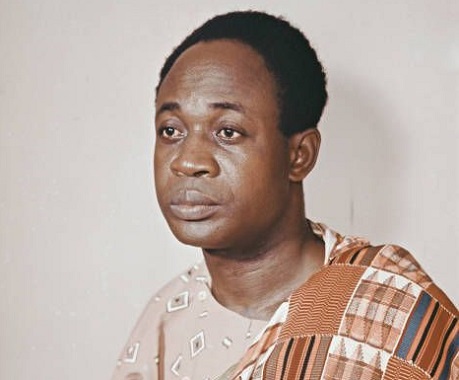
Zimpapers Politics Hub
Gibson Nyikadzino
IMAGINE finding a street named Adolf Hitler in Tel Aviv, Israel.
This is unfathomable for political, social, historical and civilisational reasons.
Israelis loathe Hitler for orchestrating the killing of millions of Jews during his reign as leader of Germany from 1933 to 1945.
To remind people of the evils that Hitler committed against Jews in 1953, Israeli leaders built the Yad Vashem, a memorial to the victims of the Holocaust.
Historically and contemporarily, nations set up commemoration centres and historical monuments of war to substantiate particular understandings of the past and identify critical turning points in their journey.
To understand and promote Africa’s political, economic, social and historical reconstruction, Zimbabwe’s Museum of African Liberation, a project to support Africa’s post-colonial renaissance and consciousness, is in motion.
Memorials like the Museum of African Liberation, or the Liberation City, are significant because they offer insights into how national and continental cultural values conceive modern political trajectories.
Through memorialisation, Zimbabwe, on behalf of Africa, is striving to build a future that values peace over war and ensuring that the memories of the fallen and the living are internalised to become part of our people.
This has become essential to remove the cloak of both colonialism and neo-colonialism in how Africans view their history and want to shape their future.
As such, this process is useful in fulfilling the desire to honour African heroes who suffered or died during wars of independence.
It also honours the memory of those who helped fight colonialism through political, military, logistical and ideological support.
Countries like China and Russia helped Africa defeat the ideology of white supremacy.
The immortalisation of the efforts by countries that offered help, of leaders like Tanzania’s Julius Nyerere, Egypt’s Gamal Abdel Nasser, Guinea-Bissau’s Amilcar Cabral, Algeria’s Ben Bella and Ghana’s Kwame Nkrumah, is testament to Africa’s commitment to raising the memory of its liberators.
These leaders remained revolutionaries till the last days of their lives.
Across the continent and in classrooms, road names, books and music, they must be remembered.
The establishment of the Museum of African Liberation in Warren Park, Harare, is meant to pay tribute to all those who sacrificed their lives for the freedoms Africa enjoys today.
The flames of consciousness started by Africa’s forebears should not be dimmed in the name of modernity, universality and globalisation.
The light of Africa’s revolutionaries must never die, as long as their names do not die.
Therefore, in the context of yesterday’s 61st Africa Day commemorations, the Museum of African Liberation remains a powerful force essential to reclaiming the pride of Africa lost through deliberate distortion of narratives, misrepresentations and knowledge reproduction racially skewed to favour the West.
It is known that the common principle and imperialist characteristic of the West are to entrench its domination through distorting facts and perpetuating its systems.
Because traditionally Africa’s history has been passed from one generation to the other orally, this inspiring change of frame is drawing the continent towards an ideological or idealistic cultural expression of being the master of its destiny.
The decision to establish the Liberation City signals the beginning of extricating African people from an exploitative Western system.
The more Africans begin to realise that liberation and being free go beyond achieving political independence, but to making their social, cultural and economic progress, the more it becomes apparent that undertaking the goal to historicise our successes is a key framework that guides our total freedom.
Africa’s monuments matter.
They must not be thought of as silent objects or relics of history.
They are instruments that should activate and reward the people’s political consciousness. For long, the continent has been caricatured.
Now, the opportunity to recollect its memory and give it a place in the sun should not be missed.
In pursuit of Africa’s Agenda 2063 and the anticipated success of the African Continental Free Trade Area, it is imperative to use Africa’s monuments to ensure active and grounded engagements for continental growth.



 Online Reporter