admin
admin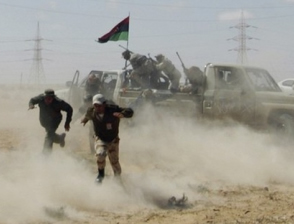
region yesterday, the rebels said as intense NATO-led strikes sent up plumes of smoke in Tripoli.
The latest flare-up in fighting came as US Defence Secretary Robert Gates warned the Western alliance’s air war on the Libyan Government forces could be in peril due to military shortcomings.
A day after Libya’s rebels won a cash boost and crucial recognition from key powers, a rebel said Muammar Gadaffi’s forces fired Grad rockets, heavy artillery and tank shells at Dafina, on the outskirts of the city of Misrata.
“Twenty people, both civilians and rebels, were killed and more than 80 wounded,” in the bombarded sector 35 kilometres (22 miles) from Misrata city centre, he said.
“The rebels succeeded in repelling an attack on this sector,” the rebel said, and spoke of “dead and wounded among the Gadaffi forces.”
Misrata, a lifeline port city some 200 kilometres (125 miles) east of Tripoli, is the rebels’ most significant enclave in western Libya.
Russian President Dmitry Medvedev’s special envoy Mikhail Margelov, meanwhile, said he was preparing to visit Tripoli to find a solution to the conflict after meeting the opposition in their Benghazi stronghold.
The surge of support for the rebels battling to oust Gadaffi came at a meeting on Thursday in Abu Dhabi of the International Contact Group on Libya, during which key powers agreed to unlock a billion dollars for their coffers.
At the meeting, the United States joined Australia and Spain in recognising the rebels National Transitional Council as the legitimate representative of the Libyan people, piling more pressure on Gadaffi to step down.
The Misrata bombardment came as two loud blasts were heard in the centre of the Libyan capital at about 3pm, coming from the eastern suburbs of Tajura and Ain Zara, residents told AFP.
Three powerful explosions shook the city centre at around midnight. Other more distant blasts follo- wed.
Tripoli has over the past two days been targeted by the most intense NATO air raids since the international military campaign was launched on March 19 under a UN mandate to protect Libyan civilians.
NATO, in a daily military update, said among the Tripoli targets attacked on Thursday were command and control facilities, an early warning radar and a surface-to-air missile launcher.
Alliance officials said that NATO has been scrambling warplanes against Gadaffi’s forces after Libyans commented on troop movements on websites like Twitter and Facebook, following verification by more traditional methods.
“We will take information from every source we can,” said British Wing Commander Mike Bracken, the Libya operation’s military spokesman. We get information from open sources on the Internet, we get Twitter.”
US Defence Secretary Gates warned however that military shortcomings among NATO members could jeopardise the air war in Libya.
With half of the countries in the 28-member alliance not participating in the Libya campaign, Gates said it reflected a worrisome lack of military assets.
“Frankly, many of those allies sitting on the sidelines do so not because they do not want to participate, but simply because they cannot. The military capabilities simply aren’t there,” Gates said in a speech.
However, Oslo, which has contributed six F-16 fighters, announced yesterday it will first reduce its participation before withdrawing from air operations on August 1.
Gates said many allies lacked intelligence and surveillance aircraft and specialists, which meant the US military had to step in to ensure allied warplanes could identify and strike targets.
“Furthermore, the mightiest military alliance in history is only 11 weeks into an operation against a poorly armed government in a sparsely populated country – yet many allies are beginning to run short of munitions, requiring the US, once more, to make up the difference,” he said.
Dutch Prime Minister Mark Rutte told journalists on Friday that his country supported a three-month extension of the NATO air campaign but its six F-16s would not fly bombing missions.
In Moscow, Margelov said he believed there remained “a window of opportunity to hold talks between conflicting sides.”
“I am now involved in preparations for a Tripoli trip,” he said after returning from a visit to Benghazi.
“We will be ready to offer some kind of contours of a ‘roadmap’ for settling the Libya conflict after my trip to Tripoli.
“The process of acknowledging positions and accumulating material is now continuing.”
Margelov said he could not give a specific date for his next visit as Russia was waiting for NATO to arrange a transport corridor so the visit could go ahead in full security. – AFP.



 Online Reporter