Arthur Marara
Point Blank
(Continued from last week)
- Carry the Burden So Others Don’t Have To
The royal family observes a small but telling tradition: any member travelling on official business must pack a black outfit. It is not written in any formal constitution. It is simply understood.
If a death occurs while they are abroad—whether a family member, a foreign dignitary, or a national figure—they must be ready to appear in public appropriately dressed, without scrambling, without drawing attention to their own unpreparedness.
The black outfit is a quiet acknowledgment that tragedy does not send a warning. When it arrives, those who represent an institution must already be equipped.
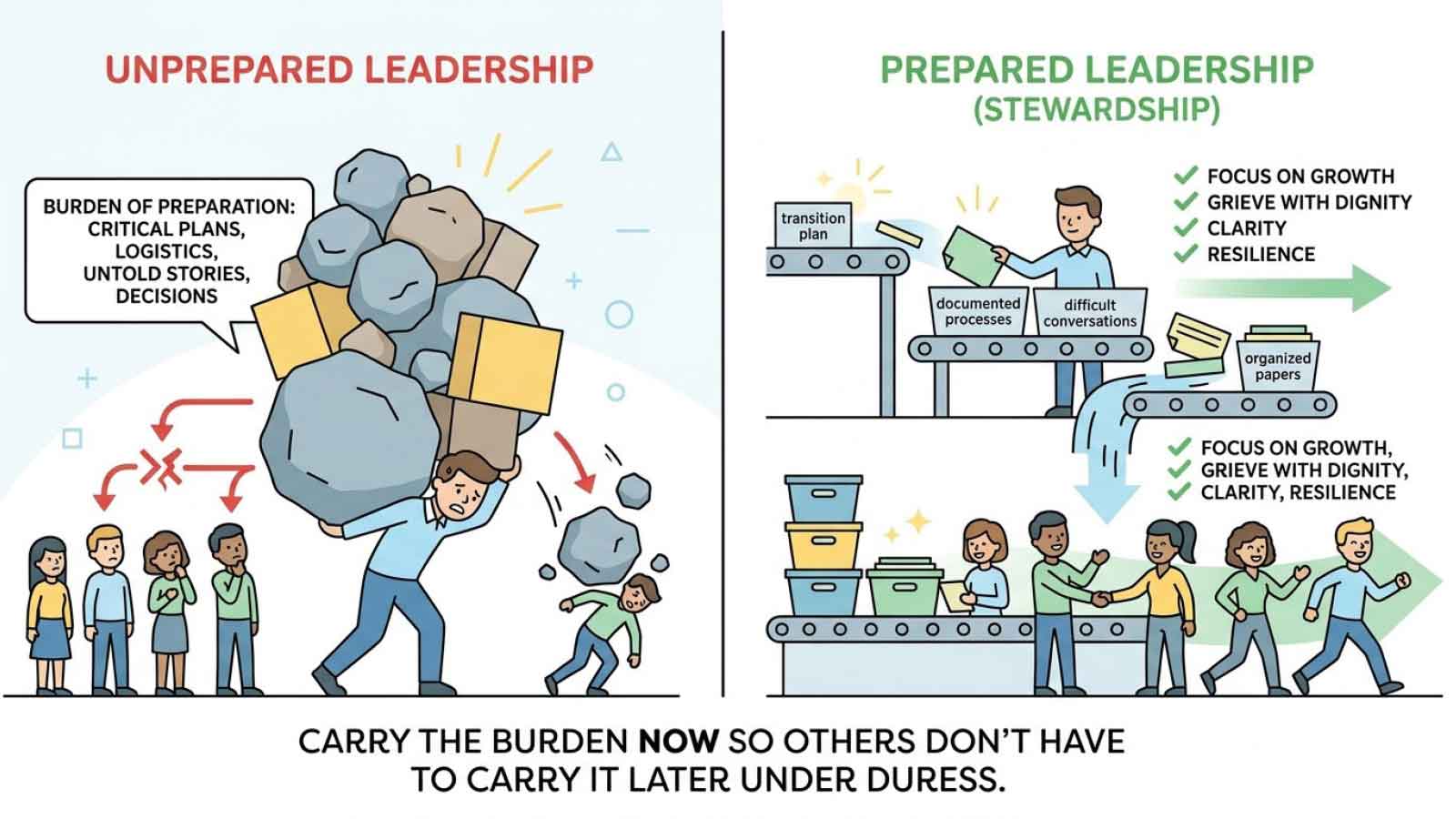
At first glance, it seems a trivial detail. A change of clothes. But it embodies a profound leadership principle: carry the burden now so that others do not have to carry it later under duress. The black outfit absorbs a small piece of potential chaos in advance. It ensures that when the moment of shock comes, the focus can remain on the person being honoured, the nation mourning, the duty at hand—not on the logistics of what to wear.
In leadership, the same principle applies on a vastly larger scale. The burdens that leaders carry quietly, long before they are needed, are what enable teams to function with clarity when pressure mounts.
It may be drafting a transition plan while you are still healthy, rather than leaving your successors to invent it in the midst of grief. It may be recording key processes while your memory is sharp, rather than forcing colleagues to reverse‑engineer years of tacit knowledge after you have gone. It may be having the difficult conversations about succession while you are still in a position to guide them, rather than leaving family or board members to navigate unspoken tensions after your departure.
None of this work is glamorous. It rarely appears on a leadership competency framework. No one receives a standing ovation for a well‑documented handover or a contingency plan that never gets used. But it is the quiet, unseen labour that separates fragile organisations from resilient ones.
Consider the founder who has spent decades building a company. They are brilliant, charismatic, indispensable—until one day they are not. If they have done the unglamorous work of documenting their relationships, codifying their decision‑making logic, and empowering a successor to step in, the organisation barely skips a beat. If they have not, the organisation fractures. The difference is not in the founder’s brilliance; it is in whether they carried the burden of preparation while they still could.
The same applies in families, in community organisations, in any institution where continuity matters. The parent who writes down family stories, organises important documents, and makes wishes known is not being morbid. They are ensuring that when the time comes, their children can grieve without being buried in logistics. The board chair who insists on a clear succession plan is not expressing a lack of confidence in the current CEO; they are expressing a deep regard for the organisation that will continue.
There is a subtle courage in this kind of burden‑carrying. It requires facing one’s own mortality or fallibility. It requires admitting that you are not permanent. It requires doing work that you will never see the benefits of. Yet leaders who embrace it leave behind a gift that is rarely acknowledged but deeply felt: the gift of not having to figure it out from scratch.
The royal family’s black outfit is a small ritual, but it points to a larger truth. Great leaders constantly ask themselves: What burdens can I absorb today that would otherwise fall on someone else in a moment of crisis? The answer becomes their quiet to‑do list. It may never be celebrated. But those who inherit the results will recognise it for what it is—the deepest form of care.
In the end, carrying the burden so others do not have to is not about doing everything yourself. It is about doing the preparatory work that makes it possible for others to step in with confidence, dignity, and the freedom to focus on what truly matters when the moment arrives.
- Humility Is the Foundation of Lasting Influence
Perhaps the most humbling act a monarch can perform is to plan their own funeral. To sit with the reality of one’s own mortality, to make decisions about a ceremony you will never witness, to write the final chapter of your public life while still actively writing the rest—this requires a particular kind of courage.
It is an admission, rendered in action rather than words, that you are temporary. A steward, not an owner. A chapter, not the whole book.
For a monarch, who embodies the continuity of an ancient institution, this admission is not weakness. It is the foundation of legitimacy. The crown does not belong to the person wearing it; it belongs to the institution, the nation, the centuries of history that precede and follow. The monarch who forgets this—who begins to believe the institution exists to serve them rather than the other way around—has already failed. The monarch who embraces it rules with a lightness of touch that comes from knowing they are holding something precious on behalf of others.
In the corporate world, the same principle holds. Leaders who embrace humility—who understand that they are temporary custodians rather than indispensable proprietors—tend to build stronger, more enduring organisations. They hire people who can challenge them, not merely people who agree with them.
They cultivate successors with genuine authority, not figureheads who must constantly check in. They build teams and systems that can function entirely without them, because they measure success not by how indispensable they become, but by how unnecessary they eventually are.
This is counterintuitive. The dominant narrative of leadership often celebrates the opposite: the visionary founder who holds everything together, the CEO whose personal brand is inseparable from the company, the leader who is described as “irreplaceable.” But examine those stories closely. The truly irreplaceable leader often leaves behind a vacuum that cannot be filled. The organisation that was built entirely around one person’s instincts, relationships, and decision‑making frequently stumbles when that person departs. What looked like strength was, in fact, fragility disguised as charisma.
The humble leader takes a different path. They recognise that their role is to strengthen the organisation, not to become synonymous with it. They deliberately distribute knowledge, authority, and visibility. They give credit away and absorb blame.
They speak of “we” more than “I.” And they do the quiet, unglamorous work of preparing for their own absence long before it is required.
There is a paradox here that runs deep. The leaders who most willingly prepare for their own departure are often the ones most trusted while they remain. Why? Because people know that this leader is not clinging to power for its own sake. They are not making decisions based on what extends their own tenure. They are focused on the mission—even beyond themselves. That clarity generates trust. And trust, in leadership, is the currency that makes everything else possible.
Consider the difference between two leaders. The first insists on being involved in every decision, centralises all relationships, and never openly discusses succession because it feels uncomfortable. The team works hard, but there is an unspoken anxiety: What happens when this person leaves? The second actively mentors others, delegates real authority, and speaks openly about the future beyond their own tenure. The team works with confidence, because they know the organisation has been designed to outlast any individual. Both leaders may achieve results in the short term. But only one builds an organisation that endures.
The humility required for this approach is not false modesty. It is not pretending you are less capable than you are. It is a clear‑eyed recognition that your capabilities, however significant, are not the point. The point is what you leave behind. The point is whether the institution, the team, the family you steward is stronger because you passed through.
King George VI, whose empty gun carriage rehearsed the route ahead of his death, understood this. Queen Elizabeth II, who reviewed her own funeral plans in the Red Box that accompanied her every day, understood this. They did not see these acts as morbid. They saw them as the final duty of a steward: to ensure that when the moment came, the institution would continue without fracture, and the people left behind would be free to grieve rather than scramble.
That is the deepest lesson of humility in leadership. It is not about thinking less of yourself. It is about thinking of yourself less—and thinking of those who come after you more..
Facing Our Own Bridges
We may never have a funeral plan codenamed after a bridge. Most of us will never see a replica of Westminster Hall built in an aircraft hangar for our departure. We will not have 300 people rehearsing our final journey. And yet, every leader, every parent, every person who cares about what they leave behind has a version of this responsibility.
It might be a will that spares your family from guessing your wishes. It might be a succession plan that ensures the organisation you built does not crumble the moment you step away. It might be a knowledge‑transfer document—a simple manual of what lives only in your head—that allows a colleague to carry on without reinventing every wheel. It might be the hard conversation with a family member about what matters most, spoken while you still have the breath to speak it.
These acts are not grand. They rarely make headlines. They are the quiet equivalent of packing a black outfit before a journey—a small preparation that, in the moment of crisis, becomes a gift of immeasurable weight.
The royal tradition teaches us that preparation is not about pessimism. It is not a dark expectation of failure or loss. It is about love—love for the people who will carry on after us, love for the institutions we steward, and love for the dignity of those who will mourn us. To prepare is to say: I will not leave you to figure this out alone. I will do the hard work now so that you can focus on what matters when the time comes.
We often think of legacy in terms of monuments: buildings named after us, achievements carved into stone, fortunes passed down. But the truest legacy is quieter. It is the absence of chaos. It is the organisation that continues to thrive because its founder built it to outlast them. It is the family that gathers without conflict because difficult conversations were had in time. It is the team that steps forward with confidence because they were given the training, the authority, and the trust before they needed it.
The question, then, is not whether we will face a transition. Every life, every leadership role, every organisation will eventually turn a page. The question is whether we will face it with the same foresight, care, and courage that went into those two‑and‑a‑half‑inch binders. Will we do the work now that we will never see the results of? Will we carry the burden so others do not have to? Will we have the humility to prepare for a world that continues without us?
Because in the end, the most enduring legacy is not what we built. It is how well we prepared others to carry it forward. It is the stability we left behind, the dignity we enabled, the freedom we gave those who came after to focus on what truly matters—grieving, healing, building, living—without having to scramble in our absence.
The bridges we build are not only the grand structures that carry our names. They are the quiet plans we make for crossing from one chapter to the next. And the greatest honour is not to be remembered for the plans themselves, but for the fact that because of them, no one had to face the crossing unprepared.
Arthur Marara is a corporate law attorney, keynote speaker, peak performance and corporate strategy speaker. With his delightful humour, raw energy, and wealth of life experiences, he captivates audiences and inspires them to unlock their full potential. He is also a leadership expert with extensive experience in leadership development and coaching. He is passionate about developing effective leaders and empowering individuals and organisations to achieve their full potential. Through his engaging talks and workshops, he imparts invaluable insights and practical strategies that empower individuals to lead with confidence and make a lasting impact. Arthur is the author of “Toys for Adults” a thought-provoking book on entrepreneurship, and “No One is Coming” a book that seeks to equip leaders to take charge. Send your feedback to bookings@arthurmararaattorneys.
com visit his website www.arthurmarara.
com or contact him at +263772467255.