admin
admin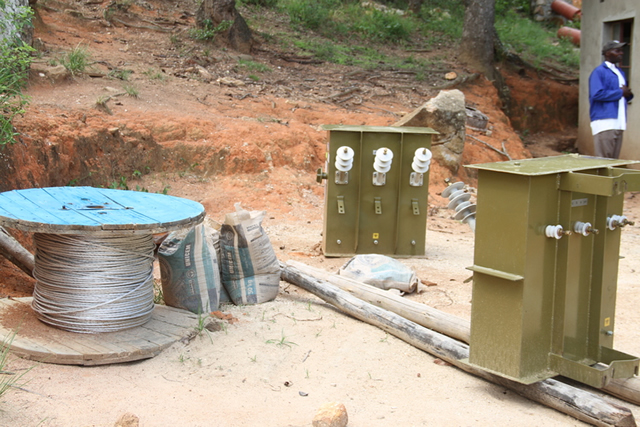
Tichaona Zindoga Senior Features Writer
Himalaya area, some 78 kilometres southeast of Mutare, is a place where interlocking mountains stand in grotesque magnificence that both attracts and awes. The geomorphology here, birthed by mother earth millions of years ago, comprises the high mountain heath, valleys that roll a thousand times and grey lichens coupled with rolling moorlands, mountain side rivers and streams.
Behind the mountains, is swathe of land that breaks into Mozambique.
Years following land resettlement here, not many souls do you find here on account of the scant population and the buffeting verdure.
Yet change is coming to the mountains: they are going to be lit up!
Micro hydropower projects that are being initiated by villagers working with development partners are promising to not only bring lights to this remote part of the country but also bring development.
Livingstone Matanda is the chairman of the Himalaya Micro Hydro Project that will cover five villages in the area, namely 7, 8A, 8B, 9A and 9B.
He believes the project is a life-changer.
The project will enable irrigation from Chitora River to villages around while shops and the local clinic will be electrified.
“The provision of electricity will transform our area in terms of business, education, infrastructure and storage of agricultural produce,” Matanda told The Herald recently.
“Our young people can also find employment by initiating welding and barber shops,” he added.
Excess electricity can also be sold.
The people here can now afford to dream food security because of irrigation projects that will tap into the provision of electricity.
It all started in 2008 when villagers felt the need to resuscitate a plant that a farmer had used in 1953.
“The plant had not been used and actually the site had been converted into a grinding mill. We carried out a feasibility study and then approached the donor for funding,” explained Matanda.
Practical Action, the NGO in question, had already helped support another micro hydro project at Chipendeke in the area.
With the agreement of the donor, the group set out to work, in 2011.
There is a committee in place that steers the work comprised of Matanda and six others who are responsible for organising work programmes, supervising and co-ordinating meetings.
Several locals have received training as electricians, which will help in management of the project that can live up to 25 years.
“The donor would provide equipment such as cement, asbestos, pipes, roofing material and two 80kW transformers while villagers would provide labour and materials readily available in the area,” said Matanda.
Transmission poles, readily available in the area thanks to a forestry project, have been sourced and treated on site.
The budget came up to US$250 000.
Groundwork included removing rocks from the weir or intake at Nyamukwetu River, reworking the old canal and the sifting tank.
The building, which now stands shiny and lonesome under a shimmering roof amid the surrounding vegetation, needed to be renovated as well.
Within it, all the relevant fixtures such as the turbines and the mother board have been installed.
Meanwhile, in the past days, villagers have been busy putting up the transmission poles.
Himalaya is ready for the big switch.
But what is the science behind the project?
Matanda explains that the first stage is that of water coming from a feeder tank and cascades down slope in a pipe of 30 centimetre diameter.
It pushes through two gate valves into the turbines.
When the water turns the turbines they also turn the generator motor which produces electricity that is fed to the controller load board that regulates power via the step up and step down transformers.
A ballaster box or tank comprises water and electric elements that heat water to contain electricity when it is not used.
As early as this December the mountains of Himalaya will be lit up.
Development, empowerment
Practical Action, the NGO championing similar power projects in Southern Africa, pats itself on the back and puts these into the context of development and empowerment of communities.
It says on its website that it is working with local women and men across Southern Africa to introduce micro-hydropower schemes, which are managed and maintained by the communities themselves.
These projects have the capacity to provide 45 000 women, men and children with access to electricity, for the very first time.
Across the globe, 1,5 billion people have no access to electricity – that’s nearly one-third of the world’s population.
Practical Action says this lack of access to electricity is a major obstacle to local development: health and education services are limited and opportunities to improve livelihoods are few.
“In rural areas, farming is the means by which most families survive and earn a meagre living. The lack of access to energy, though, prevents local people from supporting their family,” says Practical Action.
Micro-hydro schemes represent a simple, practical alternative because once installed, they can provide enough power to meet domestic, industrial and agricultural needs, and can have a life-changing impact on poor, isolated communities.
Apart from micro-hydro systems working very simply, they are harnessing the power of water to provide a sustainable, environmentally-friendly and appropriate source of electricity.
Micro-hydro systems are designed to operate for a minimum of 20 years if they are properly looked after.
Practical Action also trains local people to build and maintain their own system, and by making a small charge for use, communities can accumulate enough money to pay for the replacement of the unit at the end of its useful life.
Once schemes are set up, they should continue to function indefinitely without any more external funding.
Villagers believe that such projects as the micro-hydro projects help develop their area and appealed to Government and other stakeholders to chip in with funding of the various projects that they would want.
“People have a lot of things that we would want initiated, which will help transform such remote places as these but we are being hampered by lack of capital. Funders play their part and we play our own,” said one villager.


 Online Reporter