Online Reporter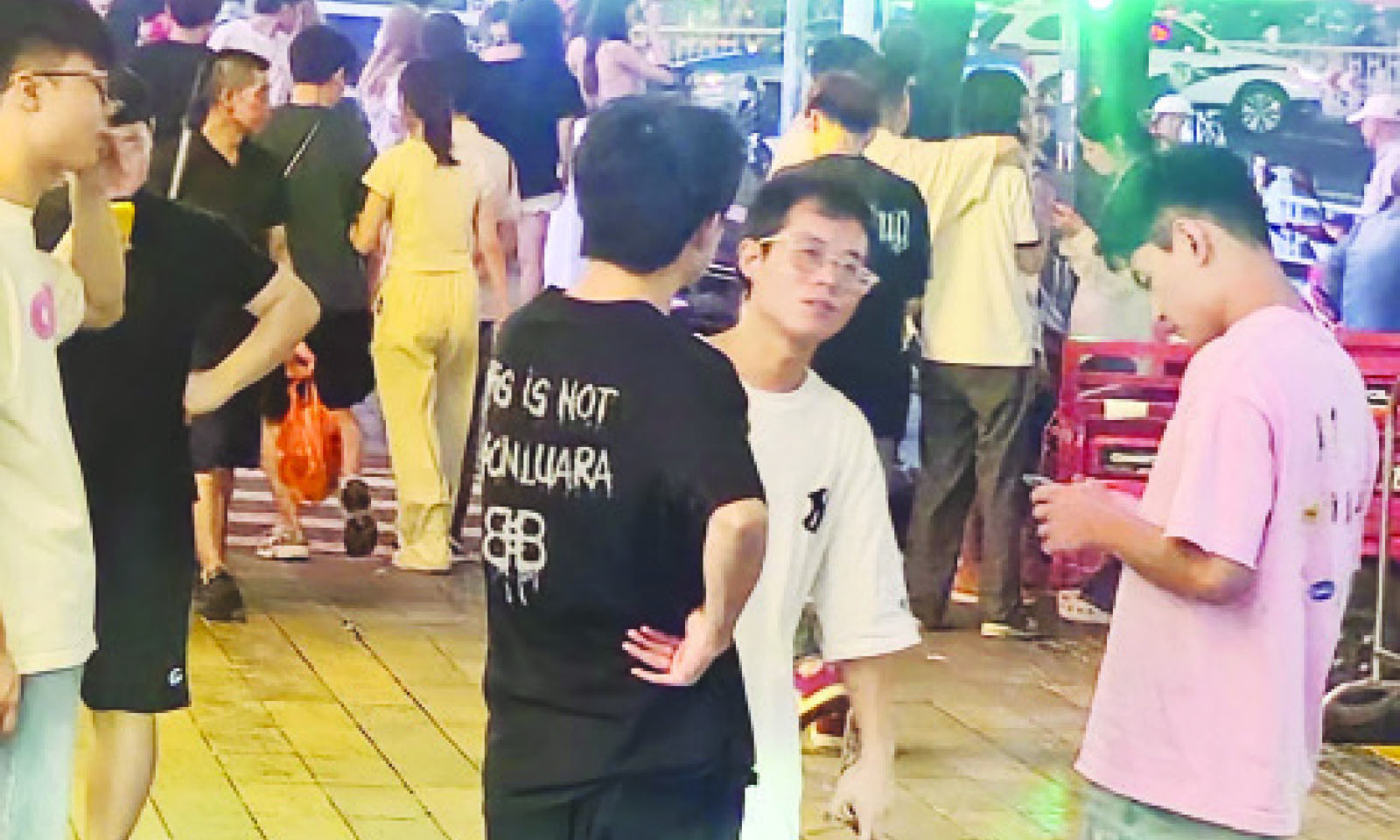
Freedom Mupanedemo, recently in China
It’s midnight in Changsha City, capital of China’s Hunan Province, and yet the streets are alive, buzzing with people, cars, bikes and the glowing pulse of a sleepless metropolis.
Here, nightfall is not a curtain call, it’s an awakening.
Back home in Zimbabwe, this would be the hour of silence, the streets emptied and handed over to the realm of rest, myth and folklore.
But in this vibrant corner of Asia, midnight is rush hour. The city wakes up again, stretching into the early hours with unapologetic energy.
Towering skyscrapers, woven with architectural elegance, rise into the sky, illuminating the night with a rhythm of ever-changing light — red, green, blue, amber — casting a kaleidoscope across the skyline.
It’s like the buildings themselves are dancing.
Every square metre of space is alive with commerce.
Food stalls open.
Marketplaces breathe.
Music fills the air.
Streets flood with people, mainly youth — shopping, eating, drinking or just soaking in the atmosphere.
This is Changsha’s legendary night market scene.
From sizzling king prawns and Hunan seafood to wagyu steak, dumplings and fiery chilli vegetables, the culinary offerings are endless.
Beverages, from the beloved local lager Tsingtao to fine wines and global brands, are served freely in outdoor bars where laughter and music meet.
Public drinking is legal here, and with it comes a sense of openness and revelry that contrasts sharply with what many Africans may be used to.
It’s not lawless, it’s lively.
As visitors — Black Africans in a largely homogenous city — myself and two colleagues Brendon Josphat and Philemon Jambaya, quickly became more than tourists.
We became attractions.
Forget the neon skyline; we were the lights.
The crowd responded to us with joy and curiosity.
Cries of “Welcome! Welcome! Ni hao! Ni hao!” echoed all around.
Strangers offered hugs and handshakes.
Some shouted with such excitement that it unsettled my friends.
“Guys, maybe let’s find a bar to chill in for a bit, I’m not feeling safe here,” Jambaya suggested nervously.
But it was not hostility.
It was celebration.
Our skin tone, dreadlocks and our beards all drew attention.
We posed for dozens of photos, mostly with groups of young Chinese women and men eager for selfies with “foreign friends”.
One night, a female friend invited us across town for drinks.
We took a long taxi ride but got lost.
Our driver didn’t speak English, and navigating with maps proved futile in a language we didn’t understand.
Out of frustration, we paid the 100 RMB fare (about US$14) and got out at a random high street — 2am and still teeming with life.
This area, seemingly untouched by foreign foot traffic, buzzed with curiosity at our arrival.
Locals gathered to greet us.
“Family! Brother! Hello!” they exclaimed.
After numerous photos, we slipped into a packed bar for some reprieve.
Inside, the music stopped.
All eyes turned.
Then came the cheers.
The waiters scrambled to set up a table.
Moments later, an electronic tablet displaying a Mandarin menu was placed before us.
Overwhelmed, Brendon simply shouted, “Tsingtao!”
Soon, a six-pack of ice-cold local beer and plates of snacks arrived.
Despite the hospitality, my colleagues were nervous.
“Who is paying for all this?” one asked.
But I encouraged them to relax.
It was clear we were being celebrated, not swindled.
Meanwhile, our friend kept calling Brendon via WeChat.
He finally answered and a male voice speaking limited English helped explain our situation.
We shared our location, and not long after, our friend arrived in an AI-driven SUV with two companions.
Convincing the bar owner to let us leave was a challenge.
He argued passionately in Chinese with our friend, insisting we were his special guests.
Only after showing WeChat message history did he reluctantly agree to let us go, but not before another round of drinks, hugs and group photos.
When I tried to settle the bill, the bar owner waved me off.
“No, no, no — free!” he insisted.
We were stunned.
Everything — beer, food, water — had been on the house, a tribute to our unexpected presence in their corner of the city.
As we left for another destination with our friend, I realised that in Changsha, hospitality was not just tradition, it was instinct.
Even in the absence of shared language, there was mutual recognition of joy and humanity.
That night was one chapter.
The next leg of our adventure — what happened after that ride in the AI-powered SUV — is a story for another day.
But for now, one thing is certain: Changsha is a city that doesn’t sleep.
And for three Zimbabwean wanderers, it offered unforgettable nights of light, laughter and connection across cultures.