Ray Bande
Senior Reporter
FORMER Reserve Bank of Zimbabwe (RBZ) Governor, Dr Gideon Gono, shook up the banking sector in December 2003 when he scrapped the long standing tradition of half day Wednesdays.
For decades, banks across Zimbabwe closed early midweek, a practice executives explained was meant to allow time for the physical transfer of cheques between institutions.
But Dr Gono saw the routine as an outdated bottleneck that denied the public access to essential services and stifled productivity.
In his December 2003 Monetary Policy Statement, he declared that “there is no substitute for hard and long working hours,” urging the financial sector to modernise its operations.
His directive forced banks to remain open for full business hours on Wednesdays, permanently ending the half day custom.
The move became a defining example of how entrenched traditions — even those that inconvenience the public — can persist until challenged by decisive leadership.
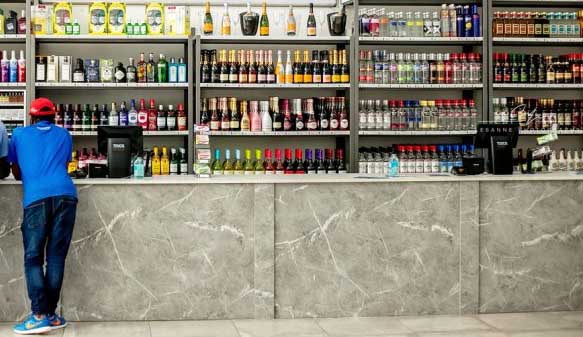
Acquisition of a liquor licence for alcohol outlet operators is another.
For an operator to obtain the licence, they must secure fingerprints from the police, and a police report of the premises, widely known as Form 55.
They also need an approved plan from the local authority, a letter of no objection, and a health report. Proof of citizenship is required, as well as evidence of occupation in the form of a lease agreement or title deeds. An affidavit stating that there are no objections to the licence and that no other person should benefit is also required. An application fee and payment to the District Development Coordinator’s Office must then be made.
The list does not end here.
A permit from the local authority engineering department costing almost US$400 is also required.
After completing all this, approval takes too long, perhaps because of the red tape entrenched in the liquor licencing system. No wonder compliance is low.
Statistics from the Liquor Licencing Board indicate that nationally more than 60 percent of operators are trading without a valid licence.
In Manicaland, almost 44 percent are operating without the requisite liquor licence.
Mutare has 170 operators trading without the licence, Makoni 171, Chipinge 195, Nyanga 69, Chimanimani 112, Mutasa 116, Buhera 134 and Mutasa 87, making a total of 938 operators in Manicaland trading without a liquor licence.
Speaking during a stakeholder consultation programme in Mutare recently, one operator questioned: “Why are we being subjected to this torture just to sell alcohol. These laws, to me are archaic. Even after meeting all the requirements, the time taken for approval is just too long, and yet after June 30, police are on our tails, even if you show them receipts they insist on the green paper (the actual liquor licence).”
In an interview on the sidelines, chairman of the Manicaland Liquor Traders Association, Mr Obey Hove, said: “There are a lot of procedures that we feel are unnecessary. One has to go through so many processes just to obtain the liquor licence. Many people are no longer interested in obtaining the document. The requirements, especially at local authorities are just too much. After all these processes, imagine we have to be recommended by council every year in order to get the licence. It is just not good for business, and I think the Government has taken the right step in consulting stakeholders with the aim of making the necessary changes,” said Mr Hove.
In her brief response to the punitive fees, Ms Soneni Hlatshwayo from the State Attorney Legal Services Department in the Ministry of Local Government and Public Works, said: “Our charge is just a token, and the local authorities benefit much out of this. We have a draft Statutory Instrument that is being worked out to reduce the fees just like what happened with SI 41 of 2026 that reduced fees for local authorities.”
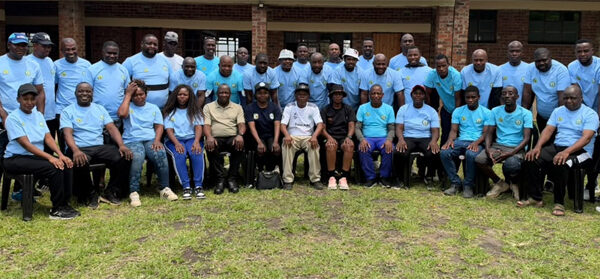
Refreshingly, the Ministry of Local Government and Public Works, through the Liquor Licencing Board, hosted physical planners, health directors and relevant representatives from local authorities across the country in stakeholder consultation workshops on review of the legal framework and standard operating procedures for liquor licensing.
The main objectives of the workshops were to review and revise downwards liquor licencing levies where applicable, streamline licencing procedures to improve efficiency, and enhance ease of doing business and compliance for operators.
Mr Absolom Dube, Principal Regional Inspector for the Liquor Licensing Board, said: “The main objectives of the workshops are to review and revise downwards liquor licencing levies where applicable, streamline licencing procedures and processes to improve efficiency as well as enhance ease of doing business and compliance for operators.”
The Liquor Licence Act establishes the Liquor Licencing Board, defines licence categories, and regulates licensed premises. It sets restrictions such as prohibiting sales to persons under the age of 18, limiting credit sales, and controlling conduct in licenced premises.
Under Part XII (Sections 90–98), police are empowered to enforce compliance, investigate breaches, and protect public safety.
Their role is both preventive — stopping illegal sales before harm occurs — and reactive, responding to disorder or violations.
Police also assess premises suitability, including distance from schools, churches, hospitals and residential areas, and public nuisance risk such as noise, disorder and traffic.
They check compliance risk covering trading hours, age restriction and public drinking, and conduct local inquiries with neighbours, council, headmen/councillors, and the background of applicant and manager. Police make recommendations on whether the site is suitable or unsuitable, after which the Liquor Licencing Board makes the final decision on granting the licence.
Liquor licence: A needle in a haystack for operators