


 peter
peter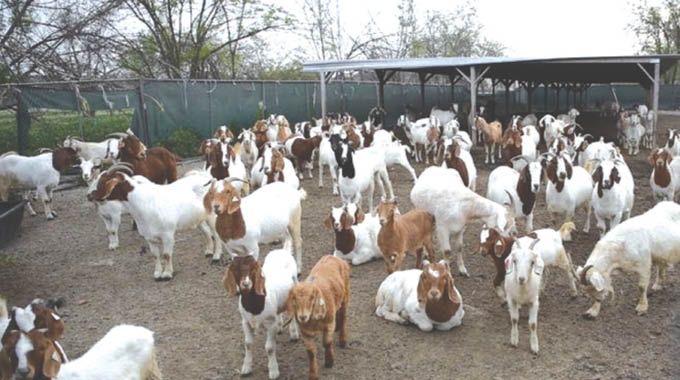
ONE advantage of the advancement of technology has been the easy access to information and knowledge in almost every subject area. Anyone can find answers about questions in any field just by merely clicking a button. This is a very plausible development because it has dismantled the commodification of knowledge and information, even where it was unnecessary.
People, especially farmers in my context can now access critical information and knowledge almost in real time. You will certainly have adequate information about any issue these days if you have a smartphone, network connectivity and data.
This has helped to bridge the knowledge gap in a big way. Gone are the days when rural folks seemed to be a millennium behind in terms of knowledge. In fact, chances are that what you have access to, information wise, they also can access if they need to.
However, the downside to this easy access to information is the proliferation of fly-by-night experts in all and every field.
Some people by merely visiting Google a few times on a particular subject area, now present and misrepresent themselves as experts.
I find that a lot in my field which is livestock production, especially from social media platforms in their various formats.
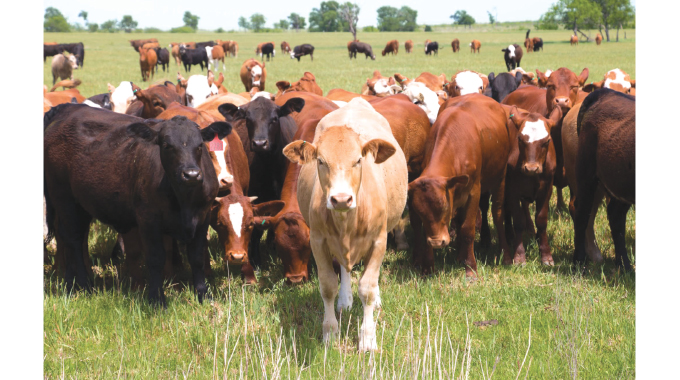
Most farmers have social media groups on which they share and support each other in various aspects of production and even marketing across all forms of livestock be they goats, cattle, goats or any other.
It is the amount of wrong information that I usually see prescribed and peddled as fact that gets me worried and perhaps the inspiration for this week’s article.
Most people on social media platforms just dish out incorrect information with very little regard of how that might affect the recipients and users of that information.
Some of the information is just retrieved from their weak memories from when they brushed with the subject in discussion and is presented with no verification for correctness to other farmers.
This is reckless behaviour which unfortunately may be difficult to rectify because no one really can or has the mandate to police social media groups.
This therefore calls for two approaches if people are going to use social media shared information.
The first approach is never to take information shared on social media platforms and use it without verification or triangulation. This means that you should make it a point to ask about the same subject area from more than one source and then check if the information is corroborated by other sources.
The second approach is that, if ever you are to share information on social media platforms especially in response to one who is asking for help, please verify for correctness first before broadcasting poison to others.
There are a lot of fake things out there including technical information, so be careful as a farmer what you consume and what you share to other farmers to use.
In livestock we deal with expensive investment and you don’t want to just take unverified information and use it on your animals.
You could lose your animals because you have used wrong drugs, or used correct drugs but the wrong way and so on.
A simple example is the use of some mineral blocks which have high urea content, if the farmer is not properly advised, he/she may actually poison his/her animals by something trivial appearing as feeding a block.
The other negative issue about technical information being thrown around everywhere, is that farmers now think they do not need the advice of actual technical experts like extension officers.
Nothing can be further from the truth than that, if anything you now need the extension officer more than before because you are likely to have been contaminated already in your understanding of the issue at hand, and hence you need guidance of the trained person who will walk you through the subject area and definitely correct some of the wrong things you might have been fed by your social media groups.
To the livestock farmers in particular and other farmers in general, I say as a rule of thumb, verify every information that you want to use especially on your animals or you want to prescribe to someone.
Verify from an actually trained person who has the technical knowhow on the subject matter under discussion or else do not share that information.
Imagine you wake up and find half your flock of goats dead because you used some wrong information from a “goat production group” on social media. Let us check with our extension officers in our wards especially for smallholder communal farmers.
Uyabonga umntaka MaKhumalo.
n Mhlupheki Dube is a livestock specialist and farmer. He writes in his own capacity. Feedback [email protected]/cell 0772851275



 Bongani Ndlovu
 Online Reporter