Chronicle Editor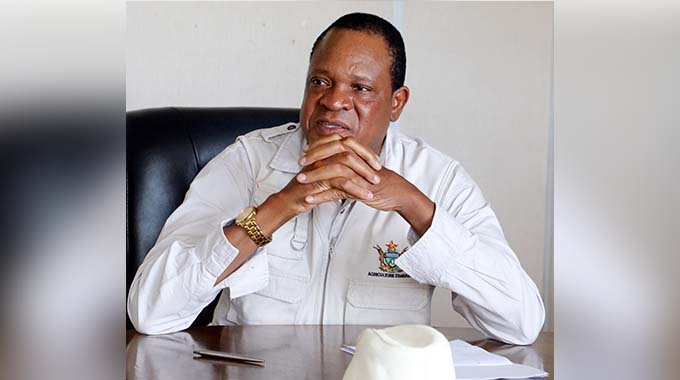
Sukulwenkosi Dube-Matutu, [email protected]
FARMERS in cattle regions have been urged to prepare plots for growing fodder, which will go towards silage production under the Pfumvudza/Intwasa Programme as the Government continues to roll out strategies to ensure food security in the country.
Government has set a target of reaching 3,5 million rural and peri-urban households under this year’s Pfumvudza/Intwasa programme. To ease the workload on farmers, especially the elderly, the Government is encouraging the adoption of mechanised Pfumvudza/Intwasa, which requires less manual labour compared to traditional methods.

Since its introduction under the Second Republic, Pfumvudza/Intwasa has been lauded as a transformative tool for smallholder farmers, moving subsistence farming towards commercial viability. The distribution of inputs is underway at Grain Marketing Board (GMB) depots across the country.
As dry conditions continue in the Matabeleland region, experts recommend that farmers consider cultivating traditional grains that are drought-tolerant.
Lands, Agriculture, Fisheries, Water and Rural Development Minister, Dr Anxious Masuka said the Pfumvudza/Intwasa programme would be guided by agro-ecological considerations, with specific crop support tailored to the environmental conditions of different regions.
Farmers in more favourable ecological zones will receive maize seed while those in drier regions like Matabeleland will receive traditional grain seeds which are more suited and adaptable to the climatic demands.
In addition, Government is also distributing fodder seed to support fodder production. The Agriculture Advisory and Rural Development Services (AARDS) has been conducting silage making trainings for farmers in a bid to ensure that farmers have access to affordable and highly nutritive feed for their animals.
AARDS Matabeleland South provincial director, Mrs Shupikai Sibanda said the province has prepared over 250 000 plots out of a target of 500 000 plots. She said her office has upscaled efforts to encourage farmers to adopt the concept.

“We have held the provincial Pfumvudza/Intwasa launch and we have now moved to districts. As we are launching the programme in various districts, we are encouraging GMB to also distribute inputs. Our province is mainly in Region 4 and 5 with small pockets in Region 2 and 3. What we are emphasising as we distribute is for farmers to adopt small grains such as millet and sorghum and to a lesser extent maize.
“In addition to the plots that the farmers usually have, we are also encouraging them to have two plots which will be set aside for fodder production. Once the farmers have harvested their fodder, they will create two silage making pits in order to ensure that they have feed for their livestock. We are trying to avoid a situation like the one we experienced where farmers have been losing their animals due to feed shortages,” she said.
Mrs Sibanda said Pfumvudza/Intwasa training is also progressing well with more staff and farmers taking up the training.
She urged farmers to embrace mechanised Pfumvudza/Intwasa. Where farmers cannot afford to buy machinery, they can come together and mobilise resources to buy the equipment and share, she said.
Mrs Sibanda urged communities to embrace various concepts that are being implemented by Government and its partners to cushion farmers against the effects of climate change adding that the prevailing weather conditions require farmers to depart from the traditional way of farming.
“It’s high time all farmers transform their farming activities. We don’t want any farmers to die of hunger when they have resources such as livestock and land. As Government, we are saying let’s grow fodder, let’s bale hay and let’s make silage,” she said.
The Second Republic led by President Mnangagwa initiated the Pfumvudza/Intwasa programme a few years ago to counter the effects of low rainfall caused by climate change. Pfumvudza/Intwasa has helped the country attain food security, at the same time boosting farm incomes as subsistence farmers are converted to small-scale commercial growers.
The programme entails use of mulch to retain moisture in the event of rains. Many countries are keen to learn about the Pfumvudza/Intwasa scheme from Zimbabwe in order to boost their yields.
The main aim of the Pfumvudza/Intwasa concept is to address problems of low productivity, low production and low profitability in farming, which have, in recent years, been negatively affecting the food security situation in the country.
The concept has also come in handy as a way of mitigating the harsh effects of climate change that have caused severe food shortages in the wake of successive crop failures. — @DubeMatutu



 Online Reporter