Nqobile Bhebhe [email protected]
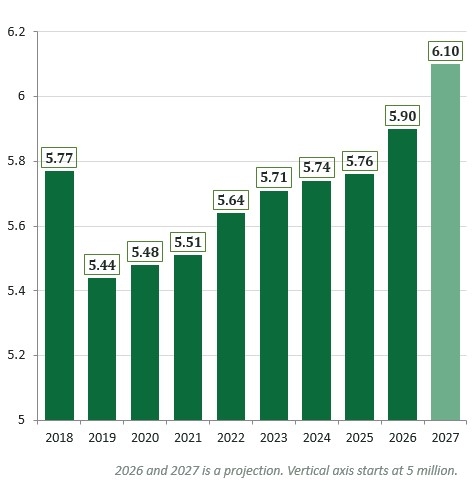
ZIMBABWE’S livestock sector is approaching the six-million-cattle mark, with the national herd projected to reach 6,1 million in 2027 as disease-control measures and breeding programmes support production growth and increase the supply of beef to the market, a Cabinet minister has said.
The expansion, which has seen the national herd grow from 5,4 million cattle in 2019 to 5,9 million in 2026, presents opportunities for investment across the livestock value chain, including commercial beef production, abattoirs, meat processing, animal health services and livestock marketing.
Finance Minister Professor Mthuli Ncube presented the figures in his State of the Economy report at the ZANU PF National People’s Conference in Chinhoyi last week, noting the sector’s growth as part of the broader performance of the economy.
“Livestock production has grown strongly – from 5.4 million in 2019 to 5.9 million in 2026,” he said in his presentation.
Prof Ncube said the national herd was expected to surpass six million cattle next year, reflecting the anticipated continuation of production growth.
“In 2027 output is expected to break the 6 million mark and rise further to about 6.1 million,” he added.
The projected growth could strengthen the supply base for Zimbabwe’s beef industry, although translating a larger herd into sustained commercial gains will depend on productivity, animal health, access to markets and investment in processing infrastructure.
Government interventions supporting livestock production include tsetse fly eradication, laboratory diagnostics for effective screening and confirmation of animal diseases, local production of animal vaccines, cattle genetic improvement programmes and artificial insemination to enhance breeding.
These measures are aimed at reducing livestock losses, improving herd quality and strengthening the resilience of cattle production, which supports rural livelihoods and supplies raw materials to the meat-processing industry.
The gains are also being reflected in slaughter volumes, with the number of cattle slaughtered for meat increasing from 261 000 in 2017 to more than 437 100 in 2026, Prof Ncube added.
“This growth is attributable to Government disease control (fighting January Disease), which has reduced livestock deaths and boosted supply,” he noted in his presentation.
The increase in slaughter numbers points to a growing flow of cattle into the formal meat market, creating potential opportunities for abattoirs, butcheries, meat processors and businesses supplying livestock producers.
A stronger and more reliable supply of cattle can support capacity utilisation in slaughter facilities and provide a foundation for expanding value addition through packaged beef, processed meat products and other livestock-derived products.
By mid-2026, formal beef slaughters had surpassed 196 771 tonnes, Prof Ncube said, underscoring the importance of the formal market in absorbing livestock production.