Chronicle Editor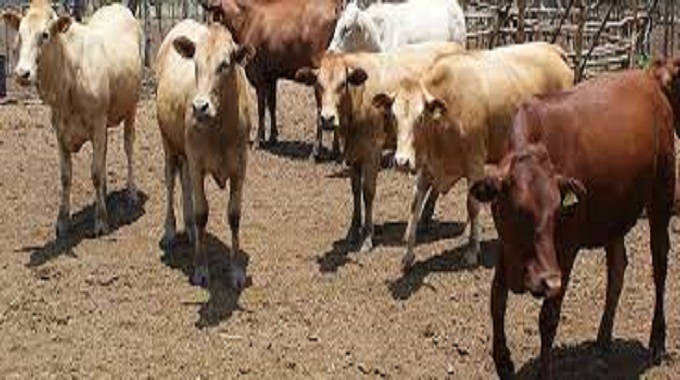
Sukulwenkosi Dube-Matutu, Chronicle Reporter
MATABELELAND Region was once a major exporter of beef, raking in a lot of income for the country.
However, today no matter how rich their breeds are, farmers cannot enjoy full returns of their hard labour as a result of illegal sanctions imposed on Zimbabwe by Western nations.
Farmers have now turned to regional and local markets to sell their animals.
Matabeleland South earned its status as the country’s livestock breeding power house and after the 1992 drought the then Ministry of Lands, Agriculture, Fisheries, Water and Rural Development projected an increase of the national cattle herd by five percent every year.
The projection results were short-lived after the country was slapped with sanctions.
Zimbabwe has been under illegal sanctions for the past two decades. America, Britain and their Western allies imposed them as a response to the country’s fast track land reform programme which started in 2000.
The programme was meant to correct the skewed land ownership that favoured white farmers.
The Second Republic under President Mnangagwa has, despite the sanctions, made tremendous progress even in the livestock sector, using locally available resources as it implements the National Development Strategy 1 (NDS1).
President Mnangagwa launched the Presidential Livestock Scheme as part of efforts to grow the livestock sub sector. Under the scheme farmers are receiving legume seeds, fertilisers and forage sorghum among other inputs. Distribution of the inputs is set to boost creation of forage banks for improved animal nutrition.
Government also rolled out the Presidential Tick Grease Programme which seeks to curb tick-borne diseases, particularly theilerosis. The programme is in line with the NDS 1 which is prioritising animal health and production through strengthening farmer knowledge, skills in livestock production and health so as to enhance productivity.
This month Zimbabwe is joined by Sadc and rest of the progressive world to push for the removal of the illegal sanctions that have also affected the entire region, judging by the calls for the removal of the embargo by various heads of state, organisations and institutions.
Sadc Heads of State and Government in 2019 proclaimed October 25 as a day of solidarity with the Zimbabwean people against sanctions. Livestock farmers in Matabeleland South province said sanctions have affected their market and vaccines availability.
Mr Obert Chinhamo from Esigodini said the imposition of sanctions has stifled their growth and crippled industries that relied on livestock products.
“The sanctions have affected us so much. We have tried to introduce quality breeds such as Simmentals and Simbrahs into our breeding the reason being that we want to bring in animals that are exportable. Sanctions have however blocked our path more than disease. Some people site diseases as the main reason which has caused us not to export but I think it’s the other way round,” he said.
“If we had exportable cattle and no sanctions we could be exporting animals in the presence of diseases. We have other countries such as Botswana and South Africa which have diseases but they have compartments which they use to export meat or livestock. The breeds we have here are the same level with anyone farming around the world and we should be exporting.”
He said livestock farmers are now forced to utilise regional markets in place of European markets.
Mr Chinhamo said they will continue improving on the breeds in preparation for the lifting of sanctions. Gwanda-based farmer, Cde George Mlilo said the shortage of vaccines brought by sanctions has greatly affected the livestock sector.
He said livestock farming was a business which required farmers to sell their animals on the correct market for significant returns.
Cde Mlilo said Matabeleland used to produce the best beef which was even being consumed in the Buckingham Palace in the UK. He said farmers used to fetch good sums of money by exporting to countries like Denmark and France.
Cde Mlilo said the country did not deserve to be hit with sanctions as it was just being punished for rolling out the land reform programme.
“The sanctions did hurt and are still hurting us because if you look at the period since they were imposed, it’s not coincidence that we started to experience diseases like January disease which decimated most of our herds. It was because we could not get vaccines and dipping chemicals from our traditional suppliers because we were being punished for the land reform.
“The vaccines we used to have to prevent diseases are no longer available, those we have are expensive. The ordinary producer doesn’t have the proper vaccine and inoculate the animals periodically. We are supposed to inoculate animals periodically for diseases such as botulism, lumpy skin and tick borne diseases but we now do it during crises,” he said
Matabeleland South Provincial Livestock Specialist Mr Hatityi Muchemwa said while Government had predicted a steady growth of the national herd, recurring droughts because of climate change and incapacitation to deal with pandemics due to the illegal embargo continue to stifle the sector’s growth.
“Our cattle herd at some point was stagnant because of quite a number of challenges including recurring droughts, that meant that our grazing fields were not rejuvenating and also the diseases which we could not deal with because of lack of chemicals and vaccines,” he said. -@DubeMatutu



 Online Reporter