Chronicle Editor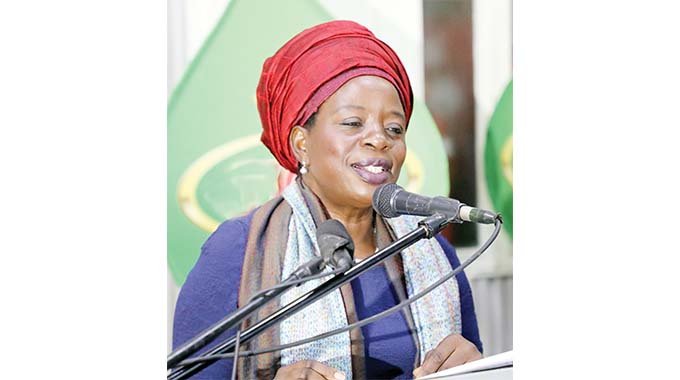
Business Reporter
INDUSTRY and Commerce Minister, Dr Sekai Nzenza, has stressed the need to anchor the positive strides being recorded by the country’s manufacturing sector on increased adoption of the local content policy, which will assist the country reduce reliance on imported raw materials.
This comes as the country is finalising its tariff offer under the African Continental Free Trade Area (AfCFTA), which offers a huge market of US$3,4 trillion and more than 1,2 billion people.
To maximise benefits from this huge market opportunity, the minister has said there is an urgent need to ensure increased competitiveness of the local products, a mandate given to the National Competitiveness Commission.
Its role is to facilitate the creation of a competitive environment for Zimbabwean business through the development, co-ordination and implementation of key policy improvements required for domestic, regional and global competitiveness
Speaking at the St Petersburg International Economic Forum in Russia last Thursday, where she made a presentation during the Business Dialogue Russia-Africa session, Dr Nzenza said Zimbabwe was transforming its manufacturing sector despite the disruptive impact of Covid-19, sanctions and other shocks.
“At the onset of the Covid-19 pandemic, we realised that global supply chains had been disrupted. Our manufacturing sector could not import the critical raw materials, which they relied upon and some of the finished consumer goods, which we would normally import were no longer available,” she told the gathering.
“This exacerbated the challenges we were already facing due to sanctions and Cyclone Idai. We therefore came up with a local content strategy that promotes the use of locally sourced inputs for our manufacturing sector.
“We also increased financing to the manufacturing sector through the Industrial Development Corporation of Zimbabwe to support company resuscitation programmes, technology transfer and retooling programmes, new investments and start-ups.”
“We, however note that while production is going up, importation of raw materials and plant and equipment is also increasing as companies are retooling. This calls for the need to deepen the implementation of the local content strategy and we are being assisted by the Common Market for Eastern and Southern Africa (Comesa) in this regard,” said Dr Nzenza.
The minister said the Second Republic led by President Mnangagwa was driving product diversification across sectors with more support being channelled towards agro-processing value chains to ensure guaranteed supply of basic commodities for consumers.
In addition, she said Government has also come up with a new approach to coordinate policies that increase the ease of doing business and competitiveness of local manufacturing companies.
This has enabled the country to turn a crisis into an opportunity as evidenced by the increase in locally produced goods, which account for more than 70 percent on the retail market, up from about 40 percent before Covid-19, said Dr Nzenza.
She said her ministry was leading the transformation and diversification of the local industry through an US$8 billion Industry and Commerce Roadmap, which is derived from the National Development Strategy 1 (NDS1), which sets out pragmatic plans to bring in structural transformation and move up the value chains.
“We came up with 10 priority value chains for the period 2021-2025. We are prioritising the cotton to clothing, sugar, soya, dairy, leather, fertiliser, bus and truck, iron and steel, waste plastic, and pharmaceutical value chains,” said the minister.
“We have, therefore, launched strategies for these value chains in close collaboration with the respective private sector players.”
Under these sector specific strategies, the ministry is promoting use of local raw materials, increased productivity, employment creation, rural industrialisation and export generation.



 Online Reporter