

 Londile Moyo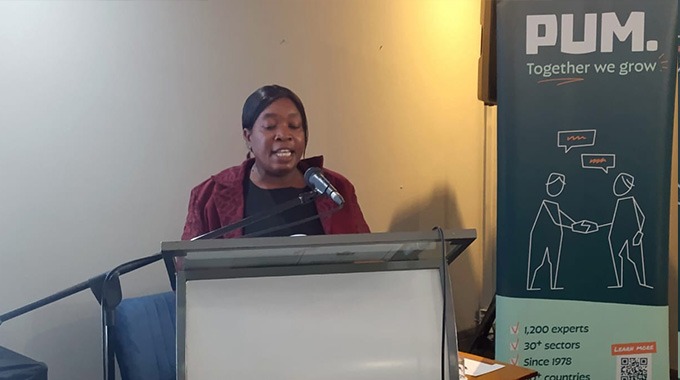
Sikhumbuzo Moyo
GOVERNMENT has called on businesses in Bulawayo to invest in compliant on-site treatment plants in order to reduce the discharge of untreated effluent into the city’s ageing sewer system.
The call was made by the Minister of State for Provincial Affairs and Devolution for Bulawayo, Judith Ncube, in a speech delivered on her behalf by Mrs Norah Mupaza, Deputy Director of Environmental
Planning and Environmental Management, during the Trade Effluent and Water Recycling Indaba at a local hotel.
Minister Ncube highlighted the importance of adopting the “Polluter Pays Principle,” promoting circular economy incentives, and fostering collaboration between Government, industry and the local community to ensure sustainable water management in Bulawayo.
“The Government of Zimbabwe plays a central role in promoting sustainable trade effluent management and water recycling. Through the Environmental Management Agency (EMA), Government oversees waste water management, licensing, and enforcement of national effluent discharge standards,” said Minister Ncube.
She noted that the City of Bulawayo has faced challenges, including EMA fines, due to the discharge of untreated trade effluent from its ageing sewer system, and said that to address this, the Office of the
Minister of State for Provincial Affairs, Environmental Management Agency (EMA), and the City of Bulawayo must work hand in glove.
She said the indaba brings together stakeholders from industry, academia and international experts, all sharing experiences and knowledge to help Bulawayo effectively manage trade effluent and wastewater recycling.
“We must adopt the “Polluter Pays Principle” to protect municipal infrastructure from toxic chemical dumping. To manage trade effluent effectively, businesses in Bulawayo should invest in compliant on-site treatment plants, reducing the discharge of untreated effluent into the city’s ageing sewer system.
While we continue to enforce environmental laws, Government is committed to transitioning from purely punitive measures to incentivising the circular economy,” said Minister Ncube.
She said the indaba is an opportunity to explore policy frameworks that offer tax rebates and import duty exemptions for industries that bring in water recycling and effluent treatment technologies, emphasising the importance of making it easier for local industries to meet regulatory standards while treating their discharge responsibly.
“Through the National Development Strategy 2, the Government recognises that industry and economic growth are pivotal to achieving an upper middle-class income society by 2030. Our role is to facilitate industry so that Bulawayo can reclaim its industrial glory—but growth must be environmentally sustainable,” said Minister Ncube.
She said water, as a constrained resource, its recycling is no longer optional but an economic imperative.


 Bongani Ndlovu
 Online Reporter