admin
admin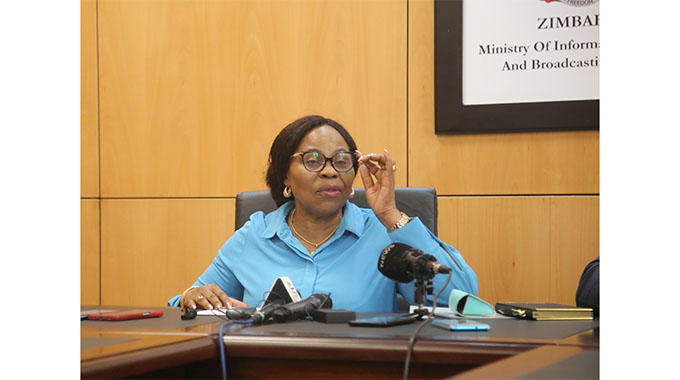
Rumbidzayi Zinyuke
Senior Reporter
New investments made by local manufacturers in the first quarter of this year are expected to contribute to a significant increase in production of local products and reduce the import bill in line with the National Development Strategy 1.
Of note, the production of margarine is expected to grow following plant expansions at Olivine Industries in Harare and Willowton in Mutare.
Giving an update at yesterday’s Post Cabinet briefing on a report on the implementation of priority projects under the first 100-Day-Cycle of 2023, Information, Publicity and Broadcasting Services Minister Monica Mutsvangwa said good progress had been made at the two margarine plants.
The 100-day target-based programme began in 2018 to expedite project implementation and propel the attainment of Vision 2030.
The implementation of the projects is centred on the key elements that capture Government’s vision for: economic growth and development; re-engagement with the global community; promotion of investment and trade; nurturing a responsive and high performance culture in the public service and engendering greater impetus in the provision of strategic infrastructure.
“The installation of a US$5 million margarine plant at Willowton in Mutare has reached 85 percent, and will produce up to 150 tonnes of margarine per day when complete. It will create employment for 50 people.
“The expansion and modernisation of the margarine plant at Olivine Industries in Harare metropolitan province is almost ready for commissioning. The local production of margarine will reduce the volume of imports,” she said;
In 2021, the country imported margarine worth US$6,5 million and was placed as the 131st largest importer of margarine in the world. The product was largely imported from South Africa, Kenya, Zambia, United Kingdom and Germany.
The NDS1 framework is organised around the key interconnected pillars that are aimed at achieving sustainable economic development namely, macroeconomic stability and financial re-engagement, inclusive growth, governance, infrastructure and utilities, social development in line with vision 2030 agenda.
Government seeks to create a framework that sustains a positive high economic growth of above 5 percent which is driven by agriculture, mining, electricity and manufacturing and improve food self-sufficiency and to retain the regional breadbasket status.
In this regard, President Mnangagwa is soon expected to commission the US$11 million plant at Buffalo Brewing Company in Stapleford in Mashonaland West Province which is now functional.
Another priority projects being implemented is the resuscitation of David Whitehead Textiles in Chegutu which has reached 40 percent of completion with state-of-the-art spinning and weaving machinery in place.
Minister Mutsvangwa said the project would employ up to 1 100 persons when complete.
“The refurbishment of the tar production plant at Zimchem in Kwekwe has reached 85 percent of completion and the installation of a US$30 million state-of-the-art bakery plant in Bulawayo by Bakers Inn is 90 percent complete.
The bakery will be the biggest in Zimbabwe, and will be producing 200 000 loaves per day,” she said.



 Online Reporter