Business Reporter
AFTER decades of dormancy following the 2008 collapse of the Zimbabwe Iron and Steel Company (Zisco) — once the industrial backbone — the country’s steel sector is experiencing a major rebirth.
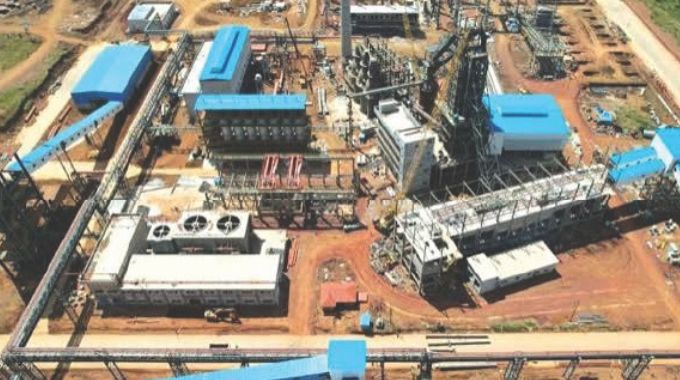
The turning point came with the commissioning and coming online of the massive US$1,5 billion Manhize steel plant built by Tsingshan Holding Group’s subsidiary, Dinson Iron and Steel Company (DISCO).
“The commissioning of the Manhize facility is not just a commercial success; it represents a fundamental shift in Zimbabwe’s macroeconomic landscape,” Enoch Musara, an economic analyst, said.
“By substituting (steel) imports with local production, the country is stemming a severe foreign currency drain while rebuilding the foundational industrial backbone required to power regional infrastructure projects.”
The modern facility has effectively filled the long-standing manufacturing vacuum left by Zisco’s demise.
Capitalising on resurgent domestic production and expanding regional markets, Zimbabwe’s steel sector recorded a robust turnaround, with earnings nearly tripling over the past 10 months.
According to the Minerals Marketing Corporation of Zimbabwe, sales surged 189,9 percent to US$208,21 million for the period ending October 27, 2026, from US$71,82 million in the same period in 2025.
What makes this export performance particularly impressive is that Zimbabwe’s modern steel sector is still in its infancy, having commenced commercial export shipments less than 18 months ago.
Despite this short operational history, the market response has been overwhelmingly positive, driven by strong regional demand and aggressive customer acquisition across Southern and East Africa.
Furthermore, Zimbabwe is uniquely positioned to capitalise on structural shifts in the regional market, most notably the operational challenges and capacity cutbacks affecting South Africa’s steel industry —historically the region’s primary supplier.
As regional buyers seek reliable alternatives, Zimbabwean steel producers are rapidly stepping in to fill the supply deficit, signalling that the current export gains represent just the initial phase of a long-term industrial boom.
Building on the current momentum, the long-term trajectory of Zimbabwe’s steel growth is anchored by a multi-phase expansion roadmap at Manhize.
Having successfully operationalised Phase 1 — which established an annual baseline capacity of 600 000 tonnes across pig iron, steel billets, and rebar — the company is executing Phase 2 to triple output to 1,8 million tonnes.
Subsequent expansion phases are projected to scale total production to five million tonnes per annum, supported by an additional total capital investment expected to reach US$2 billion by 2030.
The multi-stage industrial ramp-up —complemented by on-site power recycling, integrated metallurgical coal processing and a bulk rail infrastructure link to Mvuma —will transform
Zimbabwe from a net regional importer into one of Sub-Saharan Africa’s dominant heavy steel hubs.
Complementing this manufacturing leap, the MMCZ successfully secured new international trade corridors.
Strategic market diversification efforts have unlocked key regional economies for local steel products, including the Democratic Republic of Congo, Mozambique, Zambia, South Africa and Botswana.
The successful market penetration into Southern and East African heavy industrial hubs underscores the tangible success of the Government’s industrialisation and beneficiation push.
From massive mining developments to public infrastructure projects and urban construction booms, Africa is building at an unprecedented pace. This presents a massive catalyst for Zimbabwe’s steel industry, offering a ready-made export market for its expanding production capacity.
Crucially, the export push is mirrored on the domestic front, where accelerating national infrastructure programmes, housing developments and mining operations are driving robust local demand—ensuring that home-grown steel anchors both domestic industrialisation and regional trade.
“(The) rapid emergence as a regional steel exporter is a complete game-changer,” said an engineering consultant with a local firm with regional links, who is also a former executive with a coal mining company.
“As traditional southern African manufacturing hubs face capacity constraints and operational headwinds, Zimbabwean producers are ideally positioned to capture shifting regional demand and establish the nation as Sub-Saharan Africa’s primary heavy steel hub,” he added.
For nearly 20 years, successive efforts to reboot the former Redcliff-based industrial giant — which at its peak in the 90s produced 1,2 million tonnes of steel annually, employed over 5 000 workers and stood as Africa’s largest integrated steelworks outside South Africa —met with continuous failure.
Notable amongst these were numerous stalled turnaround initiatives — ranging from the collapsed US$1 billion acquisition deal with India’s Essar Africa Holdings to several failed deals.
The collapse of Zimbabwe’s steel industry post-2008 trapped the country in heavy reliance on steel imports — draining hundreds of millions in hard currency each year while the steady export revenues Zisco once generated had dried up.
The cooling of the Zisco furnaces tore through the heart of the national industrial ecosystem.
Communities crumbled as thousands of workers lost their livelihoods, while engineering hubs, downstream fabricators and regional trade networks were plunged into a systemic freeze.
Beyond the factory gates, the collapse delivered a heavy blow to the national fiscus, stripping the Treasury of a major tax revenue pillar while burdening the State with mounting legacy debts.