admin
admin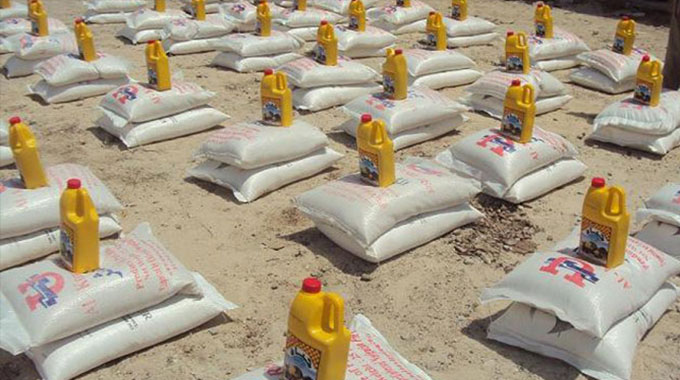
Nqobile Tshili, Chronicle Reporter
LOCAL universities have been tasked to conduct monitoring and evaluation processes as Government gears up for food distribution in drought affected communities.
Nkayi district development co-ordinator Ms Matilda Mlotshwa revealed this on Monday during a Seasonal Livelihoods Programming (SLP) launch for Nkayi District.
The World Food Programme and National University of Science Technology are leading the SLP survey.
Ms Mlotshwa hailed Nust’s participation in the exercise saying the university was doing exactly what Government is expecting from higher and tertiary institutions.
The Government has challenged universities to respond to societal challenges through research and innovations.
Ms Mlotshwa said in Matabeleland North, they will be working with Lupane State University while Gwanda State University will be in charge of processes in Matabeleland South.
“Recently, we were in a meeting in Harare where we were told that universities should be on the ground. In the drought relief you are now the monitors who are conducting the monitoring and evaluation. You will be evaluating whether village heads selected the rightful beneficiaries, whether the food reached its intended targets and what needs to be corrected.
“Therefore, universities have been given that mandate,” said Ms Mlotshwa.
She said each State university has been assigned to a province of its origin.
The country has state universities in each province of the country.
“The National University of Science and Technology (Nust) will be evaluating in Bulawayo. Each university will be monitoring processes in their provinces as we have state universities in each province. We are going to be working with Lupane State University,” said Ms Mlotshwa.
She said the involvement of universities is meant to increase transparency in the distribution of food relief.
Ms Mlotshwa said the involvement of universities would contribute to future studies while enforcing Government policies.
Government is set to roll out food distribution in communities following studies showing that 7,7 million people in both rural and urban areas will be food insecure at the peak of the drought season.
President Mnangagwa assured the nation that no one would die of starvation.
The drought, which came as a result of poor rains, was worsened by Cyclone Idai which affected the eastern parts of the country.
This prompted Government to redirect resources to rebuild areas that were seriously damaged by the cyclone. – @nqotshili


 Online Reporter