

 admin
admin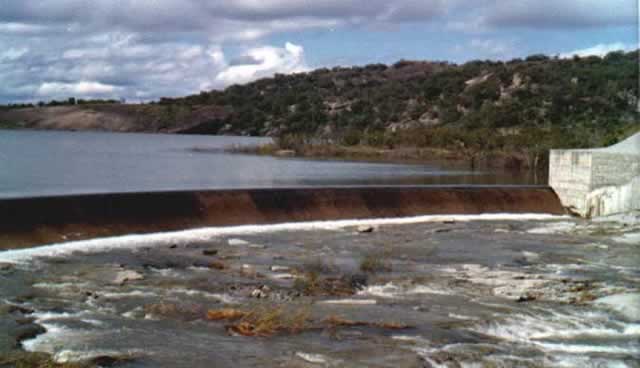
The Rhodesia Herald,
2 October 1970
THE Water Court, sitting in Bulawayo today, granted the Bulawayo City Council’s application to build the Upper Ncema dam, which will have a capacity of 10 000 million gallons.
The Court also granted the council authority to increase the capacity of Inyankuni Dam from 7,700 million gallons to 18 000 million gallons by the construction of a permanent spillway.
These two new rights give the council authority to increase its total water storage capacity by 20,030 million gallons.
The court granted the council’s application to abandon a previous scheme to build a tunnel linking Ncema and Inyankuni dams.
It also granted the council permission to amend the present quantities of water to be passed downstream.
The council submitted four applications all relating to the Upper Ncema, Ncema, Inyankuni, and Umzingwane Dams. Judge JB Pittman, who presided said they constituted “a very considerable revision of water rights granted in October 1968”.
LESSONS FOR TODAY
Despite the noble initiative to ensure that the City of Kings and Queens has adequate water for household and commercial use, Bulawayo is currently facing depleting water levels.
According to a report in last month’s Chronicle, “the Bulawayo City Council decommissioned Upper Ncema, Lower Ncema and Mzingwane dams between last year and this year, and water levels at the remaining Insiza, Inyankuni and Mtshabezi dams have dropped to 22 percent, resulting in the city imposing a weekly 144-hour water shedding programme.
Some legislators have implored Government to declare the water crisis in the country’s second largest city a state of disaster so that cooperating partners can come on board and assist with capital.
Water is life and clean water and sanitation services mean a healthy and productive nation. Lack of this precious commodity can lead to deadly water borne diseases like cholera, typhoid and dysentery.
Bulawayo City Council, the Government, the private sector and development partners must come up with a long-lasting solution to the city’s water woes. The infrastructure for water provision though very costly, should be built countrywide.
Observers have also asked what became of the Zambezi Water Project, whose objective was to ensure that the city would never face water challenges.



 Online Reporter