

 Chronicle Editor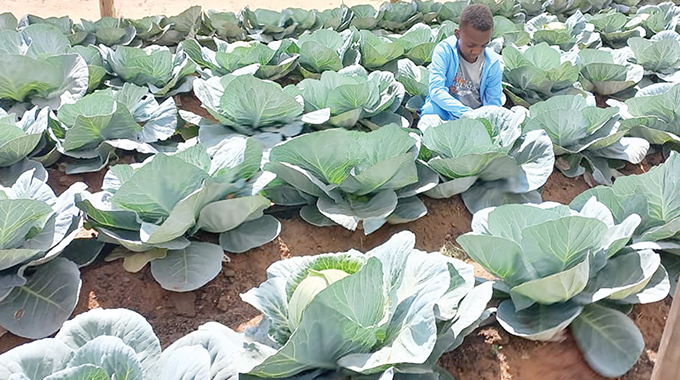
Nqobile Tshili, [email protected]
LUPANE State University (LSU) is leading a ground-breaking initiative to enhance food security in southern Africa by improving the nutritional value of Kalahari soils. The region, particularly Zimbabwe and Namibia, has been grappling with recurring droughts, exacerbated by the El Niño phenomenon.
These arid Kalahari soils pose significant challenges to agricultural productivity.
LSU, with its mandate to develop solutions for semi-arid regions, is conducting extensive research to revitalise these nutrient-deficient soils. The successful Bubi Lupane Irrigation Scheme serves as a testament to the university’s ability to cultivate crops in even the most challenging desert environments.
LSU’s Director of Innovation, Entrepreneurship, and Industrialisation, Dr Fortune Jomane, said that through knowledge-driven development, the university aims to improve soil quality up to Namibia, which faces similar soil challenges, to enhance food security.

“For us, the mandate is to push Heritage-Based Education 5.0, particularly the innovation and industrialisation thrust. What we are doing as a directorate is fostering an environment where the university’s activities solve community problems. We are in a semi-arid area; therefore, we have targeted schools and farmers to address the arid nature of our environment,” said Dr Jomane.
“Stretching from here in Lupane up to Namibia, the Kalahari sands are composed of infertile soils. We are targeting to improve that. We have introduced fertility trenches to deal with soil challenges and water management. We have a good irrigation programme and have trained numerous teachers, school development committees, and students. We do the initial installation and leave them to finish installing themselves and expand the installation.”
He said the university is satisfied with the work undertaken in communities to improve soil management. The university took a Chronicle news crew to some of the schools where it has successfully improved the fertility of the sandy Kalahari soils.
The university’s technician, Mr Tinashe Mbira, narrated how they have involved the school in viable horticulture produce from previously infertile soils.
“At AMR Sisters Primary School, we are trying to show the community how to manoeuvre and make the soils more productive. This cabbage was planted three months ago. Below these soils, there are fertility trenches where we have laid a layer of manure, grasses, and clay soils from outside to improve water holding capacity. The university is involved in project design, cropping patterns, and technical issues.
We are just a phone call away for pest management,” said Mr Mbira.
The university has also designed a solarised drip irrigation system, engaging pupils in the project. Mr Mbira said parents are also trained at the schools, hoping the project’s success will inspire them to be productive in their communities. He added that the university plans to use its Campus Radio station to disseminate agricultural information and educate the community on improving their yields.
AMR Sisters Primary School headmistress, Sister Plaxcedes Nyathi, said that through the irrigation project, they can provide supplementary feeding without challenges.
“We receive mealie-meal from the Government, so through the produce we get in our garden, we can provide for our children. Some of the farm proceeds are sold to the community, meaning we are no longer dependent on fees for some of the school’s projects,” said Sister Nyathi.
She added that the knowledge gained from the university is further imparted to community members for sustainable development.
Ndlovu Primary School head, Mr Vusumuzi Sibanda, said the university’s involvement has made them believe that through knowledge, it can be done.
“LSU is making a difference by empowering us with knowledge. Before we started working on our fields, the university’s technicians imparted a lot of knowledge on farming on these sandy soils. We learnt that these sub-Saharan desert soils can be improved, and we can get something out of them. We learnt about fertility trenches.
“They also took us to the university itself, where we interacted with their farm, motivating us to do this project,” said Mr Sibanda.
Mr Solomon Mpofu, a villager from Ndlovu Village in Lupane, said he never believed that desert soils could be made productive.
“You would expect weeds from the soil to show that there is life. This is like a desert. I never thought the soil could ever be enriched, but through the university’s engagement, what we are seeing now is like a dream. They showed us their expertise as they enriched the soil. Initially, I thought they would remove this soil, but they just put simple things like dry leaves, which we call natural manure, to enrich the soil. So the school garden has been transformed. We expect better yields in the coming three to six months,” said Mr Mpofu. — @nqotshili



 Online Reporter