Thandiwe Chidzungu, [email protected]
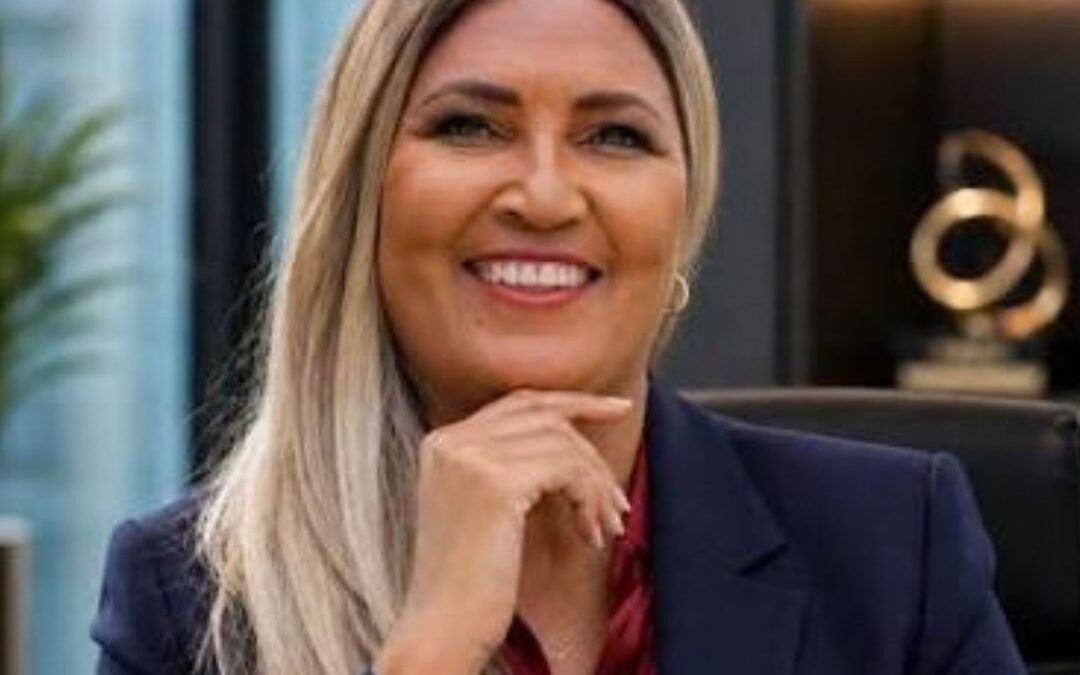
I WAS greeted by Lucinda Hughes Afzal’s heart-melting smile as she spoke with me.
She is, indeed, a free spirit. Yet beyond her warmth and easy conversation lies a woman who has built her life around one enduring belief: meaningful success is measured by how many lives we help uplift.
There are people who build careers, and there are people who build bridges. Ambassador Lucinda Hughes Afzal has spent much of her journey doing both. A proud Zimbabwean woman born and raised in Bulawayo, Hughes Afzal has carved out a multifaceted career spanning business, philanthropy, community development, and international engagement.
She serves as executive director of the Nozizwe Mother of Nations Trust Zimbabwe and SADC region agent for TripleM Holdings/Arada Properties, executive director of the Cally Rahman Blood
Drive, executive fundraiser for Kidzcan Zimbabwe, and is a published author.
Yet beyond the titles and achievements, she describes herself simply as a servant leader — someone committed to using enterprise, sport, humanitarian work, and diplomacy to create opportunities for women, children, and underserved communities.
At the heart of that commitment is a philosophy deeply rooted in her Zimbabwean upbringing: Ubuntu.
The women who shaped her
Long before philanthropy became a formal part of her life, Hughes Afzal was learning lessons about resilience, compassion, and responsibility at home. Raised by a strong single mother, alongside an ever-present grandmother, she witnessed firsthand what it meant to navigate life’s challenges with dignity and determination. Their example left an indelible mark.
“Watching them both navigate life’s hurdles with grace, unwavering dignity, and resourcefulness taught me early that circumstance does not dictate destiny,” she reflects.
Her childhood also gave practical meaning to the African understanding that it takes a village to raise a child. From those formative years came an enduring belief that strength is not simply about surviving adversity, but about helping others survive it too.
“I learnt that true strength is measured by how much you lift up others when resources are scarce,” she says.
That principle would eventually become a defining thread running through both her business and philanthropic life.
Ubuntu as a way of life
For Hughes Afzal, Ubuntu is more than a familiar African philosophy. It is a framework for how people should relate to one another.
“I am because we are,” she explains, “acknowledges that our individual wellbeing, success, and dignity are inextricably tied to the health and happiness of those around us.”
That philosophy shapes how she approaches community service.
Whether co-ordinating blood donation initiatives, supporting children affected by cancer, or creating opportunities for young people through sport, she believes humanitarian work should be rooted in dignity rather than simply charity.
Ubuntu, in her view, transforms the relationship between those who give and those who receive. It encourages solidarity, shared responsibility, and genuine engagement with communities.
“No person is an island,” she says.
It is a philosophy that has helped shape the work of the Nozizwe Mother of Nations Trust, which she established in 2018.
From giving to building
Although Hughes Afzal had always participated in acts of community giving, 2018 marked a turning point. She came to recognise that isolated acts of charity, while valuable, could not adequately
address the deeper and more persistent challenges confronting vulnerable communities.
The answer, she believed, was to create a structured and sustainable platform capable of coordinating long-term support. That vision led to the founding and registration of the Nozizwe Mother of
Nations Trust.
“I wanted to establish an organisation that could act as a bridge between commercial leadership, international peace platforms, and grassroots community needs,” she explains.
Her work has brought her into collaboration with organisations across different sectors, including Kidzcan Zimbabwe, the National Blood Service of Zimbabwe, educational initiatives, public health partnerships, and sporting associations.
“No single organisation or individual has all the answers or resources,” she says.
Partnership, she explains, begins with listening. Rather than arriving in a community with predetermined solutions, organisations must first understand what people actually need. From there, different sectors can bring their respective strengths to the table.
What communities need most
Her work has taken her into communities in Bulawayo, Tsholotsho, Harare, and beyond, giving her a close view of the challenges facing Zimbabweans in both urban and rural settings.
Among the needs she identifies are access to healthcare, educational infrastructure, clean water, food security, and opportunities for young people. In the health sector, she points to the struggles
faced by families dealing with childhood cancer, where access to treatment and financial support can make an enormous difference.
In rural and peri-urban communities, she says, basic infrastructure remains a pressing concern. Young people need constructive opportunities to learn, develop skills, participate in sport and imagine a future beyond the limitations of their immediate circumstances. For Hughes Afzal, investing in young people is, therefore, both a social responsibility and an act of nation-building.
Leading when resources are limited
Philanthropy comes with its own realities. Needs are often greater than the resources available, while funding pressures, logistics, supply chains, and bureaucratic processes can complicate even the best-intentioned initiatives.
Through her business experience and regional property partnerships, Hughes Afzal applies principles of efficiency, financial oversight, and strategic resource allocation to her philanthropic activities.
Her experience as alumni finance coordinator for the Pan African Leadership Institute in Zimbabwe has also reinforced the importance of financial stewardship, accountability, and strong partnerships. For her, good intentions must be accompanied by responsible management.
Finding motivation in impact
What keeps her going when the challenges seem endless?
A child receiving essential cancer treatment. A community gaining access to clean water. A young athlete discovering a previously unrealised talent.
“When you witness a life transformed, exhaustion disappears,” she says.
Her philosophy of leadership is equally direct: “Leadership is not defined by the abundance of your resources but by the strength of your commitment and your capacity to unite people around a shared purpose.”
Her faith, her roles as a World Citizen Peace Ambassador and Certified Peace Ambassador, and the dedication of the volunteers around her all contribute to her sense of purpose. For Hughes Afzal, peace and social upliftment are not abstract ideals. They are built gradually — “one step, one community, and one life at a time.”
A message to the next generation
Perhaps the most powerful part of Hughes Afzal’s story is that her message to young women is not about waiting for perfect circumstances. It is about beginning.
“You do not need extraordinary wealth to start making a difference, you only need a compassionate heart and the courage to take the first step right where you are, stand firm in your identity, practice Ubuntu in all that you do,” she says.
And then comes the message that perhaps best captures her own philosophy: “When a woman rises, she lifts her family, her community, and her entire nation along with her.”
For Lucinda Hughes Afzal, leadership is, therefore, not simply about occupying a position. It is about accepting responsibility for the people around you.