Gibson Mhaka, [email protected]
ZIMBABWE is entering a particularly significant period in its national calendar, with a succession of major gatherings bringing together religious leaders, political delegates, businesspeople and regional policymakers from Zimbabwe, Africa and beyond.
The sequence is important.
It begins in Bulawayo, where representatives from 36 African countries are expected to converge from October 6 to 10 for the Pan African Religious Leaders Assembly Summit, moves to Chinhoyi for the 23rd Zanu-PF National People’s Conference from October 12 to 17, and culminates in Harare with the 25th Common Market for Eastern and Southern Africa (COMESA) Heads of State and
Government Summit from October 19 to 22.
Taken together, the three events present a picture of Zimbabwe increasingly positioning itself as a venue for continental dialogue, political engagement, investment and economic cooperation.
For the Second Republic, this is significant because it fits squarely into President Mnangagwa’s foreign policy of engagement and re-engagement, anchored on the principle that Zimbabwe is “a friend to all and an enemy to none” and the broader thrust of making the country “Open for Business”.
The Bulawayo gathering is particularly noteworthy because it demonstrates that the city’s role in Zimbabwe’s national development story is not confined to the annual Zimbabwe International Trade Fair (ZITF).
For years, ZITF has been the principal platform through which Bulawayo showcases Zimbabwean industry, manufacturing, commerce, investment and innovation to domestic and international audiences.
The 2026 edition, for example, brought together Zimbabwe and Botswana at a time when the two countries were seeking to deepen economic and trade linkages.
The Pan African Religious Leaders Assembly Summit adds another dimension to that international profile.
The five-day gathering is expected to bring together religious leaders from 36 African countries under the theme, “Rise Up: From Dependency to Self-Sufficiency — Every Nation is Built by Its Own People.”
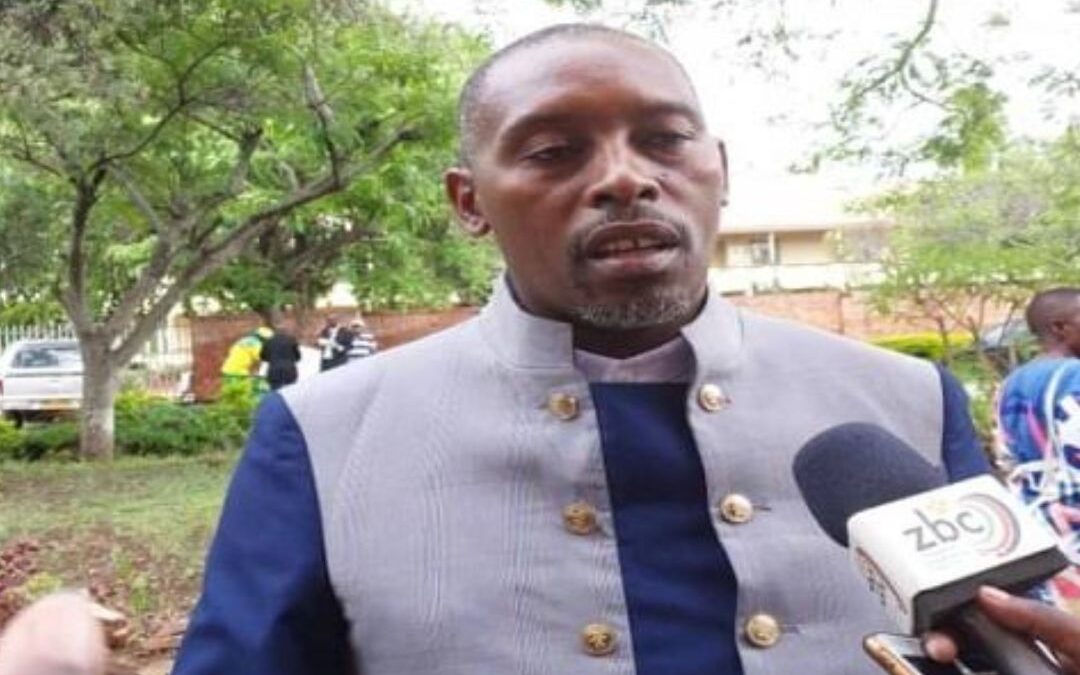
According to the Council for Churches in Africa founding president, Archbishop Dr Rocky Moyo, the summit is intended to move the African Church from a predominantly welfare-oriented approach towards one that contributes directly to economic empowerment, enterprise development, agriculture, skills creation and job creation.
That message is significant beyond the religious sphere.
Dr Moyo said the Church has a responsibility to participate in Africa’s economic transformation rather than simply responding to the consequences of poverty and underdevelopment.
“For too long, the church in Africa has been a pillar of hope, but our nations and ministries have remained dependent on external aid. We’ve prayed for Africa, and now God is telling us to build Africa.”
He said the summit seeks to change the narrative from dependency to productivity and self-sufficiency.
“The time has come for the church in Africa to shift the narrative – from survival to dominion, from aid to productivity, from dependency to self-sufficiency.”
That is where the Bulawayo summit begins to intersect with the broader development philosophy of the Second Republic.
Zimbabwe’s development agenda under President Mnangagwa has repeatedly emphasised production, value addition, beneficiation, empowerment, investment and the mobilisation of domestic resources towards Vision 2030.
The religious leaders’ summit is therefore not simply another conference on the calendar.
Its emphasis on self-sufficiency, entrepreneurship, youth empowerment, agriculture, infrastructure and investment places economic development at the centre of a gathering traditionally viewed primarily through a spiritual lens.
Perhaps its most interesting contribution to Bulawayo and Zimbabwe’s tourism ambitions is the decision to make religious tourism one of its pillars.
Dr Moyo argues that Zimbabwe possesses significant religious tourism potential, with sacred sites and major religious gatherings capable of attracting visitors from across Africa.
“Religious tourism is not just spiritual – it is economic. It creates jobs, it fills hotels, it supports transport, it markets our nation.”
This is an important proposition for Bulawayo.
A city seeking to strengthen its tourism, hospitality, conferencing and services sectors cannot depend on one annual event, ZITF, no matter how important it might be.
The city needs a calendar of major gatherings capable of bringing visitors throughout the year and generating sustained demand for hotels, restaurants, transport operators, conference facilities, traders and other small businesses.
The religious leaders’ summit could therefore complement the economic ecosystem built around ZITF by demonstrating that Bulawayo can host different categories of international events.
This is consistent with the Government’s broader efforts to attract investment and economic activity to the city.
Recent developments around the Zimbabwe International Exhibition Centre Smart City, including the planned US$12 million Fairgrounds Retail Centre investment, point to an expanding ecosystem around the city’s conference, exhibition and commercial infrastructure.
The significance of the 36-country gathering is therefore not simply the number of delegates it attracts.
It is the network it creates.
Religious leaders command large constituencies across Africa. Their networks stretch into communities, schools, universities, businesses, social organisations and charitable institutions.
If the summit succeeds in creating practical partnerships around investment, youth entrepreneurship, skills development and religious tourism, Bulawayo could benefit well beyond the five days of the event.
This is precisely the kind of outcome that can give substance to the Second Republic’s engagement policy.
Engagement, after all, is not supposed to end with diplomatic handshakes. Its economic value lies in converting relationships into partnerships, partnerships into investment, and investment into jobs and production.
The Bulawayo summit is followed almost immediately by another major national gathering in Chinhoyi.
The 23rd ZANU PF National People’s Conference which will run from October 12 to 17 under the theme, “From Resolutions to Results: Consolidating Economic Development and Deepening Empowerment Towards Vision 2030.”
Preparations are already at an an advanced stage, with accreditation underway and various infrastructure projects in Chinhoyi being put up for the conference.
The progression from Bulawayo to Chinhoyi is noteworthy.
In Bulawayo, African religious leaders will be discussing self-sufficiency and building Africa with African resources.
In Chinhoyi, the governing party will be discussing how to move from resolutions to tangible results under Vision 2030.
And in Harare, the COMESA Summit will focus on “One Market, One Future: Advancing Inclusive Industrialisation, Investment and Regional Integration in COMESA.”
There is a discernible thread running through all three.
Self-sufficiency. Production. Investment. Empowerment. Regional integration.
That thread is particularly relevant to Zimbabwe’s engagement and re-engagement policy because the Second Republic has sought to give foreign policy an economic dimension.
President Mnangagwa has consistently said Zimbabwe wants to deepen relations with countries across the world while creating opportunities for economic, cultural and bilateral cooperation.
The country’s successful campaign for a non-permanent seat on the United Nations Security Council for 2027-2028, secured with 182 votes, has also been presented by the Government as an endorsement of that engagement and re-engagement trajectory.
The October events now provide another opportunity to translate that diplomatic philosophy into practical outcomes.
For Bulawayo, the immediate challenge is to ensure that the religious summit leaves more than memories, photographs and a closing ceremony.
Dr Moyo says the organisers expect to produce a Pan African Clergy Welfare Framework, an African Church Investment Fund, a Zimbabwe and Africa Leadership Declaration on self-sufficiency, a
Women and Youth Empowerment Charter, a joint action plan on drugs, early marriages and environmental degradation, and a Pan African Religious Tourism Blueprint for Zimbabwe and Africa.
Those proposed outcomes provide a useful measure against which the success of the summit can eventually be judged.
If the religious tourism blueprint translates into actual pilgrimage routes, improved sacred sites, stronger marketing, better transport linkages and increased visitor numbers, Bulawayo and
Zimbabwe could begin capturing a larger share of a niche but potentially significant tourism market.
If the proposed investment and empowerment initiatives produce partnerships, businesses and employment opportunities, the summit would have moved from rhetoric to results.
That is also the test that awaits the Chinhoyi conference.
The theme “From Resolutions to Results” places implementation at the centre of the governing party’s agenda.
Projects being prepared for the conference, including the Chinhoyi water reticulation project, hospital oxygen plant, road upgrades and planned developments, reinforce the emphasis on tangible outcomes.
Then comes Harare.
The COMESA Summit and Business Forum will bring the engagement agenda directly into the regional economic arena.
The COMESA Business Forum is expected to connect Zimbabwean businesses with buyers, investors, financiers and policymakers from a regional market of more than 640 million people and an economy estimated at about US$1 trillion.
This makes October more than a sequence of events.
It is a test of Zimbabwe’s capacity to host, engage, connect and convert.
Bulawayo demonstrates the country’s capacity to convene African religious and social leadership.
Chinhoyi will be a political platform for translating resolutions into development priorities.
Harare provides the regional economic platform for advancing trade, investment and industrialisation.
And over all three runs the foreign-policy philosophy of a Zimbabwe that seeks partnerships rather than isolation.
The Second Republic’s “friend to all and enemy to none” approach is therefore acquiring a distinctly practical dimension.
The objective is not simply to be seen talking to the world, but to use those relationships to create opportunities for Zimbabweans.
For Bulawayo, that means using its established ZITF identity as a springboard towards a broader conference, tourism and investment economy.
For Chinhoyi, it means demonstrating that national political resolutions can translate into projects and improved livelihoods.
For Harare, it means using the COMESA chairmanship and summit to open regional markets for Zimbabwean producers and deepen the country’s position within African value chains.
The real measure of this diplomatic and events calendar will consequently not be the number of dignitaries who arrive, but what remains after they leave.
If partnerships are built, investments secured, tourists attracted, businesses connected and development programmes launched, then the October sequence will have demonstrated precisely what the Second Republic’s engagement and re-engagement policy seeks to achieve: turning Zimbabwe’s renewed international relationships into tangible economic opportunities at home.
From Bulawayo’s religious tourism ambitions, through Chinhoyi’s political resolutions, to Harare’s regional economic diplomacy, the message is increasingly clear.
Zimbabwe is opening its doors to Africa and the wider world and seeking to ensure that engagement produces development.
Ends. CKD NT