Online Reporter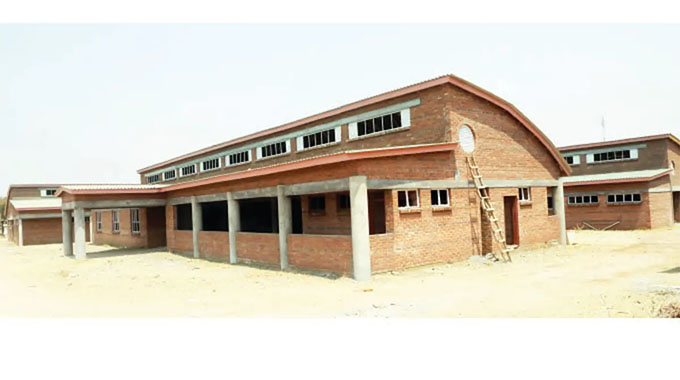
Rutendo Nyeve, Victoria Falls Reporter
MATABELELAND North Provincial capital, Lupane District, is undergoing a remarkable transformation through rolling out of key infrastructure and utilities projects, laying the foundation for a modern provincial capital.
According to a latest local development report, the district has witnessed significant progress covering electrification of households, road maintenance, healthcare facilities, water reticulation and educational institutions, showcasing a district on the move.
The electrification of Lupane’s rural and urban areas is a key highlight of the development agenda.
“In Lupane’s high-density areas, construction is 80 percent complete, with three transformers slated for relocation.
The medium-density stands are finished and seven houses have already been connected.
“Residents have been advised to complete tubing and wiring to expedite the process,” reads the report.
The new commercial area near Zimpost is also poised for development, with the Bill of Quantities and costing finalised, awaiting materials from central stores.
Once completed, 300 commercial stands will be powered, unlocking economic potential. Routine road maintenance has been a priority, with notable work on the Bulawayo-Victoria Falls Road, where gravel and premix pothole patching has been carried out between 140km and 260km peg.
The Lupane Provincial Hospital project stands as a testament to the district’s healthcare ambitions. Most buildings are at advanced stages, with the central stores 70 percent complete, roofed and internal plastering at 100 percent.
The pharmacy is 65 percent done, while the casualty unit stands at 70 percent. The outpatient department (OPD) twin buildings are roofed, with internal plastering at 90 percent and the administration block is 65 percent complete.
Staff accommodation, the eye and dental clinic, paediatric ward, surgical ward, maternity admissions, theatre, kitchen and substation are all progressing, though roofing and plastering works remain outstanding.
“The St Luke’s Covid-19 Isolation Centre is 85 percent complete, with roofing, internal plastering and electrical wiring finalised.
“Outstanding tasks include epoxy flooring, ceiling plastering and plumbing. However, the project has been temporarily shut down due to financial constraints, with partial handover to St Luke’s authority while awaiting funds for completion,” reads the report.
Similarly, water reticulation projects are transforming access to clean water. In King Lobhengula, Phase 1 and 2 are complete, with Phase 3 undergoing pressure testing.
“Pipe laying in Phases 4 and 5 is 80 percent done, though slow delivery of valves and fittings poses delays. The Non-Revenue Water Reduction programme in Jotsholo has replaced 50mm AC lines with 63mm PVC, while 110mm Class 12 pipes have been laid,” reads the report.
Borehole drilling and rehabilitation have also seen progress, with two boreholes drilled and three solar installations completed by World Vision.
“Fifteen boreholes were rehabilitated by Amalima Loko, and eight repairs were carried out,” reads the report.
Educational infrastructure is receiving a boost, with projects like the Gogu School Lab Block now 80 percent complete, courtesy of community engagement and World Vision support.
“Kana 6 Primary School is 95 percent finished, while Malunku Primary stands at 60 percent. Sanitation projects, such as flush toilets at Zambaza Secondary School and Gandangula Primary, are advancing,” reads the report.
The Welshman Mabhena Government Complex has seen a telephone and internet node installed, though linking composite blocks is delayed due to missing ducts. Trenching and cable laying are scheduled for July 2025.
Meanwhile, the Mtshibini and King Lobhengula Townships await approval for Fibre-to-Home (FTTH) networks, with temporary services provided to nearby schools and households.
The Infrastructure and Utilities report reflects Lupane’s commitment to growth, despite financial and logistical challenges.
From electrification and roadworks to healthcare and education, the district is steadily emerging as the capital of development in Matabeleland North.
Engagement with local communities and strategic partnerships remain key to sustaining this momentum, ensuring Lupane’s rise as a provincial capital worthy of its people’s aspirations.