Amos Mpofu [email protected]
LUPANE Local Board is targeting planting 25 000 indigenous hardwood trees over the next five years as part of a broader environmental plan aimed at tackling land degradation, pollution and sanitation challenges in the growing town.
The target is contained in the draft Lupane Local Environmental Action Plan (LEAP) 2026–2031, which also prioritises improved waste management, wastewater infrastructure, protection of wetlands and rehabilitation of degraded river ecosystems.
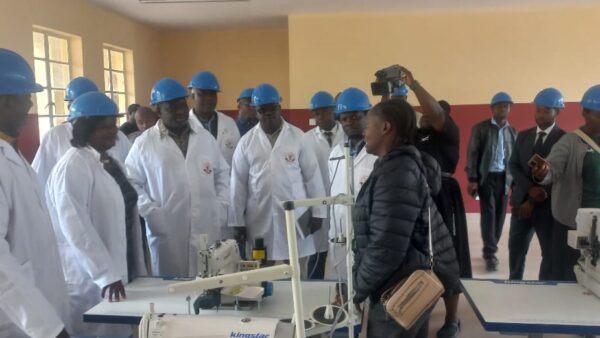
The proposals emerged during a two-day validation workshop held in Lupane from Tuesday to yesterday, bringing together Government departments, academic institutions, community representatives and other stakeholders to review the town’s environmental priorities.
Held under the theme, “Towards a Clean, Green, Resilient and Sustainable Lupane”, the workshop sought to verify baseline environmental data, agree on key challenges and establish practical interventions, budgets and institutional responsibilities for the five-year plan.
Environmental Management Agency (EMA) provincial education and publicity officer for Matabeleland North, Mr Graham Ndou, said the validation process was intended to ensure that the plan responded to actual environmental conditions in the town.
He said stakeholders conducted a field tour on the first day, assessing the Lupane Local Board operational dumpsite, illegal dumping hotspots, sewerage and sanitation infrastructure, Shabulanyana Vlei, the Lupane River riparian zones and urban green spaces.
“On the second day, the technical sessions focused on refining the draft LEAP 2026–2031, aligning institutional mandates, establishing realistic budgets and agreeing on monitoring frameworks,” said Mr Ndou.
The assessments exposed gaps in solid waste management, sanitation infrastructure, ecosystem protection and biodiversity conservation.
According to the draft plan, Lupane operates one dumpsite that handles an estimated 3,17 tonnes of waste daily, equivalent to approximately three tractor loads of three cubic metres each.
However, illegal dumping and limited waste recovery remain major challenges.
The sanitation assessment also revealed that only 403 of the 5 450 residential stands included in the planning baseline are connected to the bulk septic tank and baffled reactor system, highlighting the need for investment in wastewater management.
Environmentally sensitive areas, including Shabulanyana Vlei and the Lupane River, are also under pressure from riparian degradation, pollution pathways and sparse vegetation.
Lupane Local Board town secretary Mr Chalton Moyo acknowledged the challenges, saying land degradation and indiscriminate waste disposal required urgent intervention.
“From what we have observed in the surrounding areas, it is clear that some places have been degraded and left in an unsanitary condition. People are degrading the land and dumping waste indiscriminately,” he said.
“This is precisely why we are reviewing and developing a policy framework to address these challenges and prevent them from recurring.”
Mr Moyo said the local authority, working with its partners, will intensify community education on hygiene, environmental cleanliness and public health while strengthening enforcement of council by-laws and regulations.
“We are going to educate residents on hygiene, environmental safety and the prevention of diseases.
This will be guided by the policy framework developed under the local authority, taking into account the concerns and recommendations raised by residents during our consultations,” he said.
Mr Ndou said the draft plan was anchored on five strategic objectives: waste and pollution control; sanitation and water protection; biodiversity and ecosystem conservation; urban greening and climate resilience; and governance and accountability.
Under waste management, the proposals include improving dumpsite operations, strengthening waste collection, promoting recycling and enforcing regulations against illegal dumping.
The sanitation and water protection component identified the construction of a decentralised wastewater treatment plant as a major priority, alongside improvements to sanitation infrastructure and measures to protect water resources.
For biodiversity conservation, the plan proposes protecting Shabulanyana Vlei and rehabilitating degraded riverine and riparian corridors.
The urban greening and climate resilience strategy sets a target of planting 25 000 indigenous hardwood trees across 50 hectares between 2026 and 2031. Drought-tolerant species will be prioritised, with mechanisms to monitor tree survival.
On governance and accountability, the plan proposes a plan–do–check–improve monitoring system, supported by designated institutional focal persons, measurable performance indicators and transparent resource mobilisation.
Mr Ndou said the success of the plan would depend on sustained cooperation among institutions responsible for environmental management and service delivery.
The Lupane Local Board is expected to lead local coordination and service delivery while EMA will provide regulatory oversight and monitor environmental compliance.
Other partners include the Zimbabwe National Water Authority, Forestry Commission, provincial Government offices, Lupane State University, the private sector and local communities.
Following the incorporation of recommendations from the workshop, the final LEAP 2026–2031 document will be submitted for formal institutional approval before resource mobilisation and phased implementation begin.