Judith Phiri [email protected]
INFORMATION, Communication Technology, Postal and Courier Services Minister Dr Tatenda Mavetera has called for the development and adoption of technologies that are accessible, affordable, sustainable and responsive to people’s needs.

She said technology should not be judged by how sophisticated or expensive it is, but by its ability to solve real problems, improve livelihoods and transform communities.
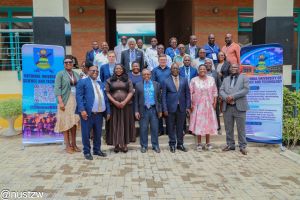
In a keynote address read on her behalf by the Ministry’s Bulawayo Provincial Head, Engineer Stanley Mubvumbi, at the 12th International Conference on Appropriate Technology (ICAT) in
Bulawayo on Wednesday, Minister Mavetera said appropriate technology should address practical challenges facing communities.
“The true value of technology lies in its ability to solve real problems, improve livelihoods, create opportunities and transform communities. Appropriate technology must be accessible, affordable, sustainable and responsive to the needs of the people it is intended to serve.
“A digital learning platform that enables a child in a rural school to access quality educational resources is an example of appropriate technology. A solar-powered ICT centre that provides internet connectivity to an underserved community is another,” she said.\

She also cited digital agricultural solutions that help smallholder farmers access weather information, markets and agricultural advisory services as examples of technology driving economic empowerment.
The Minister said the success of technology should be measured by the positive difference it makes in people’s lives rather than its sophistication.
She said the Second Republic, under President Mnangagwa, had placed modernisation, industrialisation, innovation and human-capital development at the centre of its development agenda, in pursuit of an upper-middle-income economy by 2030.
“This national development direction provides an important framework for institutions such as the National University of Science of Technology (NUST), other universities, research institutions, the private sector and Government Ministries to align their work towards practical solutions that improve productivity, expand opportunity and strengthen the country’s capacity to compete in a knowledge-driven global economy,” she said.

Minister Mavetera said the emphasis on science, technology, innovation and education reinforced the need to move beyond acquiring and consuming technology towards research, local innovation, adaptation, production and commercialisation.
“The Second Republic’s focus on the application of education, science and innovation to national development also reinforces the need for stronger linkages between universities, industry and communities. Research must respond to real-world challenges; innovation must reach the marketplace; and technological progress must translate into tangible benefits for citizens.”
She said her Ministry was committed to working with the Ministry responsible for higher and tertiary education, universities, regulators, industry and development partners to promote digital inclusion and the responsible use of emerging technologies.
The collaboration, she said, should translate national development aspirations into practical outcomes, including reliable connectivity, accessible digital services, relevant skills, stronger cybersecurity and locally developed solutions.
“Through the national development framework and Vision 2030, digital transformation, innovation, infrastructure development and inclusive access to ICT services remain important areas of focus,” she said.
“As the Ministry responsible for Information Communication Technology, Postal and Courier Services, our role is to facilitate an enabling environment in which digital technologies contribute meaningfully to economic growth, efficient public service delivery and improved quality of life.”
She said meaningful digital transformation required more than simply making technology available. It also depended on reliable connectivity, affordable access, relevant digital skills, cybersecurity awareness, supportive policies and partnerships between Government, academia and industry.
The Minister said digital transformation should benefit not only people in major urban centres but also rural communities, women, young people, persons with disabilities and other underserved groups.
“No community should be left behind in Zimbabwe’s digital transformation journey. One of the greatest challenges confronting developing economies remains the digital divide.
“Significant differences still exist in access to connectivity, digital devices, technical skills and opportunities to participate in the digital economy. The Ministry continues to support initiatives aimed at expanding ICT access through digital infrastructure development, community information centres, digital skills programmes and connectivity initiatives,” she said.
She said improving connectivity in schools, public institutions and communities in Bulawayo and across the country remained a priority.
However, she said infrastructure development had to be accompanied by skills development, reliable power and appropriate equipment.
“A connected school must also have trained teachers, relevant educational content, reliable power and adequate equipment. A connected community must have the skills and confidence to use digital services productively. It is therefore essential that infrastructure development and digital skills development progress together.”
The four-day conference, being held at NUST, is running under the theme: “Harnessing Appropriate Technologies for Sustainable Development: Empowering Communities, Bridging Gaps and Driving Inclusive Growth.”