 Fortious Nhambura
FORTIOUS NHAMBURA: You have a new novel. What is it called and briefly what is it about?
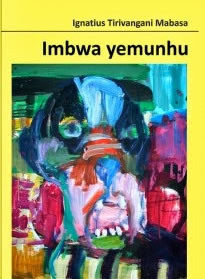
IGNATIUS MABASA: Yes, I have a new novel, my third Shona novel to be precise. It’s called Imbwa yemunhu (inja Sibili in Ndebele and You Dog in English). It’s a story told from the perspective of a senior bachelor called Musa who is hopelessly in love with beer. His family tries to help him in all sorts of ways to get married and settle down, but all their interventions don’t work.
When Musa eventually finds love and announces that he is ready to marry, his relatives are scandalised because the woman is married to another man. Imbwa yemunhu is a novel that bites like a rabid dog. Employing the dog metaphor, it chides human folly and snarls at life. This is a novel about life, and the life is a dog. But who owns this dog?
FN: Your first two novels were published by College Press, is Imbwa yemunhu also published by College Press?
IM: Imbwa yemunhu is not a College Press publication, it was published by Bhabhu Books.
FN: So you have ditched College Press?
IM: Not at all. Kukura kwemwana achinotangawo musha wake hakusi kutiza musha. After many years of a very good relationship with College Press, I decided to try something new in response to the social changes. College Press (through Chirikure Chirikure) discovered me and immensely helped me to be the poet and writer that I am today when they published me in the anthology Tipeiwo Dariro and my debut award-winning novel Mapenzi. I would not be where I am as a writer without College Press, so I can’t say I have ditched them. I am just venturing out to see what is over the hedge!
FN: What is Bhabhu Books?
IM: Bhabhu Books is a Zimbabwean book publishing and Shona language promoting organisation that was established in 2011. It is there to help nurture our children and make them understand the world through books and stories mainly in their first and mother language. Bhabhu Books offers other services such as Shona reading workshops, Shona translations services, storytelling and Shona children’s games. So far, we have been concentrating on producing Shona readers for ECD and primary school.
FN: Which other authors are going to be published by Bhabhu Books?
IM: Tinashe Muchuri, Clever Kavenga, Memory Chirere, Jerry Zondo are some of the authors we will be publishing.
FN: So where can Imbwa yemunhu be found?
IM: For now, the novel is available on Amazon.com as an e-book. We decided to initially publish it as an e-book because of high printing costs locally as well as to curb piracy. Right now we are looking for cheaper printing companies in China that can print the book at reasonable costs so that it sells for US$5 or less and the inquiries show that this is possible.
We are not looking at huge profit margins because that is what is also fuelling the piracy market. So Imbwa yemunhu will soon be available in hard copy. But we also hope to engage companies like Econet to sell mobile versions, and these are actually much cheaper — a novel like Imbwa yemunhu on mobile phone can be bought for as little as US$1 because there are no printing costs.
FN: How did the idea of putting Bhabhu Books Shona readers onto Amazon come to you?
IM: While it was my strong wish to have Shona readers on Amazon mainly because of high printing costs and piracy — the idea came more as an opportunity when friends from Zimbabwe Reads, an NGO that is into literacy promotion told me that they had shown a few copies of Bhabhu Books readers to representatives of Worldreader who were visiting Zimbabwe and they had shown great interest in the readers. So, Zimbabwe Reads linked me up with Dani (Zacarias) at Worldreader and as they say, the rest is history.
FN: Who is Worldreader?
IM: Worldreader, is a US NGO that provides digital books to children and families in sub-Saharan Africa and other developing nations using e-reader and existing mobile phone technology. They recently signed new digital publishing deals with Bhabhu Books, Bulawayo-based Ama Books and Weaver Press from Harare.
FN: Please describe how the collaboration with the Worldreader developed. Is it an easy procedure?
IM: The collaboration with Worldreader has been a great personal and professional development opportunity for me and Bhabhu Books. We have invested a lot of time, trust and patience into the relationship. There has been a lot of e-mail exchanges, lots of paperwork, sending and resending documents.
Reading contracts, consulting, asking questions, answering questions, completing forms and waiting. It has been an interesting journey — more like Dorothy’s when she went to the Wizard of Oz’s city. There are a lot of things I used to take for granted which have made me realise that the e-book publishing world is a different ball game from the traditional book publishing that we are used to.
FN: So, is digital publishing the way to go in Zimbabwe?
IM: There is no doubt that Zimbabwe is currently experiencing a technological revolution and the mobile phone is actually the leader of this phenomena. There is now e-news, e-money (championed by EcoCash) and mobile phones have now found their way into very remote rural areas. People are sharing and exchanging a lot of information via mobile phones and if organisations like Worldreader are already providing digital books on existing mobile phone technology, we are looking at a future where books will be sold and distributed via these devices.
This will drastically reduce costs such as marketing, distribution, warehousing etc. So yes, I can boldly say the future is digital and as Zimbabweans we need to be ready for this positive social development.
FN: I understand that Simon Chimbetu is one of the characters in Imbwa yemunhu?
IM: Yes, Simon Chimbetu is a character in the novel. I love Simon Chimbetu’s music and if you read my first novel Mapenzi, you will come across Simon Chimbetu’s songs that are sung a lot by Ticha Hamundigone, the protagonist. In Imbwa yemunhu, Simon Chimbetu is captured giving his views about life from the other world he wrote his Samatenga song from — kunyika iri kure kwavasingagone kunyora tsamba. Besides it being a literary device, it is a way of recording, reminding and celebrating the phenomenal life of one of Zimbabwe’s finest musicians.
FN: Finally, what inspired the choice of the cover of your novel?
IM: Obviously the story inspires the cover. The cover of my novel was done by our own talented and international artist Misheck Masamvu. After I had briefed Masamvu about the novel and the story — he produced an amazing picture which I love very much. If you look at the painting by Masamvu, that dog is not enjoying being a dog — the state of the dog captures the state of affairs in the lives of the characters.
For me, working with Masamvu not only raises the Bhabhu Books profile, but also shows that local artists must collaborate as much as possible because we need each other — sharing information and exchanging ideas.
FN: Thank you so much for your time.
IM: You are welcome my brother.