Online Reporter
Yesteryear great with Lovemore Dube
MADINDA Ndlovu, in full flight during the 1980s, was every left-back’s nightmare.
He was unstoppable and deservedly among the most capped wingers.
To emphasise his class, he appeared on the calendar more than any other winger of that time and was twice disqualified for red cards against Lucky Dube, the Dynamos goalkeeper.
Madinda was synonymous with happiness and positivity within Bosso’s playing squad, making stars out of many teammates because of his industry when on the field.
But Madinda is the first to admit that, while defenders nationally and beyond the borders were at his mercy, Oliver Kateya, the former Dynamos left-back, was a tough nut to crack.
Kateya started as a flying striker, scoring goals for fun and is said to have scored 62 goals in his last season with Metal Box before moving to Dynamos.
He later switched to left-back as an emerging Lloyd Katsvere took over the left-wing position.
In an interview with Zimpapers Sports Hub on Friday, Madinda described Kateya as a brilliant opponent and national teammate.
“Oliver Kateya was a brilliant left-back who, on his day, could win a match for his club on his own. Kateya made life difficult for right-wingers, as he would overlap and recover with lightning speed,” said Madinda.
What made Kateya different, Madinda believes, was his intelligence too.
“He was intelligent, fast and made life hard on the pitch. But I believe I was an exception — he knew what he was coming up against when facing me because I was pacey too and unpredictable in full flight,” said Madinda.
Madinda recalled one duel when he received the ball and said to Kateya: “I hear you have pace, let’s go.”
He took Kateya on, and in full flight, stopped with the ball. As Kateya chased, Madinda immediately stopped with the ball, as if he thought he would turn in, he then proceeded to cross the ball into the box, leaving Kateya sprawling on the turf.
The duels between the two were legendary. Once Madinda was dispossessed by Kateya, the tracking back and anticipated outcomes involving Kateya versus Highlanders’ dependable right-backs Mercedes Sibanda or Fanuel
Ncube were pure entertainment, as the quality of the delivery or shot on goal was textbook stuff.
“I have great respect for Kateya, one of the all-time best left-backs I ever encountered in my career. Kateya could do amazing things with the ball on the field,” said Madinda, who broke into the Highlanders first team in 1980.
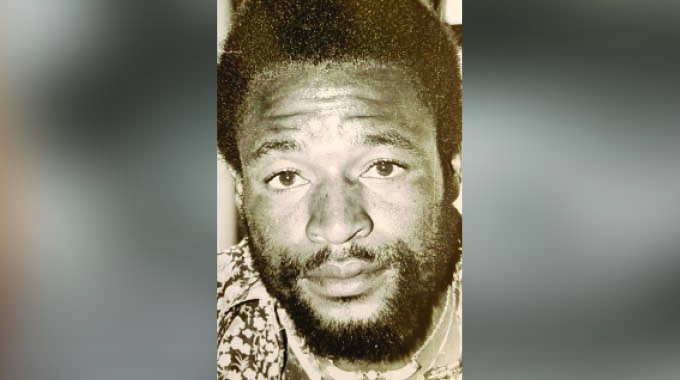
Kateya played for Dynamos alongside Sunday and Misheck Chidzambwa, Garnett Muchongwe and a number of good goalkeepers such as Labani Kandi, Matthew Mwale, Lucky Dube, Frank Mkanga and the brilliant Japhet “Shortcat” Mparutsa.
Madinda was teammates with Kateya on the national team from 1981 to 1986.
“Kateya was knowledgeable about football and an inspirational role model for us younger players when we joined the national team. He embraced us, gave us tips that boosted our confidence and didn’t let inter-club rivalries interfere,” said Madinda.
Dynamos also had Eddie Muchongwe at left-back, who had the task of marking Madinda.
“He was good for his own calibre but didn’t challenge me like Kateya did. He was more solid as a defender, using his frame to his advantage, but due to his lack of pace, I never had problems with him — I always got the better of him,” said Madinda.
Another Dynamos left-back Madinda faced was Stanley Chirambadare.
“He was not as strong as Kateya, just like Claudius Zviripayi. Remember, I went to Germany, and these two played more games with my younger brothers Peter and the late Adam,” said Madinda, adding that Kateya was the “real deal.”
Madinda also spoke about his duels with Zimbabwe Saints’ Josphat Humbasha, who would openly kick him.
“As soon as we got close to each other at the start of the game, Humbasha would come straight to me and say he would kick me. It was nothing personal, outside the game, we would meet and greet. During the 1980s, fights between fans started the moment fixtures were announced on Monday or Tuesday. Rival supporters fought each other and the tension in the game was intense,” said Madinda, who probably received more rough tackles from Humbasha than from the entire backline of other teams in a season.
He said his advantage over Humbasha was his speed, which seemed to frustrate the Saints’ left-back.
“Because of my pace and ability to switch legs in flight, fans called me Khathazile because I was a nuisance to defenders,” said Madinda.
Madinda mentioned that teams like Wankie (now Hwange) had good defenders such as Benson Soko, Isaac Nyathi, Luke Masomere, and Knight Mathe.
“It was these players who went an extra gear to face my challenge. Every defender knew what they were up against.
Unless I was out of form or the whole team was struggling on a particular day, no defender could stop me. Knight was good but a bit too slow, so I would give him a tough time — even when he was with Gweru United,” said Madinda.
Nicknamed Khathazile, Shaky, Madlezibabayo and Juluka, Madinda also has respect for former Gweru United left-back Ashton Mhlanga, who was a penalty specialist.
“He was an intelligent left-back, with good timing, tackles and interceptions. It was never an easy afternoon, I would have to dig into my bag of tricks to get the better of him,” said Madinda.
Zisco was known to have the best right-back and left-back combination, as well as some of the best centre-backs — James Takavada (right-back), Ephraim Dzimbiri (left-back) and Benedict Moyo (centre-back) — many of whom were also selected for the national team.
Takavada and Dzimbiri were firm wing-backs and both very intelligent.
“I would rate Dzimbiri higher. If you beat him, he was a never-say-die player like Fanuel Ncube — you beat him and he would be chasing you. He was superb with the ball too,” said Madinda, who played in the Olympic, Under-20 and senior national teams alongside Dzimbiri and Takavada.
He also reflected on myths surrounding Torwood Stadium in Redcliff. “I didn’t believe in ‘umuthi,’ even when my club did rituals before matches. I would go to St. Patrick’s for Catholic services, and teammates and fans would say I had pride. But looking back, there was a small bridge we were told not to cross during play because it was a trap. Sometimes, at Zisco, we found ourselves off form or too tired — maybe those things work,” said Madinda.
The former Bosso and Zimbabwe international, who was so talented he even passed a trial at Sheffield Wednesday in 1985 — only for the move to be blocked — said Ephraim Moloi and Benedict Moyo combined with the wing-backs made Zisco a tough team to beat.
“Under Paul Moyo, Zisco was a solid and tough opponent,” he said.
Madinda also spoke about the late Arcadia defender Majid Dhana and the atmosphere at Danny Bismark in Harare.
“It always felt different playing at Arcadia. The crowd and supporters cheering on top of their voices gave the game a special feel,” said Madinda.
Regarding Dhana, he said: “He was tough, coming at you hard and telling you not to come close. I remember once, against Cameroon, he kicked a player. The Cameroonian told him to play football and the next thing, Dhana’s shorts were torn to shreds. He was tough alongside Reg Payne and Dorman Moodley. Joey Antipas was also part of that no-nonsense defence, they were as hard as our own Henry Jones.”
Initially, players stuck to their designated roles, such as right winger or left winger, but Madinda excelled even when moved to the opposite flank, challenging players like Graham Boyle of Rio Tinto.
“I faced good right-backs like Takavada, Boyle of Rio Tinto and Benson Soko of Wankie, but as I said before, I feared no defender. It was them under pressure every time they faced me,” said Madinda.
He admitted to losing his temper once when repeatedly kicked by the same opponent during matches.
Born in Siabuwa in Binga District, Matabelelaand North Province on 2 May 1965, Madinda grew up in Bulawayo and joined Highlanders juniors in 1977.
He made his breakthrough at the age of 15 in 1979 when Bosso was playing in the South Region national league, but his Super League debut came in 1980, at the insistence of the late Vice-President Joshua Nkomo, who believed he was too talented to ignore.
Highlanders had visited Zambia at the end of August 1980, and the reserve team played a friendly match against Gwayi River Mine Assembly Point’s team of ex-combatants.
Madinda’s impressive performance led the late Zapu leader to openly marvel at his speed and skill.
By then, Madinda had already become the first Bosso player to be capped at Under-20 level, a milestone he repeated in 1982, further cementing his and Highlanders’ place in independent Zimbabwe.
He played in Germany from 1989 to 1991, during which his younger brothers Peter and the late Adam blossomed into Warriors material.