Online Reporter
Veronica Gwaze at Ngoni, Norton
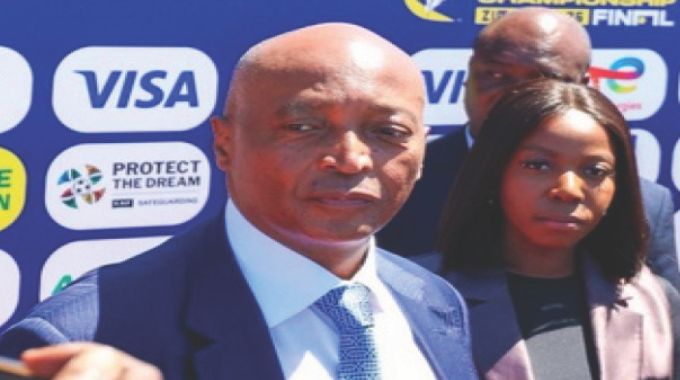
CONFEDERATION of African Football president Patrice Motsepe has thrown his weight firmly behind ZIFA president Nqobile Magwizi, applauding his leadership and crediting him for steering Zimbabwe towards a renewed and deliberate focus on grassroots football.
Motsepe, who was in the country for the CAF African Schools Football Championship, used the occasion to emphasise what he believes is tangible progress in Zimbabwe’s game, driven largely by investment in youth development and the structures that support it.
The week long tournament, hosted across Harare and Norton, concluded with Ghana clinching the Under 15 girls’ title and Senegal lifting the boys’ crown, outcomes that underscored the growing continental emphasis on schools football as a sustainable pathway for talent development.
Yet it was at Ngoni Stadium yesterday that the broader significance of the visit truly crystallised.
Motsepe officiated at the signing of a Memorandum of Understanding between CAF and the Barbados Football Association, a partnership aimed at strengthening schools football structures beyond the African continent.
Flanked by Barbados FA president Randy Harris, Motsepe stressed that Zimbabwe’s role — both as host of the championship and as the venue for the landmark agreement — carried real meaning.
“I am proud and grateful for the leadership that you are providing…I and all of us can see the enormous progress that has been made,” said Motsepe.
He went on to place Zimbabwe’s experience within CAF’s wider strategic vision, which prioritises early development as the bedrock of long term success.
“We started the schools football on the continent following up on a similar project that the Motsepe Foundation had started and it has taken us thus far.”
For Motsepe, the philosophy is straightforward: strong national teams are not built overnight, but nurtured patiently from the classroom to the pitch.
“Schools football is the foundation of success of the game in each of the 54 countries in Africa,” he said.
He challenged African nations to deepen their commitment to grassroots football, drawing lessons from regions where sustained investment has paid dividends.
“One of the major reasons why European and Dutch football is successful is due to their enormous investment in grassroots and youth football. As a young boy, I used to watch young players in schools and here today I feel confident of the future.”
The partnership with Barbados, Motsepe added, reflects CAF’s intention to forge meaningful alliances that extend beyond Africa’s borders and enrich the development of the game globally.
“I also thank Harris, Barbados and the Caribbean have a special place in our hearts hence it comes as a huge honour and privilege to work together.”
For Harris, the agreement marked a historic step forward for football development in his country and the wider Caribbean region.
“I am honoured to be here for such an event, it will be the first time that CAF will be leading and assisting development in Barbados and the Caribbean. This is a great thing for us because football is bringing us together for a noble cause. CAF have consented to evaluate Barbados in schools’ football and development; we are eager to know where we stand and what we need to do going forward.”
Back on home ground, Magwizi framed Zimbabwe as an active participant in this shared vision, highlighting the confidence drawn from CAF’s endorsement and the opportunity presented by hosting the championship.
“President your vision has left a huge impact on Zimbabwe, I believe we have the impetus we require to go further. I am grateful for the support that CAF gives to Zimbabwe and we hope to continue to stand on this vision and hopefully one of these days Zimbabwe will lift the Africa Cup of Nations,” he said.