admin
admin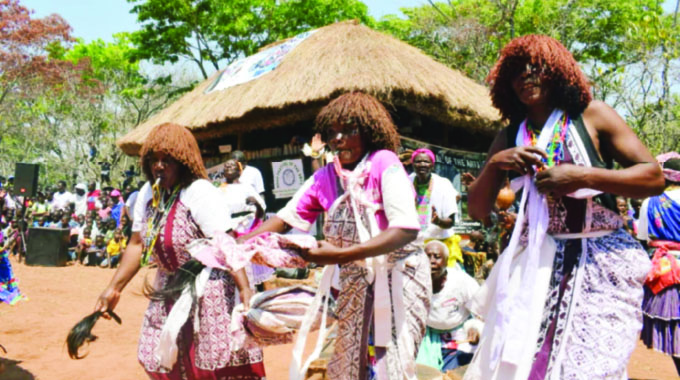
Freedom Mutanda Correspondent
The road from Chipinge town to Bangira meanders through bushy areas and as you think you have arrived as you see the Chikore High School sign, you are jerked to the world of reality when the locals tell you that “Paiyepo” is a couple of kilometres away.
You do not disembark from the pirate taxi you have hired and look ahead with your head held high.
This is NDaFA 2022.
The Ndau Festival for the Arts (NDaFA) has been in existence since 2013 until the deadly Covid-19 struck and for two years, the premier arts festival in Chipinge was put in abeyance as the protocols governing the pandemic were not friendly to the gathering of huge crowds, let alone move from one point to another to get to Bangira village deep in Chief Musikavanhu territory.
This year, the theme is: “main streaming indigenous languages in recognition of the international Decade of Indigenous Languages.”
According to UNESCO, “despite their (indigenous languages) immense value, languages around the world continue to disappear at an alarming rate”.
Ndau is an indigenous language.
The Government has made giant strides to ensure that Ndau does not fall into those extinct languages’ cesspool by making it one of the official languages.
To complement government efforts, NDaFA directorate fronted by Phillip Kusasa, has a department that deals with the development of the Ndau language.
“We held a symposium on Friday at Chikore High School where various academics who hail from this district presented papers associated with Ndau history, language and identity,” he said. “For example, Prof Charles Pfukwa, Dr Elias Konyana and Dr Tennyson Mabuya, who are from BUSE and GZU respectively, presented papers.”
It was at Chikore High School that 42-year-old Ndau poet, Farai Chinaa Mlambo, talked about how he was inspired to write in the Ndau language.
He is a teacher at Jersey Primary School and he received his secondary education at Rimbi High School before being trained as a primary school teacher.
”I get inspired by nature and what ordinarily takes place every day. Weather patterns motivate me to write in the five Ndau dialects. At the same time, Ndau folk tales and nursery rhymes come to my mind when I create poems. I also write Ndau short stories.”
At the cultural centre, the Director of Ceremonies is Frederick Bandama, a man renowned for the Ndau expose he made at the burial of his brother, Brigadier General Eliah Bandama some years back.
He is one of the trustees of NDaFA.
Ndau courses through his blood as he set about introducing people and says the press is an incontestable member of the cultural side of the world.
The 2000 plus crowd is wowed by the Holland Dance troupe which does not disappoint. One expects the full spiritual regeneration of the people as what used to happen in the past comes to the fore.
It is sweltering hot, but no one wants to hide under the trees for muchongoyo is Ndau and Ndau is muchongoyo.
No amount of muchongoyo would make people get drowsy and drop off into a sleepy stupor. Mrs Joice Simango, the first Ndau writer was given a lifetime award for ensuring that the Ndau language does not go the way the dinosaur went.
She happily came forward and gave a bear hug to another budding poet, Flight Rufaro Mlambo, whose rendition of the poem that alluded to Covid-19 made her a Ndau celebrity before she was in Grade 1.
Up stepped Flight Mlambo and she recited a poem where she eulogised NDaFA as a last institution standing in the conserving of Ndau culture.
Indeed, she was right, but it is important for everyone to hold dearly the indigenous language that they were given.
The guest of honour, Ms Thokozile Chitepo, the permanent secretary in the Ministry of Sport, Arts and Recreation, represented by Ms Charity Manuhwa, applauded the efforts of the Paiyepo management and said the country had many artists who earned a living out of utilizing their God given talent.
”Brick by brick we build our area,” she said. “Look at Jah Prayzah. He has made a name for himself and it’s crucial for us here at Paiyepo to think about entrepreneurship for the arts to be employment creators.”
One thing is clear in the people’s mind: the next decade would see whether the Ndau language would sink or swim.
However, with traditional leaders gracing this occasion, it means, they too, like the Government, do not want to see an end to indigenous languages.
Language is a vehicle of a culture and already, the NDaFA board of trustees is working on the next edition, having started this journey in 2013. Dr Tennyson Mabuya, an academic, said plans were under way to work on the orthography of the Ndau language.
“We have an expert in the language,” he said. “We hope to rope him in as Ndau has become part of the curriculum of Marymount Teachers’ College.”


 Online Reporter