malvernmugadzikwa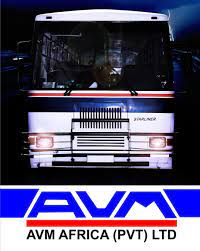
Emmanuel Kafe
ZIMBABWE’S oldest bus manufacturer, AVM Africa (Pvt) Ltd, is poised for a major comeback after signing a partnership agreement with Minsk Automobile Plant last week that will see it leverage on cutting-edge Belarusian technology to boost local production.
The collaboration will witness the company assembling at least 50 buses per month and employ more than 5 000 people at peak capacity. Presently, AVM, which is operating at 10 percent capacity, is assembling five buses a month. Under the deal, Minsk Automobile Plant will provide AVM Africa with high-tech bus assembly technology for the manufacture of 120-seater buses powered by a range of engine transmissions.
AVM Africa’s plant in Msasa, Harare, can assemble buses powered by drive-lines from renowned engine producers such as DAF, Scania, Mercedes-Benz, Volvo and Iveco.
A drive-line, also known as a drivetrain, refers to the system that transmits mechanical power from the engine to the wheels of a vehicle, allowing it to move.
It is envisaged that production will commence before April.
In an interview with The Sunday Mail, AVM Africa’s chief executive officer Mr Jacob Kupa said the development is set to revolutionise the local transport industry.
He said the increased production of buses was expected to benefit a network of 92 local companies involved in the production value chain. “The project holds immense potential,” he said. “At maximum production capacity, AVM Africa plans to employ up to 5 000 individuals, while simultaneously generating an estimated half a million jobs throughout the downstream supply chain.
“This infusion of employment opportunities is expected to have a transformative impact on the local economy.”
The company’s strategic approach, he said, will involve supplying the domestic market first before expanding into regional markets.
At its peak, AVM Africa employed a workforce of around 2 500 and produced 40 buses per month, some of which were exported to African countries such as Zambia and Uganda.
The company faced significant challenges at the turn of the millennium and its production dwindled to a maximum of five buses per month.
“By leveraging on Belarusian technology, we aim to revolutionise public and urban transportation in Zimbabwe, introducing state-of-the-art 120-seater city buses,” added Mr Kupa.
“These modern buses are expected to enhance the quality and efficiency of public transportation services, significantly improving the overall commuting experience for the populace.”
AVM Africa, Mr Kupa said, was already engaging Dinson Iron and Steel Company to secure steel for fabrication of bus assembly kits locally once production commences at the multi-million-dollar iron and steel plant in Manhize.
“Once the steel plant is complete, bus fabrication will commence at the plant, with assembly taking place in Harare,” he continued.
“AVM Africa is prepared to fulfil orders from various sectors, including the Government and Zupco.
“The company hopes to secure a substantial order of around 550 buses from Zupco through the Government,” he added.
In recent years, the Government has spent millions of dollars importing buses under a programme meant to recapitalise Zupco.
A crucial aspect of the recapitalisation plan involves acquiring new buses to replace Zupco’s ageing fleet, which has resulted in unreliable service and frequent breakdowns.
Local bus operator Mr Alfred Zimhare welcomed the partnership between AVM Africa and Minsk Automobile Plant.
“Apart from revolutionising the transportation landscape, the AVM Africa and Minsk Automobile agreement has the potential to create jobs, drive economic growth, attract foreign currency, develop local supply chains, improve public transportation services and expand market opportunities for Zimbabwe,” he said.
In recent years, Zimbabwe and Belarus have deepened cooperation across many sectors, driven by a desire to strengthen bilateral ties and explore mutually beneficial opportunities.
Zimbabwe seeks to leverage on Belarus’ expertise in agriculture to improve its own agricultural productivity and food security.
The Eurasian country has supplied Zimbabwe with a range of high-tech agricultural, mining and firefighting equipment.
Last week, Harare and Minsk convened the first session of the Zimbabwe-Belarus Joint Permanent Commission on Cooperation in Harare.


 Online Reporter