Online Reporter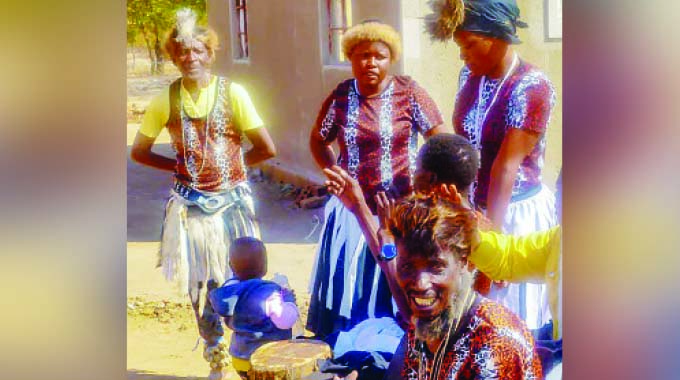
Bruce Ndlovu, Sunday Life Reporter
TWO weeks ago, a remarkable spectacle unfolded at the homestead of Headman Mpamadzi Makawule in Simukwe, Matobo District, Matabeleland South Province.
On this particular day, members of the Makawule clan, some of whom had travelled from far and wide, gathered to commemorate the 100th anniversary of the passing of their forefather, Mdumuli Sekelela Makawule Ndlovu.
As is customary in a region where the Roman Catholic Church holds strong influence, the ceremony began with a Thanksgiving Holy Mass.
Yet, instead of the expected Catholic hymns accompanying the priests’ entrance, they were welcomed by wailing drums, the steady rhythm of leg rattles and the soothing timbre of traditional song.
Under the sweltering sun, women ululated with fervour while men’s whistles pierced the otherwise tranquil morning air. Traditional culture and Catholicism stood side by side in harmonious celebration.
In this part of Matabeleland, the blending of African traditional practices and Christianity is not uncommon but on this occasion, it felt especially poignant.
Families had travelled from Malaba, Malundi, Kendile, Mhlotshana, Kwite, Hobodo, St Joseph, Mpini, Thekwane and Gwambe, transforming Simukwe into a hive of kinship.
Held on the eve of Heroes Holidays, the gathering was more than a celebration, it was a pilgrimage to reclaim a piece of history nearly erased by colonialism.
Mdumuli Makawule was the son of Mapini Makawule Ndlovu, known as Chief Khutshiwe (recorded as “Kutshe” by colonial authorities), who led during the Anglo-Ndebele War of 1893–94 and the devastating famine following the 1896 Umvukela (Ndebele Uprising).
His bravery and royal heritage earned him the chieftaincy, but colonial incursions by the British South Africa Company (BSAC) soon displaced his people from their ancestral lands around the Matobo Hills.
They were pushed into reserves across Bulilima-Tsholotsho, Thekwane, Kwite, Empandeni East and the arid lands of Simukwe and Mangwe.
Chief Khutshiwe’s chieftaincy was downgraded to headmanship and in 1944, Chief Ntelela Malaba nominated Mpamadzi Makawule Ndlovu as headman. Sadly, Mpamadzi passed away the following year before his position could be officially recognised.
In 2022, Government revived the Mpamadzi headmanship under Chief Malaba, appointing 76-year-old Leonard Ndlovu as the substantive headman.
For over a century following Mdumuli Ndlovu’s death, the Makawule clan had searched for a way back home, scattered by colonial land policies.
As they gathered to honour their forefather, many Makawule family members, some meeting for the first time, rejoiced in their reunion.
Meat sizzled on fires scattered around the homestead and beer was shared as the clan danced through the day and into the night. For the religious, hymns were sung and prayers offered.
For the traditionalists, ancestral brew was poured onto the earth in reverence. This was more than a reunion, it was a collective effort to reclaim identity, family and heritage.
The guest of honour, Chief Fuyana, praised the Makawule clan for recognising the importance of identity and commended the parish priest at St Joseph’s, Father Innocent Makawule Ndlovu, for uplifting the community and championing the celebration of clan heritage.
“What the Makawule clan has done today is an example of what is possible when people put in extra effort and recognise the importance of their origins. I also doff my hat to Father Innocent Ndlovu for his work in documenting not only his clan’s history but also for uplifting Kalanga culture on many mainstream platforms,” he said.
Chief Fuyana’s sentiments were shared by Father Oelen Halimana Ndlovu, a visiting Catholic priest currently based in the Free State, South Africa.
“What I have seen here is very encouraging. What would we be without culture? Sometimes I see young people on social media mimicking other cultures during lobola ceremonies. They wear beads and garments from other traditions without understanding their meaning. Culture has become a fashion statement. Why? Because they have not fought to preserve their own identity,” he said.
“Seeing people here in traditional attire, singing traditional songs, it’s uplifting. Through their ancestor, the Makawule family has shown what is possible for all Zimbabweans who lost so much during the colonial era. They are reclaiming their history and many more should be encouraged to do the same.”
Monica Makawule, village head in Kitwe, Plumtree, said for many, it was the first time they had seen their clan members in person.
“We have always heard stories about relatives living in different parts of the country, but we mostly treated them as just stories. We never imagined that one day we would be face-to-face with our kin from all these places.
“It is humbling to be connected with your people and we thank Father Ndlovu, a child of the family, who has made it his mission to bring us together and document our history,” she said.
During the ceremony, Headman Matenga of Chief Bango shared his connections with Makawule clan members who fought in the liberation struggle.
He spoke fondly of the exploits of Thaddeus Makawule, Pax Ndlovu, Swantshana Elmon Makawule and Ngindana Dubha Makawule.