admin
admin
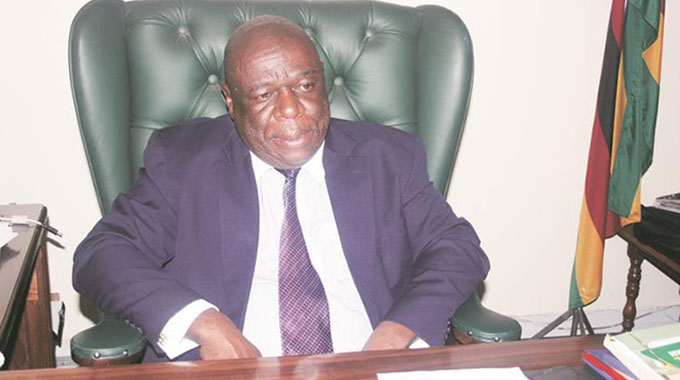
Dr Dennis Magaya
Zimbabwe is making good progress with the rest of the world to digitalise its TV broadcasting services.
Digitalisation is a massive project that affects the entire television value chain which includes viewers, media companies, the TV broadcaster and regulator in profound and different ways.
Digitalisation is not quite a demand-driven initiative but instead it is a supply side opportunity because it addresses television signal transmission technology issues.
As a result, consumers are generally not informed about the justification and impact of digitalisation.
In some cases in Africa, the business case for digitalisation is not fully realised by broadcasters because it is implemented as an engineering project where old television transmitters are replaced with new technology without transforming the entire business to a customer-centric and competitive operation.
In fact, some countries have realised that if the requisite business changes are not made to monetize the digital technology assets, the broadcaster will in the end be worse-off from the digitalisation project debt.
Television Broadcasting Digitalisation is a global process involving the switch from the current analogue signals to digital.
It is the most significant innovation in television since colour television was introduced in the 1950s. Digitalisation has the potential to improve both the quantity and quality of what is available on TV and to increase the number of people who will be able to watch it.
The current analogue TV broadcasts use a range of radio frequencies to transmit the picture and sound.
However, Digital TV operates differently. It uses switch on and off pulses to convert the picture and sound into a series of 1s and 0s (on =1 and off =0) which are transmitted on a specific frequency as digital information.
This may sound insignificant by modern standards, but remember there were no electronic computers when television was first introduced in the 1920s.
The digital TV signal carries more data than an analogue signal which enables the broadcasting of more than one channel of television programs at the same time in a frequency spectrum that previously was only able to transmit a single analogue channel.
Viewers get better picture and sound quality compared to current analogue systems. Digital TV offers sharper; brighter picture and reduced interference.
The current analogue TVs only provide standard definition television. However, Digital TV allows High definition television which is the premium version of digital television and offers much better picture and sound quality.
Digitalisation provides the opportunity to increase the broadcasting coverage area which allows more viewers to share the same television programmes.
More viewers are offered a wider range of channels on condition that the broadcasters has a financially viable business model.
Digital broadcasting offers the possibility of more channels which can include those in vernacular language.
Digital TV is easy to duplicate, store and distribute content.
It gives you the ability to watch what you want, when you want, including the creation of Video-on-Demand services.
In theory, it is possible to have every programme ever made available to watch at the time which enables us to eventually get rid of the concept of “linear television” that is scheduled television channel.
From a technical operations perspective, Digital TV requires lower signal power (about 10 percent) to reach the same audience as an analogue signal.
The digital signals are more compatible with modern technology such as computers, DVDs, Blu-Ray, and modern video processors in TVs.
However, digital TV reception is an all-or-nothing service compared to analogue, where you could see some kind of a picture and hear at least one channel of audio when signal is bad. With analogue, you could get at least a fuzzy picture. Digital TV is unforgiving of a poor signal because the viewer gets nothing unless the antenna and signal are good.
Digital TV is not backwards-compatible with older analogue technology such as video.From a government policy perspective, digitalisation enables the review of public interest in broadcasting.
The effectiveness of local production quotas and of Government schemes that support local production can be stress tested.
It should be noted that although the production and signal transmission can be made digital at manageable costs, the problem is that the majority of television sets are still analogue.
The broadcaster cannot unilaterally push the digital signal without cutting off viewers that still do not have digital TV sets.
As a solution, a Set Top Box (STB) was introduced to translate the digital broadcast to a signal that the TV set can understand so that the picture can be displayed.
The STB has the capability to interface with devices such as a cell phone, memory card or internet modem. This will provide viewers with access to many more services and information.
The challenge for Government and the regulator is that digitalisation has some significant challenges.
The biggest hurdle is the cost of STB to receive digital TV signals. The government policy can be to allow STB to be procured at market prices, to subsidize them or offer them for free. The STB is usually around US$50 while a digital television can be upwards of US$300 at the lower end.
The African broadcaster business case has more fundamental issues to resolve which are beyond the transmission of signals in digital format.
Firstly, there are still some places in many African countries where there is no TV signal irrespective of whether it is analogue or digital.
Managing a reliable signal transmission system which is not affected by all sorts of issues is still a priority.
Secondly, the revenue model for the new digital television channels can be based on consumers Pay TV subscriptions, or by the Government through the state broadcaster and by advertisers through new Free-To-Air channels.
As the number of channels increases, it is important to determine a revenue model that will work, taking into consideration the national mandate and commercial imperatives for many national broadcasters.
Thirdly, digitalisation is like a highway that increases cars in the highway (the content) but without systems, processes, go-to-market strategy, soon the road-infrastructure will collapse.
With or without digitalisation, many broadcasters require business transformation so they become competitive corporates that are not dependent on government subsidy.
The national mandate should be positioned as a platform to monetise the broadcaster assets rather than loss making obligation.
For instance, the business processes and policies require a complete revamp.
African broadcasters have little integration between scheduling and play-out systems. As a result, it is difficult to reconcile adverts that were paid for with what was actually played out. There are limited polices that guide barter trade which is a common business practice in broadcasting.
In theory, it is possible to barter trade a chicken with a cow. The IT and back-end systems require automation and integration. Revenue collections, payment systems and customer self-service should be implemented.
Fourthly, Digitalisation will increase the number of channels and therefore content. However without corresponding economic growth, the advertising agency money remains the same cake which will be shared among many channels.
Many channels could mean more advertising prime spots which ultimately results in advertising sales.
The net is an reduction in overall revenue while in fact the costs for running the channels and buying more content is increasing.
Experience from many African countries show that the extra channels may not provide good content as a large number appears to fall into categories of junk channels.
It appears there is little extra content than what was there was before digital TV. In fact, it appears good content is harder to find and is thinly spread.
Fifthly, broadcasting and telecommunications are in many African countries treated as separate, vertical markets with separate regulators and policies.
This is the one of the biggest self-created challenges because every indicator in industry, market and consumer behaviour shows the opposite.
Digital convergence means that telecoms operators are involved in broadcasting and broadcasting companies are looking at how they might deliver Internet and voice services.
The amount of content received via social media, You Tube and telecoms in general is much higher than broadcasting. Technologies such as fiber and 4G (LTE) can carry high quality content to the user-handset and tablet.
Dr Dennis Magaya, is the Director and Chief Consultancy at Rubiem Group, which is an ICT consultancy firm with operations in nine African countries. The company provides business transformation services and has assisted several governments in Sadc on ICT projects.



 Online Reporter