admin
admin
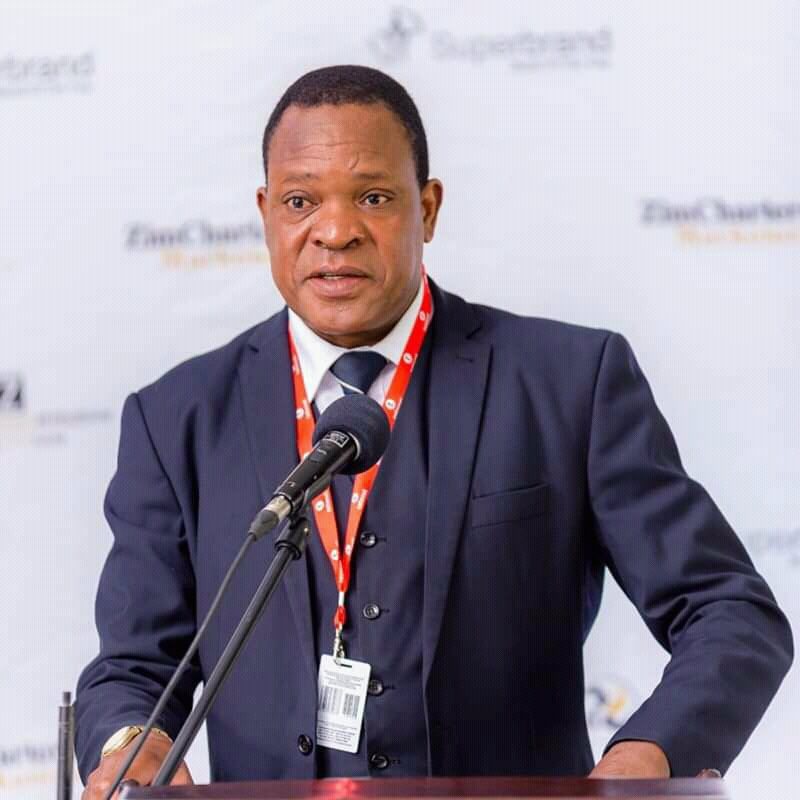
The country is facing serious power outages, lasting up to 12 hours in some areas, attributed to low water levels in Kariba dam and low coal output. Our reporter Africa Moyo, last week spoke with Makomo Resources director Mr Raymond Mutokonyi , who also represents the Active Coal Producers Association, to get his views on the coal sector. For more, read the excerpts:
Q: Who is Makomo Resources?
A: We are an indigenous company. We started operating in 2010. We have a foreign shareholder, made up of a mixture of people; that’s us.
Q: How many people do you employ since you started?
A: Well, it’s seasonal. Our production model is based on demand. So at peak, we would employ between 800 and 900 people. Currently, we have between 650 and 670 employees because of demand. It’s a mixture of part-time and permanent employees but predominantly, those are permanent.
Q: So in other words you are saying the demand for coal is low, hence low employment levels?
A: The demand for coal is progressively becoming low. If you recall between the 2017 and 2018; we actually shutdown because demand at Zimbabwe Power Company (ZPC), which is the biggest consumer, was subdued.
Q: But we have power generation challenges in the country and ZPC should naturally require more coal to generate electricity. What are they saying is the reason for low coal uptake?
A: At the moment their coal requirement is high for Hwange Power Station (HPS) because they are supposed to have minimum stock level of 200 000 tonnes at any given time. The main reason for the low supply is the capacity of the coal producers to produce coal at the moment. For the small thermals, most of them are literally down. They are more or less always handicapped by machinery breakdowns or due to old age I think. For HPS, demand is there, they actually need to build up their stock to minimum of 200 000 tonnes.
Q: Tell us about the challenges faced by miners?
A: Currently in Zimbabwe the three coal mining houses namely Hwange Colliery, Makomo Resources and Zambezi Gas; Hwange being there for 100 years and Makomo having started in 2010. I will give you my perspective from the Makomo angle (but) I represent the Active Coal Producers Association at the moment, but I am well versed with Makomo. When we started in 2010, we had the capacity to do between 250 000 and 300 000 tonnes per month. So we were geared to supply anything up to that much. As we went on from 2010 to 2016, we were producing on demand. However, from 2011 to 2017 we faced a serious challenge when the price was pegged at US$26,50 per tonne, a price which ran up to April 2019. The reason for that is, ZPC said they could not get a tariff increase from ZERA, as a result they could not also give us a price (increase). That resulted in the lowering of capacity; remember production is a function of equipment availability.
Whilst the equipment is not serviced, you cannot produce to the required level. This was coupled by lack of ability by ZPC to pay for the coal. In 2017 to 2018 they owed us up to $28,5 million for coal delivered and consumed but not paid for. This really affected us in terms of replacement cycles where we were supposed to replace and upgrade equipment so it affected our production. By the time we got paid by ZPC, there was a time lag in terms in terms of replacing our equipment and so on, and affected our production capacity. The same is also true for the other coal mining houses; that price for coal to ZPC is universal, for all the three miners. So over time, what affected us, also affected other coal miners in terms of capital expenditure. A typical example is which requires about US$1 million to replace parts of its broken down equipment so that they get going again.
Q: In your view what should be the appropriate coal price per tonne?
A: This US$26,50 was US dollars at that time and obviously, what has happened from last year, there was a shift from the US dollars to the RTGS dollar. But we are still paid the US$26,50 in RTGS now. It was only reviewed in April this year to $88 (local currency). If you were to accept the $88 and convert it to today’s interbank rate, it’s about US$16. The average cost of production for Hwange Power Station coal is between US$33 and US$37 and if you take the current price you basically get paid half the production cost, which is not sustainable.
Q: At the moment, how much are you owed by ZPC?
A: The payment side is OK because it’s payment as we deliver. The problem is the value.
Q: Capacity wise, what are you producing per month?
A: It is difficult to say this is the capacity we have. In terms of machinery availability, Makomo, for example, has capacity to do 300 000 to 350 000 tonnes. But if you factor in the availability of key inputs like diesel, spares and explosives, that now can determine what production can happen. In the last two to three months, the biggest factor has been the availability of diesel, followed by the spares and explosives. If diesel is available and the machinery is working, we can produce any amount required but the key is the ultimate price, are you able to sustainably mine at a particular price, in which case the unfortunate answer is no. At $88 per tonne, you cannot sustainably produce because you are producing at a low cost.
We are on a platform here, as the three coal miners and some Ministry of Mines officials, including the Permanent Secretary and also ZPC, just to talk about coal production every day. So the issue in the last three months has been diesel. This mine stops today, they get diesel, after three days this one stops and so on. So because of this there is no continuous production. In terms of plant capacity, I think the three mines can sustainably produce using the equipment they have if the key inputs like diesel, explosives and spares are available.
Q: Tell us if the Reserve Bank of Zimbabwe is still making your foreign payments or you are now going to the interbank market.
A: We got a bit of money from the RBZ as and when we made applications but it was never made in full. Makomo last got money from RBZ beginning early last year, way before the interbank. The interbank came with a bit of money, which is a key issue because the money would help boost production cycles.
Q: Some say most of the money in coal comes from value addition. Have you considered moving into this area?
A: As Makomo we invested in a wash plant, a Dense Medium Separator (DMS) plant which purifies coal to make good grade coking coal. We invested US$16 million in 2014, just to do the coking coal. We believe there is more we can do if the viability issue is resolved. There is a lot of prospects that are there. At the moment we are developing the Coal Policy where we are looking at the future of coal, not only in Zimbabwe but beyond. We are going to be looking at issues of bi-products from coal such as gas, tar and liquefaction of gas into gas and fuel. All those are in our vision.
Q: To what extent are the three Chinese companies adding value to coal getting business away from you or complementing your operations?
A: Those three are basically using our coking coal to make coke. So basically, they are value adding our coal, we are their supplier. So we complement each other.
Q: In terms of exports, are you doing any exports?
A: As coal producers, every mine is exporting but the quantities are very subdued. Over time, the capacity issues have been slowly impacting on the exportable amounts of coal. For Makomo specifically, yes. Unfortunately, the five years that we have been constrained by the ZPC challenge, we didn’t focus on the export market. The focus was on the local market so we have slowed down our exports. In 2016, we were awarded the best exporter award in the coal mining sector.
The award was from the Zimbabwe Investment Authority (ZIA), for the volume of exports we did. Unfortunately, 2017, 2018 and 2019, we are very far from that. We are hardly exporting 2 percent of our production but we are working on resuming and increasing exports.
Q: You have indicated that transportation through NRZ is expensive. What charge would you prefer?
A: From a regional perspective it used to cost US$20 per tonne to move 80km from Hwange to Victoria Falls Bridge, using NRZ. It also cost US$31 to move 451km from Victoria Falls to Lusaka. If you compared US$20 and US$31, it doesn’t add up. I know they say the longer you go the cheaper it becomes but we believe NRZ needs to look at its pricing for sustainability purposes. Coming to Harare is cheaper for one to transport a tonne of coal using a truck than NRZ because with NRZ you have to move the coal from the mine to the siding, then load it again into a truck to customers.


 Online Reporter