Mukudzei Chingwere-Senior Reporter
MALAWI has turned to Zimbabwe for assistance in resolving its acute fuel challenges, drawing on long-standing bilateral ties with a neighbour that has successfully navigated similar petroleum supply constraints in recent years.
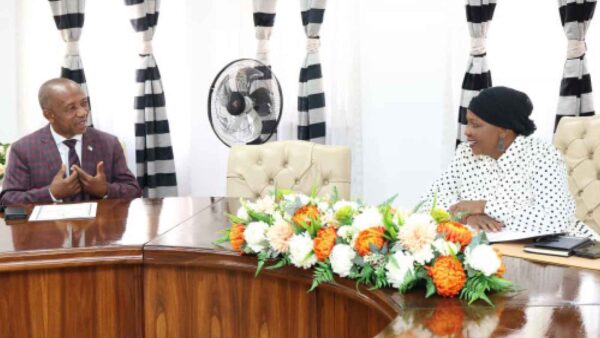
Malawian President Professor Arthur Peter Mutharika dispatched Foreign Affairs Minister Dr George Chaponda as a special envoy to Harare, where he met Acting President Dr Constantino Chiwenga yesterday to deliver a special message addressed to President Mnangagwa.
The diplomatic mission sets the stage for technical engagements between Harare and Lilongwe, with Dr Chaponda leading a delegation of Government officials, financial institution representatives and energy operators to explore practical interventions.
Speaking to journalists after meeting Acting President Chiwenga, Dr Chaponda said Malawi’s fuel shortages stem largely from severe foreign currency constraints inherited by President Mutharika’s administration upon assuming office last year.
“In that letter, which was handed over to the Acting President, it sets out the issues which His Excellency the President, Professor Arthur Peter Mutharika, would like to be addressed,” he said.
“But the main issue, which as a Minister of Foreign Affairs I know, is that Malawi has a fuel crisis.”
Dr Chaponda noted that reliance on foreign currency to import petroleum leaves landlocked nations particularly exposed.
“As you know, just like Zimbabwe, Malawi is a landlocked country, or nowadays we call it land-linked,” he said.
“And the fuel you have to pay in forex, and having no forex makes it difficult.”
While the exact mechanisms under discussion remain undisclosed, technical teams from both nations — spanning Zimbabwe’s finance, trade and foreign affairs ministries — will examine options ranging from procurement and financing arrangements to infrastructure access and policy expertise.
“We have come through the President with a huge technical team from Government agencies in Malawi, and financial institutions, and also even operators, who will sit down here to go into greater detail on the challenges,” Dr Chaponda said.
“These will be presented again for further discussion here.”
Zimbabwe’s own turnaround in fuel supply management lends weight to the mission. Following persistent fuel queues in 2019 and 2020, the Second Republic introduced the Direct Fuel Import facility—enabling private firms with access to foreign currency to procure fuel independently and easing pressure on the Reserve Bank of Zimbabwe.
Coupled with subsidy removals noted by the World Bank and investments in storage and transport infrastructure, Zimbabwe has maintained steady supplies despite rising demand. According to the Zimbabwe Energy Regulatory Authority (Zera) 2024 annual report, “Fuel supply remained generally stable throughout the year, with global occurrences not affecting the sector much,” even as diesel imports climbed from 736,4 million litres in 2020 to roughly 1,1 billion litres in 2024.
Dr Chaponda added that Malawi’s outreach reflects deep historical solidarity between the two SADC and Common Market for Eastern and Southern Africa (COMESA) member states, recalling Zimbabwe’s past maize donations to Malawi and military deployments to safeguard Malawian fuel tankers transiting Mozambique.
“Zimbabwe and Malawi have a long history. We have a similar colonial history, we also have cultural similarities, and we also have quite a number of Malawians here and also Zimbabweans in Malawi,” he said.
“Whenever there has been a problem in Zimbabwe, Malawi has always come to assist. Similarly, whenever there is a problem in Malawi, Zimbabwe has always come to assist.”
Thanking Harare for its warm reception, Dr Chaponda confirmed that joint technical deliberations were now underway ahead of formal consultations with President Mnangagwa.
“We are happy for the warm welcome and hospitality which we have received since coming here,” he said.
“Following the meeting that we have had with the Acting President, we are now going into the meetings with the technical team from Malawi, the technical team from here and also with the relevant ministries here.”