Mukudzei Chingwere Senior Zimpapers Reporter
MALAWI has turned to Zimbabwe for assistance in addressing its fuel crisis, drawing on long-standing bilateral relations with a country that has successfully navigated similar petroleum supply challenges in recent years.
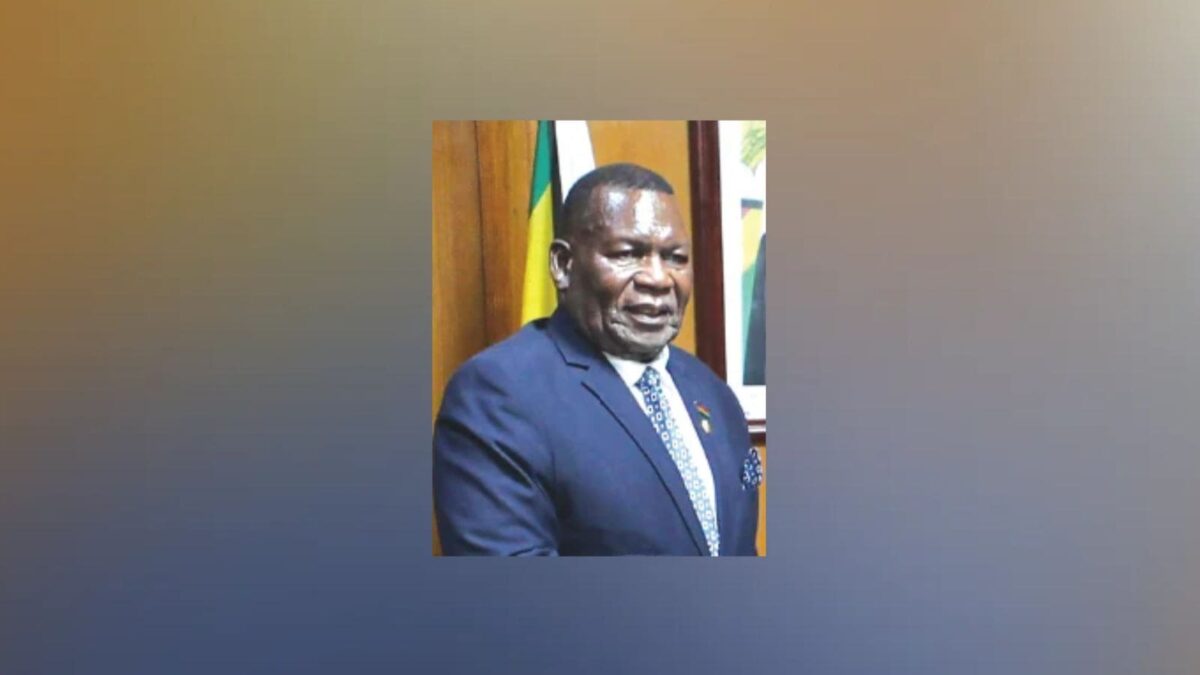
Malawian President Professor Arthur Peter Mutharika dispatched his Minister of Foreign Affairs, Dr George Chaponda, as a special envoy to Harare, where he met Acting President Dr Constantino Chiwenga yesterday and delivered a special message addressed to President Mnangagwa.
The diplomatic engagement has set the stage for technical discussions between the two countries, with Minister Chaponda leading a delegation comprising Government officials, representatives of financial institutions and industry operators to explore possible interventions.
While the precise nature of the assistance Malawi is seeking from Zimbabwe is yet to be disclosed, the technical engagements are expected to provide clarity on the scope of cooperation and possible mechanisms through which Harare could assist Lilongwe.
Speaking to journalists after meeting Acting President Chiwenga, Minister Chaponda said Malawi’s fuel supply challenges were largely a consequence of foreign currency shortages, which had constrained the country’s capacity to import petroleum products.
“In that letter, which was handed over to the Acting President, it sets out the issues which His Excellency the President, Professor Arthur Peter Mutharika, would like addressed,” he said.
“But the main issue, which as a Minister of Foreign Affairs I know, is that Malawi has a fuel crisis.”
Minister Chaponda said President Mutharika’s administration inherited several economic challenges upon assuming office last year, chief among them, shortage of foreign currency, which had affected the procurement of essential commodities, including fuel.
“As you know, just like Zimbabwe, Malawi is a landlocked country, or nowadays we call it land-linked,” he said.
“And the fuel you have to pay in forex, and having no forex makes it difficult.”
Zimbabwe’s own experience in dealing with fuel shortages provides an important dimension to the visit by the Malawian delegation.
The country has largely put behind it the persistent fuel queues that characterised parts of 2019 and 2020 through a combination of policy reforms, increased private sector participation and investment in petroleum infrastructure.
In 2019, the Second Republic introduced the Direct Fuel Import facility, allowing companies with access to foreign currency to procure petroleum products for their own consumption and commercial distribution, easing pressure on the Reserve Bank of Zimbabwe to finance fuel imports.
The World Bank, in its assessment of Zimbabwe’s economic reforms, identified the liberalisation of the petroleum sector and removal of costly fuel subsidies among important reforms undertaken by the Government.
The interventions, coupled with investments in petroleum transportation and storage infrastructure, have helped Zimbabwe maintain relatively stable fuel supplies despite growing domestic demand.
In its 2024 annual report, the Zimbabwe Energy Regulatory Authority (Zera) said: “Fuel supply remained generally stable throughout the year, with global occurrences not affecting the sector much.”
The stability was achieved against a backdrop of rising consumption, with diesel imports increasing from 736,4 million litres in 2020 to approximately 1,1 billion litres in 2024.
Zimbabwe’s experience is particularly relevant to Malawi given that both countries are landlocked, depend on imported petroleum products and have previously experienced foreign currency constraints.
However, it remains to be established whether Malawi is seeking assistance with fuel procurement, financing arrangements, access to petroleum infrastructure or an exchange of expertise on policy interventions that have helped Zimbabwe stabilise its fuel market.
Minister Chaponda said the composition of his delegation reflected the technical nature of the mission, with the outcome of the engagements expected to inform subsequent decisions at the highest level.
“We have come through the President with a huge technical team from Government agencies in Malawi, and financial institutions as well as operators, who will sit down here to go into greater detail on the challenges,” he said.
“These will be presented again for further discussion here.”
The engagements will involve Zimbabwean ministries responsible for finance, trade and foreign affairs, among other relevant institutions.
Minister Chaponda said Malawi’s decision to approach Zimbabwe was also informed by the historical relations between the two countries and their tradition of assisting each other during periods of adversity.
“Zimbabwe and Malawi have a long history. We have a similar colonial history, we also have cultural similarities, and we also have quite a number of Malawians here and also Zimbabweans in Malawi,” he said.
“Whenever there has been a problem in Zimbabwe, Malawi has always come to assist. Similarly, whenever there is a problem in Malawi, Zimbabwe has always come to assist.”
He cited Zimbabwe’s donation of maize to Malawi to alleviate food insecurity and recalled previous military assistance extended by Zimbabwe to secure the movement of Malawian fuel tankers through Mozambique when petroleum supply routes faced security challenges.
The latest engagement also speaks to the importance of regional cooperation in addressing energy security challenges, particularly among landlocked economies whose industrial, agricultural and transport sectors depend heavily on reliable access to imported petroleum products.
Zimbabwe and Malawi are members of both the SADC and the Common Market for Eastern and Southern Africa (COMESA), providing additional institutional platforms for cooperation in trade, investment, transport and energy security.
Minister Chaponda expressed appreciation for the hospitality extended to his delegation, saying the meeting with Acting President Chiwenga had laid the foundation for substantive engagements between the two countries.
“We are happy for the warm welcome and hospitality which we have received since coming here,” he said.
“Following the meeting that we have had with the Acting President, we are now going into the meetings with the technical team from Malawi, the technical team from here and also with the relevant ministries here.”
President Mutharika’s letter will be conveyed to President Mnangagwa, with the ensuing technical engagements expected to provide a clearer picture of the nature, scope and feasibility of the assistance Malawi is seeking before any decisions are made.