admin
admin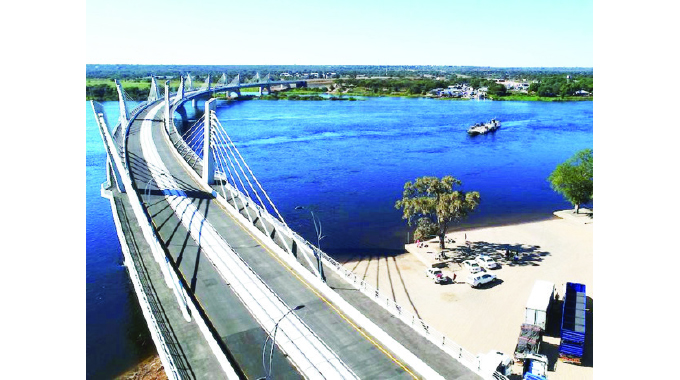
Gibson Nyikadzino-Correspondent
Because some things are not fully understood, it does not mean they should be left unattended.
Answers should be sought to remove distortions and misrepresentations.
Many theories against Zimbabwe’s relations management through the “engagement and re-engagement” initiative have been tossed to try and dissuade the masses from the transformational foundations being laid for state growth, regional integration and cooperation.
The foremost theory of falsities and pre-truths by Zimbabwe’s detractors is that there is no re-engagement and engagement process the country is undertaking because of absence of “immediate results”.
But theory must constantly pass the test of reality and cannot insist on something disproved by reality.
Attending to this misunderstanding, the Ethiopia analogy best explains the situation at hand.
Western media has today deliberately misrepresented events about the ongoing conflict in Ethiopia between government forces and the Tigray Peoples Liberation Front (TPLF).
What is being sold to the majority by western media is that Ethiopia’s government is wrong and committing a genocide against the Tigrayan ethnic group.
Unfortunately, nothing has been said about the role the USA is playing in aiding the rebel TPLF army to dislodge the constitutionally elected government of Prime Minister Abiy Ahmed.
Of major concern is that the USA was once a firm Ethiopian ally during the almost three-decade rule of Ethiopia by the TPLF in which many suffered under its dictatorship.
While many factors have been flown about the genesis of this conflict, little is said about the prime resource at the centre of this year-old conflict: access to the Nile river and its waters.
Besides flowing through Egypt, Ethiopia and Sudan, the Nile river also flows in seven more countries.
For Ethiopia, its Grand Ethiopian Renaissance Dam (GERD) project has escalated tensions among the three African countries with Egypt calling on the USA to interfere on its side by cutting aid meant for Ethiopia, which it has done.
The conflict is about water resources, water security and the involvement of the USA on Egypt’s side has traces to the instability caused by the TPLF.
When a super power joins a conflict on behalf of an ally, that conflict rarely concludes quickly and the same applies with the conflict in Ethiopia, all because of the USAs involvement.
It is the USAs proxy war to undermine the legitimacy of Ethiopia. Of key interest to the USAs interventionist policy in this conflict is that Egypt and Sudan share a British colonial identity, and Britain is the USAs key ally.
Ethiopia is a centre of Africa’s colonial victory as on two occasions it resisted Italian conquests.
She maintained her independence from colonialism through the nationalist organisation of her people. As the custom, British and American interests are today thriving on a divide and rule tactic in Ethiopia.
A key lesson manifesting itself is on the importance of managing bilateral and multilateral relations among states to avoid tensions, hostilities and conflict especially when it involves transboundary resources like the Nile river.
Transboundary resources are natural or man-made assets found crossing borders of more than one country.
In this case, the Nile River is a transboundary resource that passes through the riparian states of Egypt, Ethiopia and Sudan. Transboundary resources can allocate burdens but at the same time make states accrue benefits as the case with these nations.
Zimbabwe, too, has seen a similar test on the management of its multilateral relations with Botswana and Zambia over the commissioned transboundary resource, the Kazungula rail and road border post.
While Botswana and Zambia made a US$259 million-dollar investment into the asset, the two states have made deliberations to incorporate Zimbabwe into the agreement after it showed a willingness to share responsibilities.
The Kazungula transboundary resource is an opportunity for the three countries to facilitate commerce and enhance the movement of people, goods and services for the benefit of their respective economies.
Some Zimbabweans appear to not have fully understood the case of the Kazungula border, hence it is difficult to leave the matter unattended from a bilateral and multilateral point of view.
Before the inception of the Second Republic in Zimbabwe, the country missed some opportunities to enhance trade and cordial relations due to some diplomatic challenges.
The Kazungula project was going to be a major miss the previous administration failed to translate, and through engagements, the New Dispensation is facilitating its fruition because of national and regional political and economic interests.
The Kazungula project is not a first transboundary resource Zimbabwe is embarking on.
There are other transboundary resources that Zimbabwe has managed and still maintaining cordial relations with its neighbours.
The Kariba Dam is an inherited shared transboundary resource between Zimbabwe and Zambia. Relations at the centre of these resources are governed by institutionalised legal and bilateral apparatuses.
Built during the colonial era, in the days of the Federation of Rhodesia and Nyasaland, the post-independence management of the Kariba Dam has maintained cordial relations between Zimbabwe and Zambia.
Both countries have benefited from this resource with its ties to the Zambezi river basin shared between Zimbabwe and Zambia.
Another transboundary resource is the Victoria Falls. Zimbabwe and Zambia have traditionally improved their economies from the revenue generated through tourism from both sides.
Equally, the Kruger National Park in South Africa also extends to Zimbabwe and also Mozambique. The essence of highlighting these examples is to appreciate that the peace prevailing in southern Africa is premised on the idea to collectively manage relations cordially.
As revealed by the case of Egypt, Ethiopia and Sudan’s failure to manage relations necessitated by transboundary resources, conflicts become imminent and unavoidable.
For Zimbabwe, Zambia and Botswana, there is no animosity as the three countries share a similar colonial history.
When Botswana and Zambia achieved their independence, the two also facilitated the passage to Zimbabwe’s.
Botswana was a gateway to ferrying liberation fighters abroad while Zambia was the site of political decisions by nationalist leaders.
Alternatively, when Zimbabwe got its independence, South African nationalists had Zimbabwe as their second home.
The region’s strategic culture to collective cooperation and deriving economic dividends that benefit all countries is key in fronting the cause of development. It is this cooperation that has made southern Africa the most stable region on the continent.
Maintaining existing bilateral and multilateral relations is key, not only for Zimbabwe, but for the region as this boosts trade, cohesion and cooperation.
Botswana, Zambia and Zimbabwe need to continue with such cooperation as this opens new frontiers for regional integration.
While the three states wish that peace and security return to Ethiopia, it is also their pan-African position in contemporary times that war and conflict are not alternatives to settling diplomatic challenges.



 Online Reporter