

 admin
admin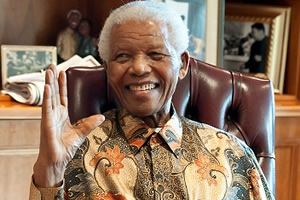
accompanied by 67 minutes of giving back to the community. However, there has been some debate on many forums whether or not the fanfare is just worth it.
Does the day really have any significance to the black South African in particular and African at large?
With the current status of the black South Africans is the day worth celebrating? For a country that does not even celebrate its Independence day, to celebrate this day is an irony. Does this day identify with the common man on the streets of Alexandria or the Cape Flats?
Is Nelson Mandela a hero or a villain; a saint or a sellout? If he is a hero whose hero is he? This latter question is irresistible as it appears the West and the white media in South Africa are at the forefront of celebrating him.
Can Mandela be put in the same category as Kwame Nkrumah or Patrice Lumumba among other Pan Africanists?
Why is he celebrated more than all other African leaders? What has he done for Africa in general and black South Africans in particular?
Why is it that we do not hear about the people who were in trenches fighting apartheid when Mandela was in prison? How about those who were leading the “Free Mandela” Campaign?
Media is a very powerful tool and it has even hijacked the Mandela brand.
Isn’t it ironic the very same people at the forefront of celebrating Mandela are the same people who kept him on the list of terrorists until his 90th birthday, only four years ago? By his own admission, in his book “The Long Walk to Freedom”, Nelson Mandela admits that he initiated secret talks with the National Party in 1986.
Mandela did this without consulting his colleagues in the ANC. When he finally decided to tell his comrades, Govan Mbeki and Ahmed Kathrada, in 1987, the accusations of selling out started.
He was suspected of selling out the struggle and the apartheid regime had managed to break him.
Oliver Tambo for one never accepted it and it is said this led to the first stroke he had.
According to his book, Mandela initiated the dialogue and he was alone in the discussions and the National Party talks were led by Kobie Coetzee.
What we know today about those discussions is what Mandela himself tells us. He might have negotiated to cut a deal for his release, for all we know.
When he was released from Robben Island in March 1982 to Pollsmoor Prison from where he was transferred to Victor Verster Prison where only him had first class treatment, he was living in a large warden’s three bed-roomed house with a swimming pool and a big garden and he also had a private chef.
The fact is while his comrades were still living like prisoners Mandela was enjoying the life of a free man.
Why didn’t he negotiate better conditions for other prisoners? Today the South Africa negotiated for by Mandela prior his release from prison and even during Codesa talks is so skewed in the favour of whites, it is a disguised apartheid. The compromises Mandela made, still haunt South Africa today.
Mandela negotiated from a position of weakness and that gave de Klerk the upper hand. The apartheid national anthem was made part of the national anthem of the new South Africa.
F W de Klerk once said: “I am not negotiating myself out of power”, and he did just that.
De Klerk negotiated to protect the interests of the white minority. While de Klerk was making sure he protected his own, Mandela was selling them out.
Mandela is celebrated today because he did not rock the boat. Whites still control the media, judiciary, the economy and virtually everything in South Africa.
This explains why singing “dubula ibhunu” is considered racist and painting “the spear” is considered “freedom of artistic expression”.
Many people today can never identify a city called eThekwini or another, Tshwane, yet these are two of the most popular cities in South Africa.
Names in “independent” South Africa are still very much like during the apartheid era. The whites fought hard to protect their heritage.
So when the United Kingdom recently “mistakenly” played the national anthem of apartheid South Africa, we were not surprised. We are talking of 18 years after the fall of apartheid.
The flags of apartheid South Africa had to be banned at rugby matches, this again years after the supposed independence. The need to change the springbok symbol caused much stir again because it was symbol of apartheid rugby.
There was much debate around this and again Mandela chose not to rock the boat. South Africa is an amazing country — a nation once described by her former president as a one country with two nations and two economies.
Some like to call it the “Rainbow Nation”.
It is also a country, which is renowned for the highest number of violent crimes. A nation which is a home to more than 50 million people and the 2010 mid-year estimated figures for the population categories were Black African at 79,4 percent, White at 9,2 percent, Coloured at 8,8 percent and Indian or Asian at 2,6 percent.
Despite being in the majority, blacks still face serious challenges, which their white counterparts can never dream of. This is a country where by 2004 calculations 22 percent blacks had completed high school. The unemployment rate of the black population aged 15-65 is 28,1 percent.
The median annual income of black working adults aged 15-65 is R12 073, compare this to the unemployment rate of the white population aged 15-65 which is 4,1 percent. The median annual income of white working adults aged 15-65 is R65 000. No wonder, Winnie Mandela once said “Mandela let us down.
He agreed to a bad deal for blacks. Economically we are still on the outside. The economy is still very much white”
There’s a vast difference between living in shacks and cheap RDP houses which are mostly occupied by blacks versus properties whose average price tag is over a million rand . . . and as much as R40 million which are mostly owned by whites.
Despite being in the minority white South Africans still enjoy the bigger share of the cake. So whose hero is Mandela? What has he done for the upliftment the living conditions of blacks?
Mandela is just a model of what the West expects an African to behave.
Any African leader who dares to rock the boat is labelled a tyrant and anyone who dances to their tune a democrat.
Today as the Azanian People’s Organisation Youth League is calling for Mandela to apologise before he dies mainly for the secret talks he had with the apartheid regime.



 Online Reporter