admin
admin
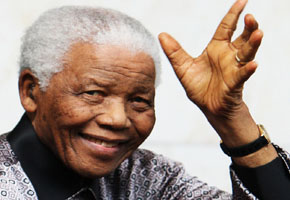
Durban — The presidency urged Nelson Mandela’s family yesterday to solve an increasingly bitter dispute “amicably”, weighing in for the first time on a feud over the ailing former president’s final resting place. “It is regrettable that there is a dispute going on among family members and we’d like that dispute to be resolved as amicably and as soon as possible,” President Jacob Zuma’s spokesperson Mac Maharaj said in an interview.
After a heated court battle, 15 Mandela relatives, including his three daughters and wife Graça Machel, won a court order to rebury the remains of his three deceased children on Wednesday.
His oldest grandson Mandla Mandlela (39), had moved the graves from Mandela’s childhood village Qunu to his own nearby homestead in Mvezo two years ago, without the family’s permission.
Following the ruling Mandla launched a tirade at his relatives.
In a nationally televised news conference on Thursday he accused one of his brothers of impregnating his wife, and said others were born out of wedlock.
Mandla also accused other close relatives of money-grabbing and said Mandela’s daughter Makaziwe was trying to “sow divisions and destruction” in her family.
Maharaj refused to comment on a nine-day-old court document, which said the 94-year-old former president was judged to be in a “permanent vegetative state” and that his doctors had recommended switching off his life-support machines.
“We did not file any document and we are not saying that it’s true or not true,” he said.
The filing was produced by a Mandela family lawyer last Wednesday and argued for an urgent court hearing, so that a burial place for the critically ill Mandela could be finalised.
Mandela has indicated in the past he wanted to be buried with his family.
The moved graves meant there was confusion about his final resting place.
Since the court document was published, the presidency as well as Mandela’s family and friends have said his condition has improved.
But Maharaj would not confirm if the document described Mandela’s health accurately.
Mandela remained in a “critical but stable” condition, Maharaj said, but did not elaborate, citing doctor-patient confidentiality.
In Johannesburg, doctors treating Mandela have denied that he is in a vegetative state.
“We confirm our earlier statement released this afternoon [Thursday] after President Jacob Zuma visited Madiba in hospital that Madiba remains in a critical, but stable condition,” Maharaj said in a statement.
He said Mandela was under the care of a “multi-disciplinary” panel of medical experts drawn from the SA Military Health Services, the public and private sector, and universities.
“Under this panel, a team of doctors, nurses, paramedics and other health professionals attend to Madiba on a 24-hour basis.”
The statement from the presidency came after court documents surfaced stating that Mandela was in a “permanent vegetative state” and that his family had been advised to turn off his life support machine.
The certificate of urgency dated 27 June and submitted to the Eastern Cape High Court was widely reported by local and international media. A copy was obtained by Sapa.
In it, an advocate for the Mandela family said he had been advised by his instructing attorney that Mandela’s condition had “taken a turn for the worst (sic) and that the Mandela family have been advised by the medical practitioners that his life support machines should be switched off”.
“Rather than prolonging his suffering the Mandela family is exploring this option as a very real probability.”
The document was attributed to David Smith, an advocate representing 15 members of the Mandela family in a court case against Mandela’s grandson, Mandla. In the document, Smith described Mandela’s health as perilous, and said he was in a permanent vegetative state and was being assisted in breathing by a life support machine.
“Affidavits will be provided, at the hearing of this application, from his treating physicians that he is in a permanent vegetative state and is assisted in breathing by a life support machine,” he said.
“The anticipation of his impending death is based on real and substantial grounds.”
A later version of the document filed in the court omitted the paragraphs referring to Mandela’s “vegetative state” and the advice by physicians to take Mandela off life support.
A lawyer for the Mandela family later said the original certificate of urgency was “merely a submission outside of court”.
“To the extent there is speculation, a certificate of urgency was filed in terms of the practice of our court,” said Wesley Hayes, who represented the family in the dispute with Mandla about the graves of his father and his grandfather’s other two children.
“The certificate is not evidence, but merely submissions on why a matter should be heard outside ordinary court sittings.”
Hayes said the ruling on the urgency of the matter had been made “in camera” and that this “would extend to the contents of the certificate of urgency”.
“Further than that we have no comment,” he said. — Sapa


 Online Reporter