

 Online Reporter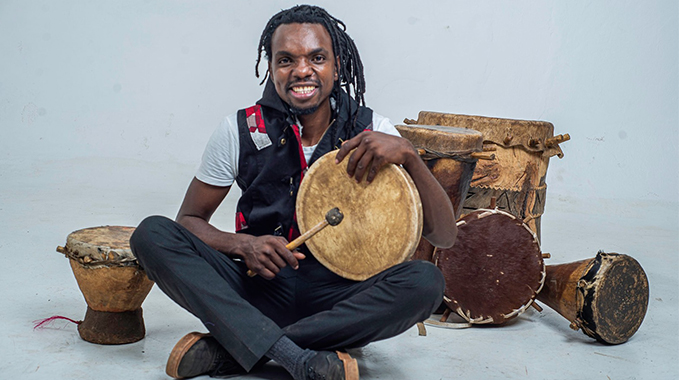
Langalakhe Mabena, Zimpapers Arts and Entertainment Hub
THE name Mangoma is pure artistry. Loosely translated as “drums”, it aptly suits a man whose life is inextricably bound to the rhythms and pulse of African traditional music.
Born Othnell Moyo, “Mangoma” has devoted his life to the preservation, performance and promotion of traditional African instruments, treating each as a sacred cultural artefact and vessel of ancestral memory.
Raised in Nguboyenja, Bulawayo — where music was woven into the fabric of everyday life — young Mangoma became fascinated by traditional instruments such as the mbira, marimba and a variety of tribal drums. Some of his earliest musical memories involve watching in awe as his older siblings, Osward and Rea Moyo, played these instruments.
“I started playing instruments as far back as I can remember. My older siblings and their friends say I began playing marimba at the age of three, drumming at five, and mbira at seven. They were always my inspiration, especially their connection with the mbira,” he said.
Now a professional instrumentalist, Mangoma is a rare virtuoso, able to play nearly every category of African tribal instrument — from lamellaphones and membranophones to xylophones, chordophones and aerophones. And, as his name suggests, he is a master of the drum.
“I play various African instruments. I can play all types of mbira, including Matepe, Njari, Mbira DzavaNdau, Tumbila, Karimba, Nkulu, Nyonganyonga, Mana eMbudzi, Munyonga, Mbila dzemaDeza, Nhare and Ntchanje Yatsvuri.
In the drum family, I play Ngoma varieties like Djembe, Dun Dun, Bara and talking drums. In the xylophone category, I play Pentatonic Balafon, Marimba, Valimba, Mbila and Mutondo,” he said.
His repertoire also includes traditional chordophones and aerophones such as the Chipendani, Mukhube, Chitende, Umqangala, Uhadi, Bangwe, Ngororombe, Hwamanda, and Chigufe.
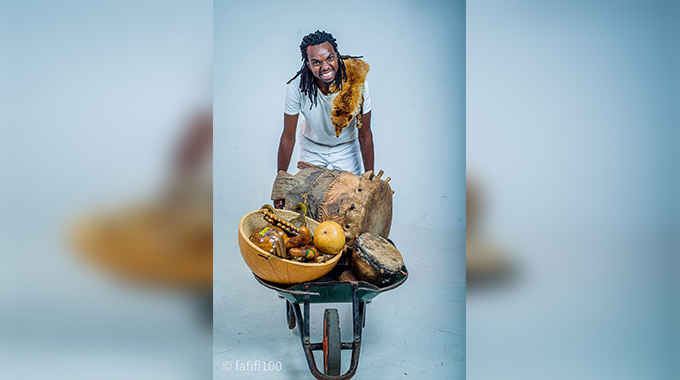
For Mangoma, each instrument is more than a musical tool — it is a storyteller, a symbol of culture and a bridge to the past.
But his talents extend beyond the stage. He is also a master craftsman, who builds the very instruments he plays. Mangoma founded the Ngoma/Ingungu Arts Centre in Munyawiri Village, Domboshava, Mashonaland East — a space rich in natural resources and ideal for crafting authentic African instruments.
“I can craft most of the instruments I play. I learnt the skill from several masters across Zimbabwe, Mozambique and Burkina Faso, including Edson Marwizi, Chaka Callisto Chawasarira, Alexander Mhlanga, the Amakhosi Cultural Centre, Dudu Manhenga-Muparutsa and Constant Ouedraogo,” he said.
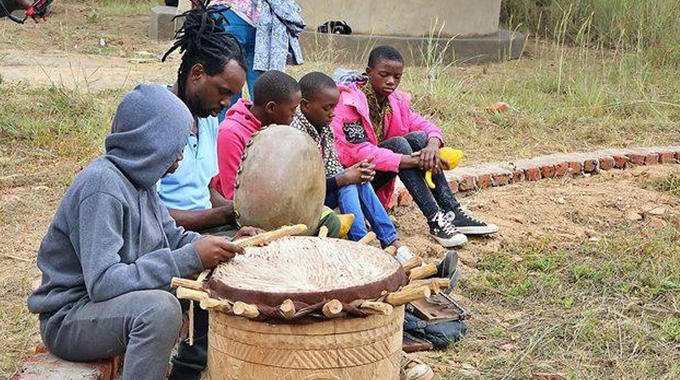
With a firm belief in passing on indigenous knowledge, Mangoma has made it his mission to train the next generation in both playing and crafting tribal instruments. He is driven by a need to preserve African cultural heritage in the face of rapid globalisation and the lingering impact of colonial erasure.
“Our knowledge systems and documentation methods were embedded in songs, dances, artefacts and music-making. These instruments were destroyed or banned during the colonial era. By rebuilding them and relearning how to play them, we unlock ancestral memory and gain a deeper understanding of who we are. That’s why we teach young people at the Ngoma Arts Centre — to ensure they become the custodians of our culture and heritage,” he said.
Mangoma’s influence now spans the globe. He has taught African tribal instrumentation and music at 56 universities across the United States and Europe, sharing his knowledge with students and fellow artists alike. As a performer, he has played in over 1 300 venues worldwide, gracing stages in the USA, Canada, Costa Rica, Botswana, Zambia, Malawi, Kenya, Ethiopia, Nigeria, Togo, Ghana, Burkina Faso, India, Germany, Italy, Norway, Russia and Sweden, among others.
Despite his international acclaim, Mangoma remains deeply rooted in his African identity. He continues to champion traditional instruments as tools for storytelling, healing, resistance and self-expression.
“This is more than music. It’s the language of our ancestors. Through it, I have found my voice, my path and my purpose,” he concluded.


 Bongani Moyo