

 aurora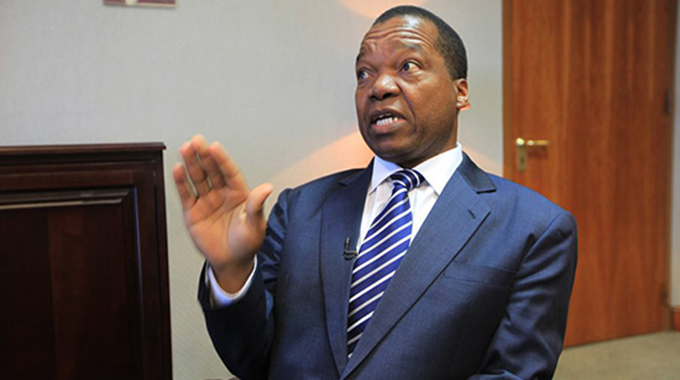
Business Writer
The Reserve Bank of Zimbabwe (RBZ) Governor, Dr John Magudya, has defended withdrawal limits he announced in the Monetary Policy Statement (MPS) presented last week.
The transacting public and businesses deemed the new withdrawal limits low and limiting on spending on essentials.
However, Dr Mangudya said the limits were fair as they were derived from average salaries.
He argued the limits were also meant to curtail foreign currency parallel market activities. Dr Mangudya revealed this during a post monetary policy seminar with members of the Zimbabwe Economic Society.
The Zimbabwe Dollar has been hit by parallel market activities with traders using electronic transfers to trade the currency against the greenback with premiums going as far as 100 percent.
This prompted the central bank to instill lower transfer limits in order to keep the levels within many people’s salaries and wages.
“We were of the view, and we are still convinced, that the figures which are there are quite high,” Dr Mangudya said, adding, “If you look at the average salaries in Zimbabwe, they aren’t all that high. How many people are earning more than $50 000 or $60 000 in the general economy?”
According to the governor, there are not as many employees that earn above those figures and he said they looked at the general salaries in the market before coming up with the limits.
He added: “$100 000 equated to US$417, using a parallel market rate of US$1:$240, but a salary of $50 000 or $60 000 translates to US$208 or US$250, respectively. I think if we are being very honest, the limits are quite good,” Dr Mangudya said.
The apex bank set new mobile banking limits per transaction of $25 000 and $10 000 for person-to-business and person-to-person transactions, respectively.
Previously, the limits were $20 000 and $5 000, respectively.
Maximum limit for individual-to-business transactions was set at $100 000 per week while the person-to-person transfer limit was set at $70 000 per week.


 Online Reporter