Online Reporter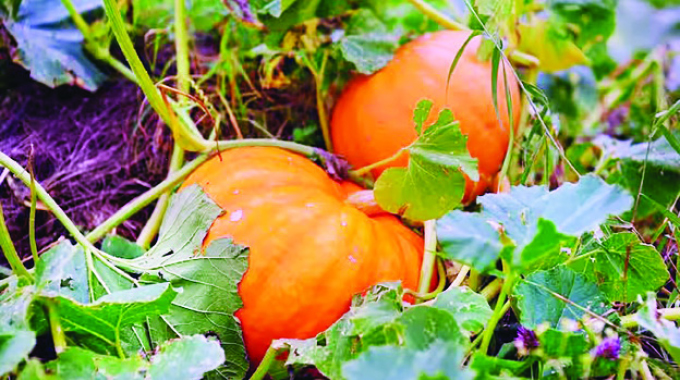
Theseus Shambare-Herald Reporter
“MANHANGA matete; todya maruva!” — the phrase now echoes far beyond the country’s rural trails.
Kombis blast it from cracked speakers, TikTok influencers use it for dance trends and even “ama2K” in urban uptown cafés chant the catchy chorus.
The anthem of resilience, lamenting tough seasons when villagers must eat pumpkin flowers before the fruit matures, has become an unlikely hit.
But, the popularity of the tune is more than just a cultural moment.
The song’s lyrics speak to a deep and recurring truth in rural life, one that now carries a new twist.
What was once a symbol of temporary hunger has become a metaphor for a harsher, more unpredictable climate.
In the sun-scorched heart of Chivi District, Gogo Mavis Chauke (84) chuckles as she stirs a pot of pumpkin leaves.
“We sang that line back in the 1980s. Back then it was hunger, now it is climate change.
“Same tune, new problems.”
Gogo Chauke’s village is part of the Bwanya Irrigation Scheme — a sprawling greenbelt born from barren soil.
Once a food-aid dependent community, Bwanya is now a model of transformation under a US$47,8 million climate-resilience initiative supported by Government, UNDP and the Green Climate Fund.
“People used to laugh at the idea of wheat in Chivi,” said Ekem Tinago, the scheme’s chairman.
“Now we grow it. We feed ourselves. We sell. We dream.”
The scheme’s 300 families each contributed land, now divided into lush half-hectare plots.
Powered by centre pivots and sprinklers and fed by water drawn from Shashe River, Bwanya is a reminder of what partnerships can achieve in the face of crisis.
In Mudzi, Mr Innocent Kazani, a once-hopeless farmer, now raises fish in two sparkling ponds.
“I stopped forcing maize from dry soil. I now sell tilapia at US$3/kg,” he said.
He benefited from the Presidential Community Fisheries Scheme, receiving free fingerlings and training.
“I never imagined I would earn more from water than I ever did from land,” he added, watching fish ripple beneath the surface. This is the new agriculture,” he said.
Under the Presidential Fisheries Scheme, over 1 200 community ponds have been established across 10 provinces, aiming to generate US$5 million annually in rural income by 2026.
Yet in Madabi Village, the song’s painful meaning still echoes.
Lindiwe Ndlovu (15) hauls a 20-litre bucket on her head, her baby brother strapped on her back.
The closest borehole near her homestead dried up months ago.
She now walks 4km daily to find water.
“My school uniform is still clean at home,” she said with a low-tired voice. I did not go today.”
Nearby, Susan Mudenda, a Grade Five pupil, limps home. She injured her foot while foraging for firewood. Like Lindiwe, Susan may not return to class for days.
“Climate change is killing our childhood and our future,” she said.
At such tender age, this child already knows the brunt of this phenomenon. In these villages, climate change is not theory – it is thirst, hunger and dropping out of school.
Last year, Zimbabwe was hit by the worst drought in the past 42 years and prompted President Mnangagwa to declare a state of disaster.
The country lost nearly 60 percent of its maize crop due to the El Niño-induced drought.
Over 2.7 million people were deemed in urgent need of food assistance, according to the Zimbabwe Vulnerability Assessment Committee (ZimVAC).
In response, Government and partners launched the Enhanced Resilience for Vulnerable Households in Zimbabwe (ERVHIZ) project.
Thanks to support from the European Union, Christian Care installed high-tech solar water systems in Mangwe and Matobo.
Villagers now have tap water and schools like Tjingababili Primary have established nutrition gardens powered by solar pumps.
“We used to lose learning hours fetching water. Now we just open a tap,” said Awakhiwe Ndlovu, a Grade 7 pupil.
School head Mr Christopher Mguni adds: “We used to record over 80 absentees a day. Now? Just a handful.”
In Matobo, thanks to solar-powered water systems, attendance has improved by 65 percent in affected schools over the past two years.
Tjingababili Primary now sustains two school gardens, feeding over 450 learners during term.
From Matobo to Mudzi, from fish ponds to school gardens, Zimbabwe’s story is changing.
Yes, the “pumpkins are still thin,” but with bold adaptation and collective effort, there is a growing promise of harvest.
The viral song may have started as a lament — but across Zimbabwe, it is becoming a rallying cry.
“We ate the flowers,” Gogo Mavis said.
“Now we water the roots.”